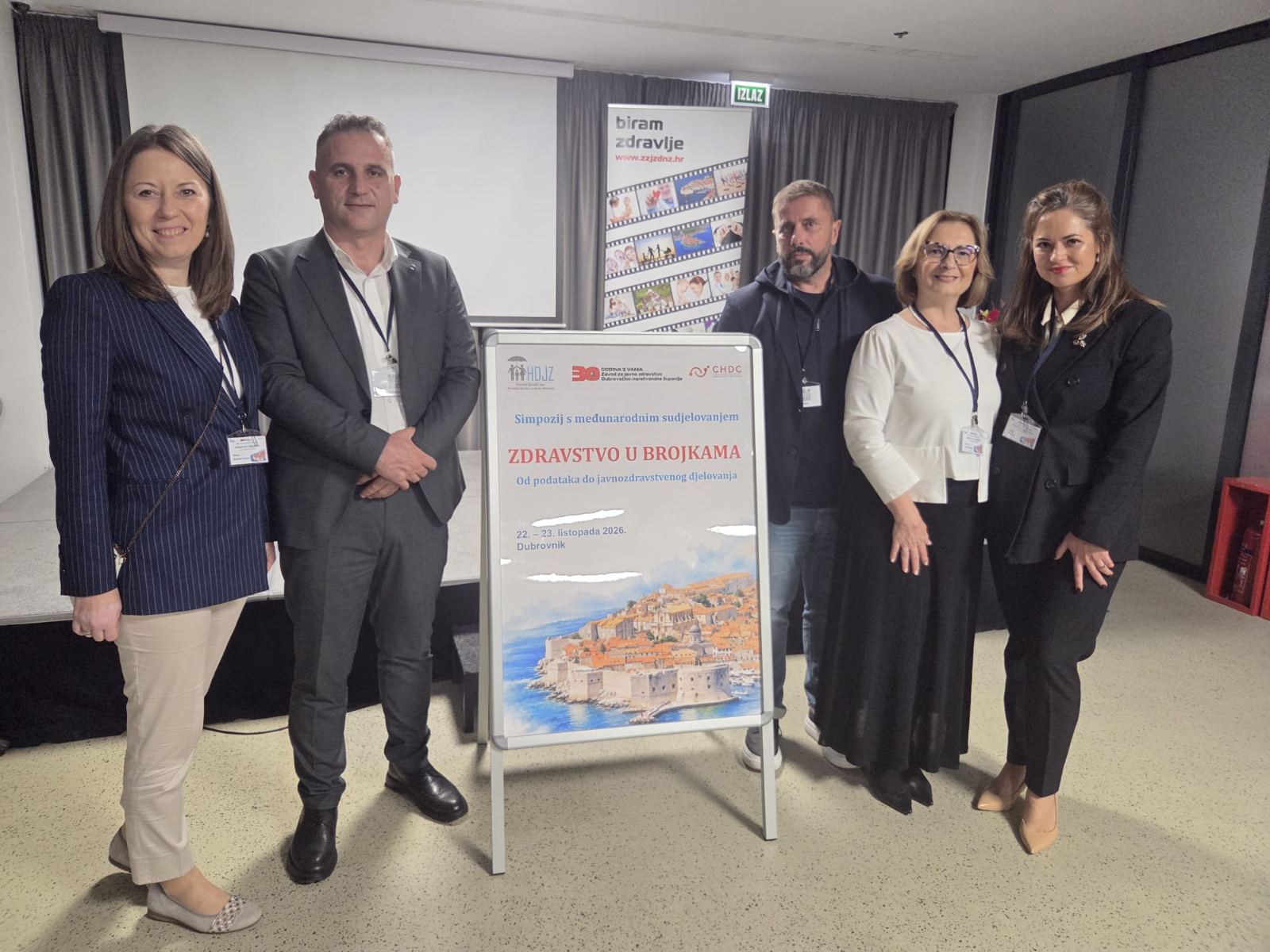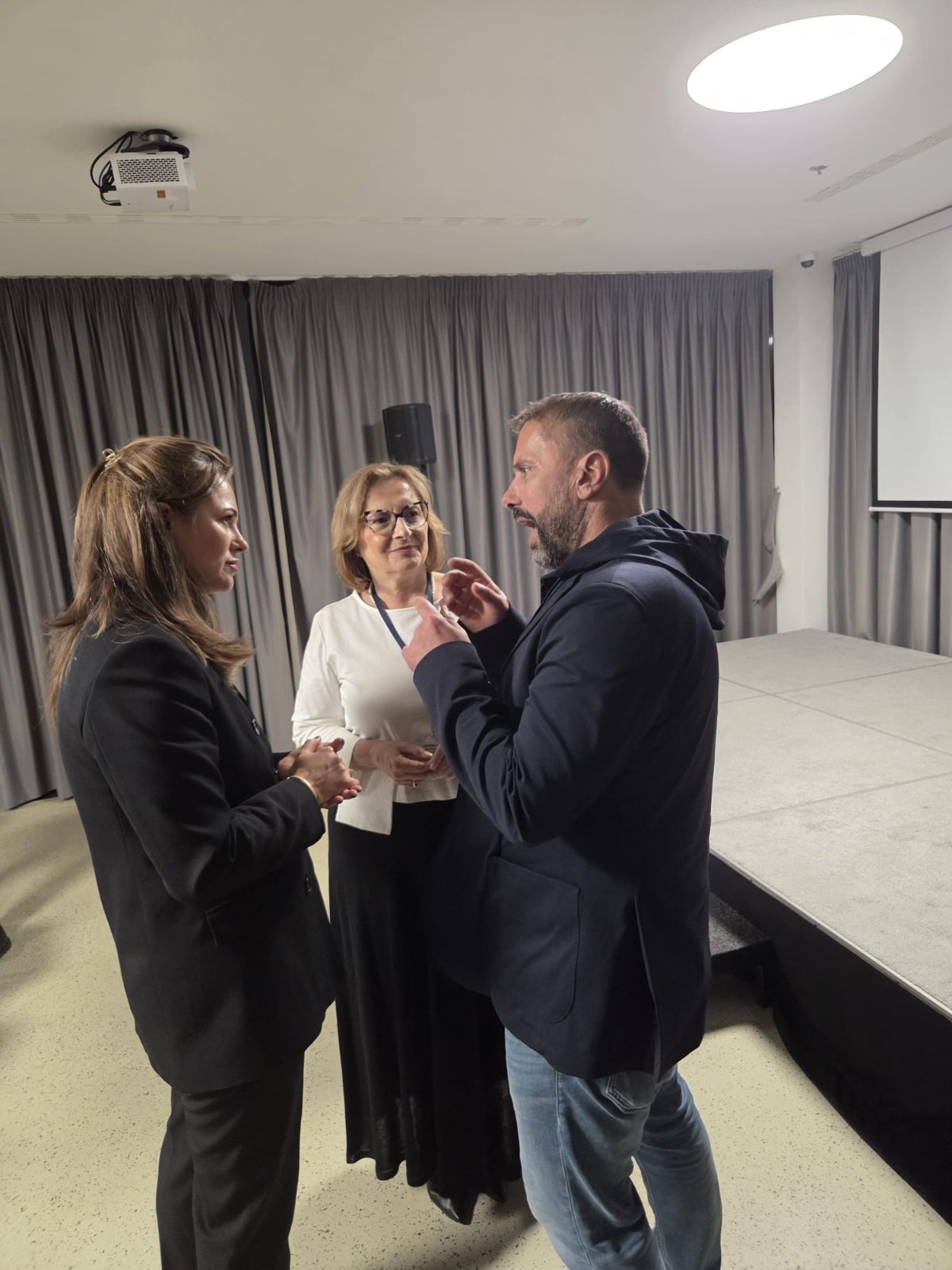

Dubrovnik, Croatia, 23 October 2026 – The South-Eastern Europe Health Network (SEEHN) participated in the International Symposium “Health in Numbers: From Data to Public Health Action”, held on 22–23 October 2026 in Dubrovnik, Croatia. The event brought together public health professionals, researchers, policymakers and institutional representatives to explore how reliable health information can support better decisions, more effective prevention and stronger health systems.
Organised by the Croatian Public Health Society of the Croatian Medical Association and the Public Health Institute of Dubrovnik-Neretva County, the symposium addressed a broad range of issues, including health workforce planning, healthcare quality, chronic disease prevention, digital health technologies and the European Health Data Space.
Dr. Tatiana Păduraru, Head of the SEEHN Secretariat, represented SEEHN and contributed to the opening plenary session on the importance of health data for developing regional health cooperation.
The meeting held particular significance for SEEHN, taking place in Dubrovnik 25 years after the signing of the Dubrovnik Pledge on 2 September 2001, which laid the foundations for the Network. This anniversary provided an opportunity to reflect on the progress achieved through regional cooperation and the challenges facing public health systems across South-Eastern Europe.
In her intervention, Dr. Păduraru emphasized that the growing availability of health information must be matched by stronger institutional capacity to interpret evidence and translate it into effective public policies.
“The ultimate test of health data is not how much we collect. It is whether we use what we know to make people healthier, systems fairer and societies better prepared for the challenges ahead,” she stated.
Her presentation highlighted the importance of moving beyond data collection toward the practical use of health intelligence to address inequalities, improve access to care, strengthen preparedness, and support more equitable allocation of resources.
Particular attention was given to the challenges posed by fragmented information systems, limited interoperability, and the persistent gap between scientific evidence and policy implementation. Dr. Păduraru also emphasized that public trust, transparency, and accountability are essential to ensuring that health information contributes to meaningful improvements in people’s lives.
Drawing on SEEHN’s 25 years of experience, the intervention reaffirmed the Network’s role as a platform for intergovernmental dialogue and technical cooperation among its nine Member States. Through its national health coordinators, Regional Health Development Centers, and institutional partnerships, SEEHN supports the exchange of expertise, mutual learning, and the development of stronger public health capacities across the region.
The discussion also addressed the opportunities and responsibilities associated with digital transformation and artificial intelligence. While emerging technologies can improve disease surveillance, health service planning, and the identification of population health needs, their effective use depends on reliable data, appropriate governance, professional expertise, and safeguards for privacy and equity.
Looking ahead, SEEHN reaffirmed the importance of health-system innovation and digital transformation as part of its evolving regional cooperation agenda. These priorities will also inform preparations for the Bucharest Pledge, which is envisaged in connection with the next SEEHN Ministerial Forum in 2027.
The Dubrovnik symposium offered an important opportunity to strengthen dialogue between public health institutions and regional partners, while reaffirming a shared commitment to evidence-informed policies and practical cooperation.
Twenty-five years after the Dubrovnik Pledge, SEEHN remains committed to helping its Member States translate shared knowledge into coordinated action, with the ultimate goal of improving population health, reducing inequalities, and building more resilient health systems across South-Eastern Europe.