News
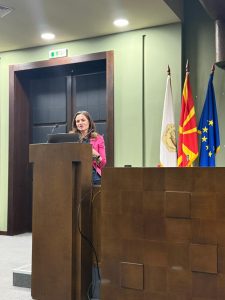
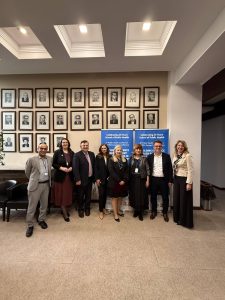
The Country Day aims at improving WHO Europe’s interactions with and relevance for the member states of the South-Eastern Europe Health Network (SEEHN). It aims to build upon the ongoing collaboration and ensure a more coordinated approach to the existing opportunities. Objectives of the Day are also to highlight the issues faced by the sub-region and to discuss the provision of policy advice and targeted technical assistance that address the networks needs by fulfilling sub-regional as well as national commitments so to ensure the delivery of agreed results.
The Country Day is designed to provide a forum for in-depth discussion on the health issues and priorities of the sub-region, the importance of the network to the WHO as well as an analysis of the technical programs’ implementation in the selected priority technical areas. It will address previous successes and future opportunities on working in and with the SEEHN at both strategic and operational levels.
Organization and all preparatory work for the SEEHN Country Day are coordinated by the Strategic Relations with Countries unit (SRC) in the Regional Directors Office.
The Country day is open to all staff members and will specifically involve Divisional Directors, Program Managers and the SEEHN Co-Opted Member and founder of the SEEHN, Dr Maria Ruseva. Heads of WHO Offices will also be linked in to participate directly in the discussions by sharing their experiences with members of the SEEHN at country level, and to contribute to the discussion on future collaboration. The meeting will be held in a plenary session with presentations and round table discussion.
News
The Regional Health Development Center on Mental Health in SEE, based in Sarajevo, Bosnia and Herzegovina, published its 4th Newsletter.
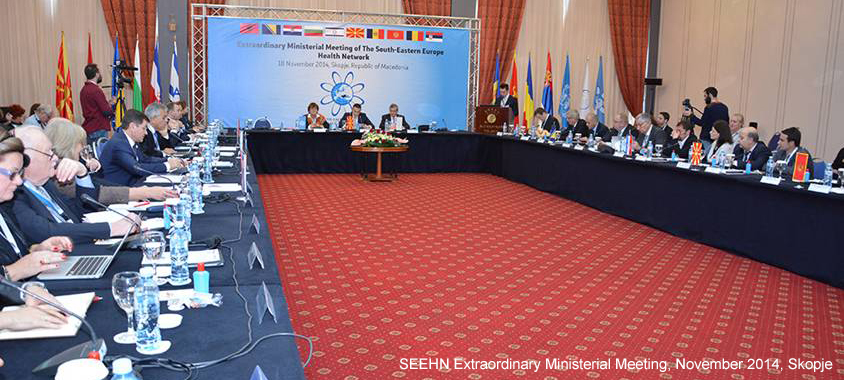
Product of fruitful cooperation in the area of mental health between the SEEHN Member States and its partner countries and organizations, as Mr. Sredoje Nović, Minister of Civil Affairs of Bosnia and Herzegovina, says in the Editorial, the fourth issue begins by presenting the achievements of the SEEHN Extraordinary Ministerial Meeting held in November, 2014 in Skopje under the Macedonian Presidency.
Overviewing the regional activities of the SEEHN in the area of mental health in 2014, including the development of the Regional Program 2014-2024 of the RHDC on Mental Health in cooperation with the SEEHN member countries, the Newsletter also describes the separate country activities undertaken in this area.
The fourth issue is available at the following link.
News
The governments of Macedonia and Serbia held a joint session in Skopje on Monday that ended with the two countries signing seven cooperation agreements. The two governments signed agreements on cooperation in business, tourism, science and education, culture, sustainable development and environmental protection, as well as an agreement on establishing border procedures for the Tabanovci-Presevo railway crossing and an agreement on holding foreign affairs consultations in 2015-16.
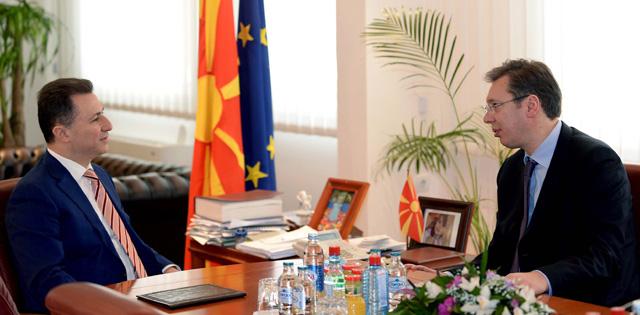 Prime Ministers of Macedonia and Serbia, Mr. Gruevski and Mr. Vucic
“We not only came up with seven agreements, but also with a number of projects that we must finalise, some this year, some in 2016. We have managed to establish mutual interests in all fields”, the Serbian Prime Minister Aleksandar Vucic said after the session which was attended by 10 out of 16 Serbian ministers.
The two countries discussed European integration, regional cooperation, new infrastructure projects, including a rail link to Greece, and gas supplies, as well as the idea of opening joint diplomatic and consular missions in some countries.
The Macedonian Prime Minister Nikola Gruevski said that the Serbian government visit was proof of good relations between the two neighbouring countries and a basis for closer economic cooperation. “We had a productive session and I believe that the contracts we have signed will bring benefits to both countries,” Gruevski said.
This was the second joint session held by the Macedonian and Serbian governments since the Progressive Party took power in Serbia in 2012. The first joint session was held in 2013 in Belgrade.
Highlight on health: The Governments of Macedonia and Serbia joint session was used for a separate bilateral meeting of the Macedonian Minister of Health, Mr. Nikola Todorov and his colleague, Dr. Zvonimir Lonchar, Serbian Minister of Health.
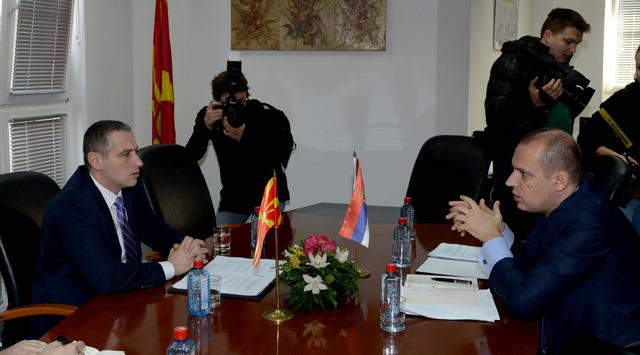 Macedonian and Serbian Ministers of Health, Mr. Todorov and Mr. Lonchar
The two Ministers discussed further improvement of the already good bilateral collaboration, in a friendly atmosphere. Minister Lonchar emphasized their commitment to introducing e-health, the area where Macedonia has already very much advanced. They agreed that the Serbian technical experts visit next week Macedonia over technical discussion with their Macedonian colleagues on the e-health topic and presentation of the Macedonian experience.
Minister Todorov informed his colleague of the interest in further education (specialization) and training in health abroad. Minister Lonchar supported this endeavor and offered 10 specializations for Macedonian doctors, under the same conditions for the Serbian doctors.
Minister Todorov further offered an initiative for joint participation at the pharmaceutical market (joint procurement of vaccines), which was accepted by Minister Lonchar and was also presented at the two Governments’ joint session.