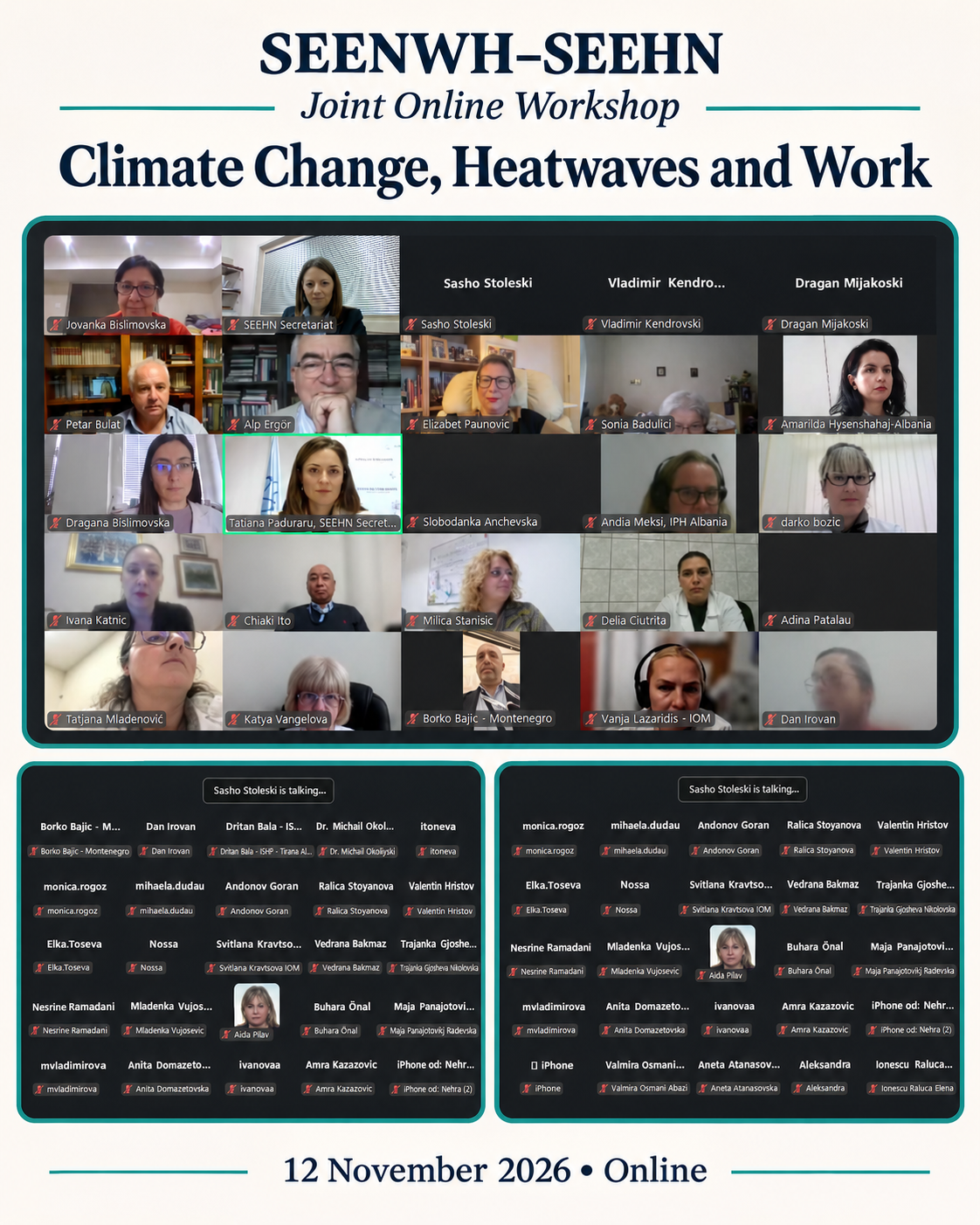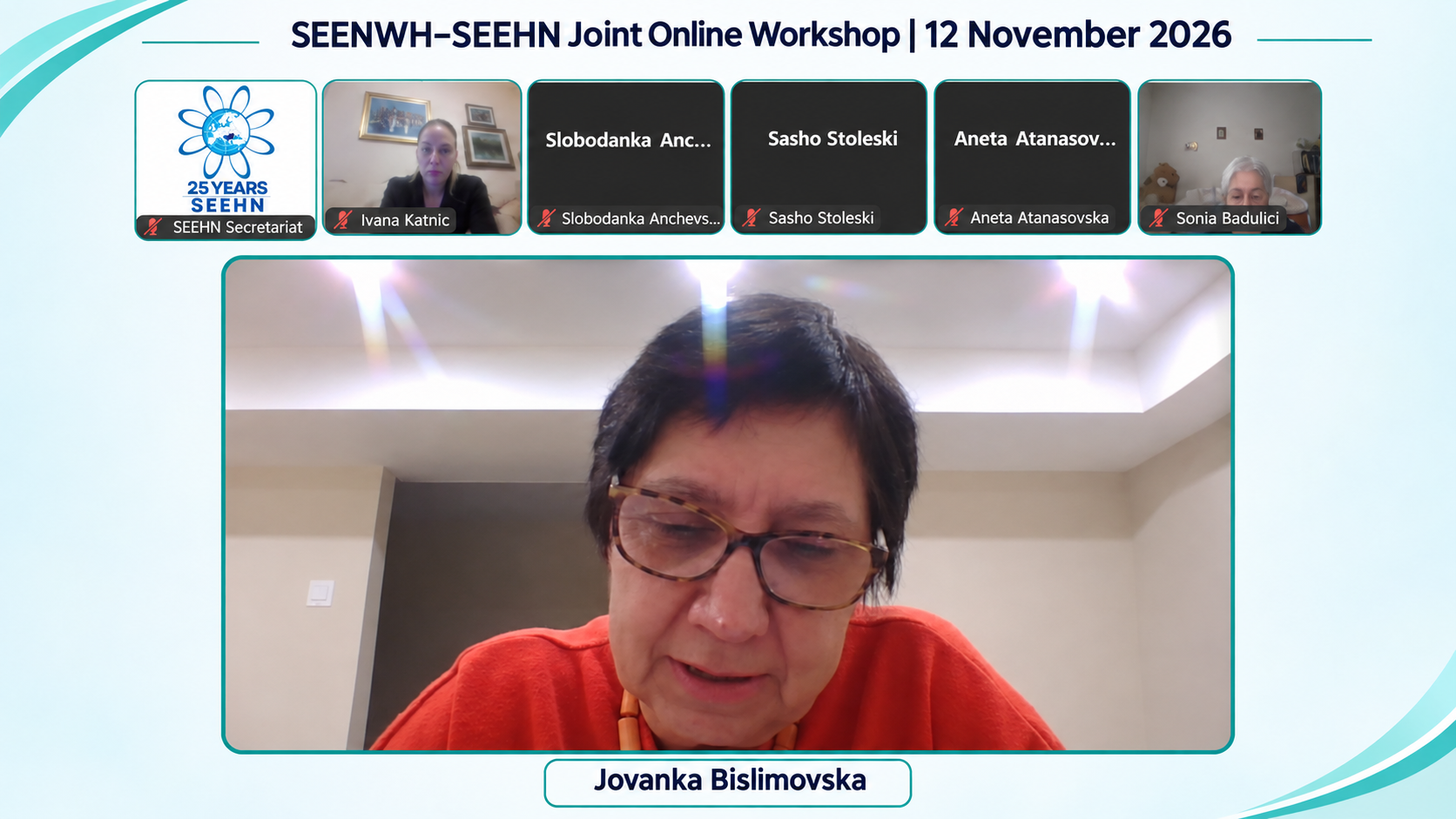
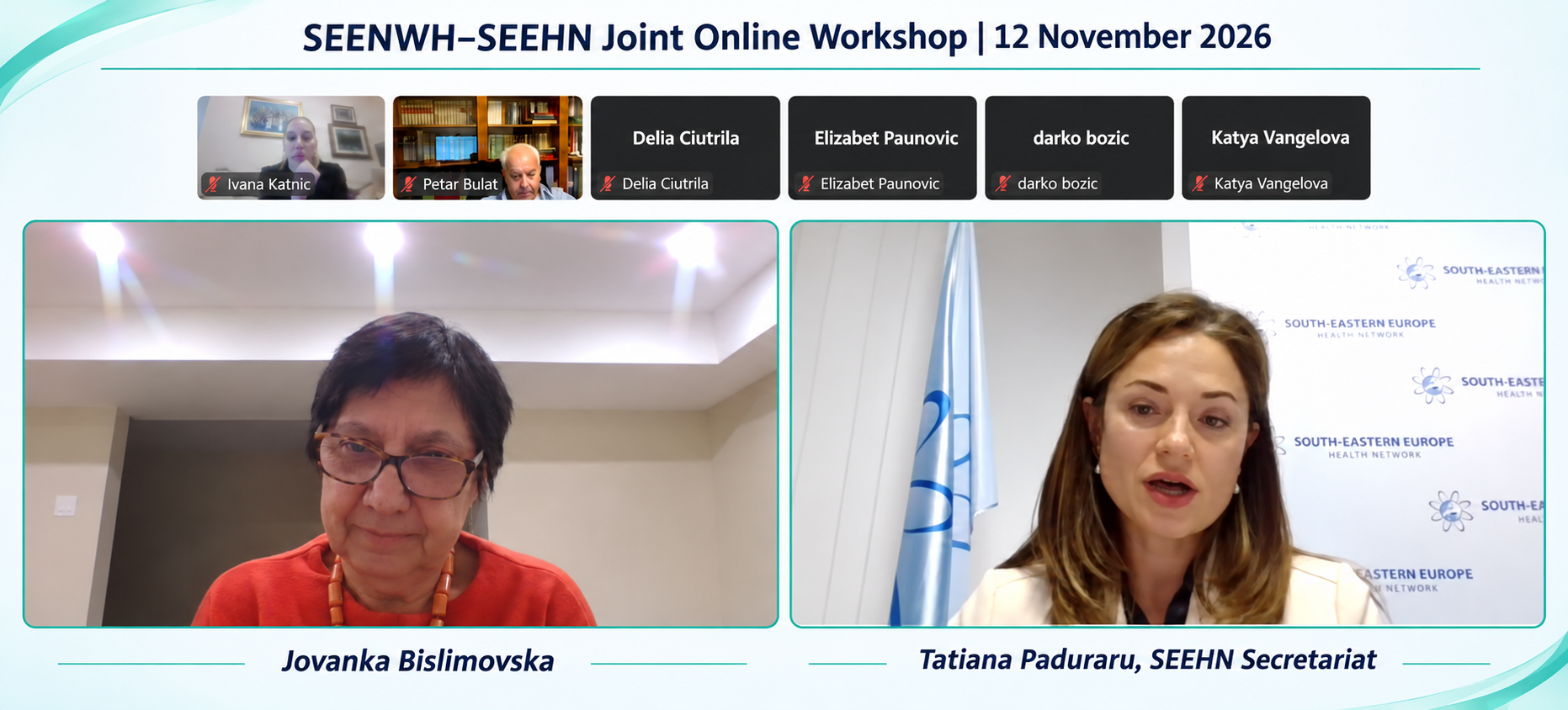
The workshop brought together occupational health and public health experts, researchers, policymakers and representatives of national institutions to exchange scientific evidence, research findings and national experiences on the growing impact of climate change and extreme heat on workers’ health.
Climate change and increasingly frequent heatwaves pose significant challenges to occupational and public health across South-Eastern Europe. Beyond their direct effects on physical health, these developments also affect mental well-being, working conditions, healthcare services and institutional preparedness. Addressing these challenges requires stronger cooperation among public health authorities, occupational health professionals and research institutions.
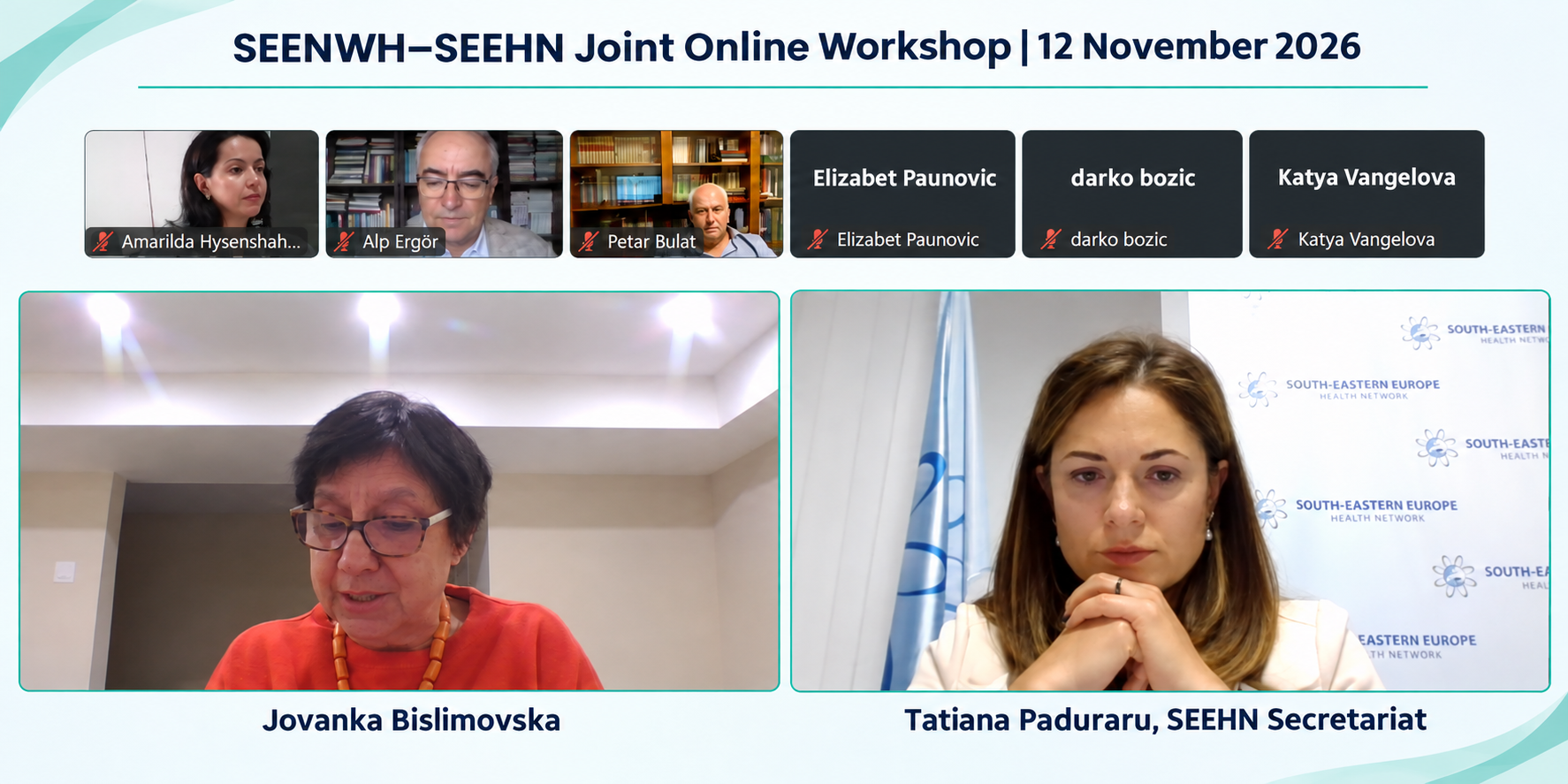
The workshop opened with remarks from Professor Dr. Jovanka Bislimovska, Coordinator of SEENWH, and Dr. Tatiana Păduraru, Head of the SEEHN Secretariat, who set the stage for discussions on shared regional challenges and opportunities for closer cooperation between the two networks.
The scientific program provided an overview of current evidence and policy responses at the European and regional levels.
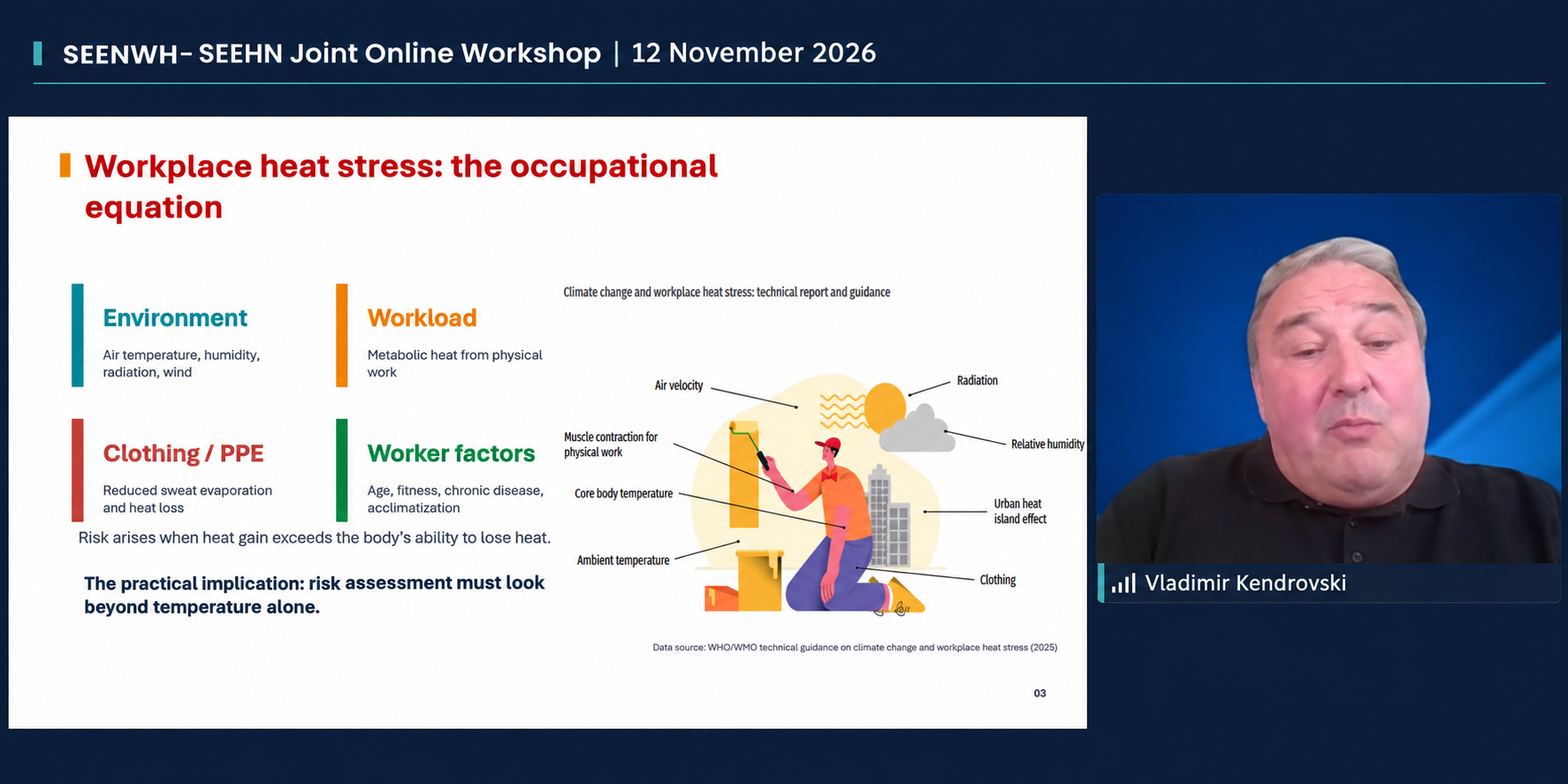
Dr. Vladimir Kendrovski, Technical Officer at the WHO European Centre for Environment and Health in Bonn, addressed the challenges of extreme heat and occupational health in the WHO European Region, emphasizing the importance of prevention, adaptation, and preparedness in a changing climate.
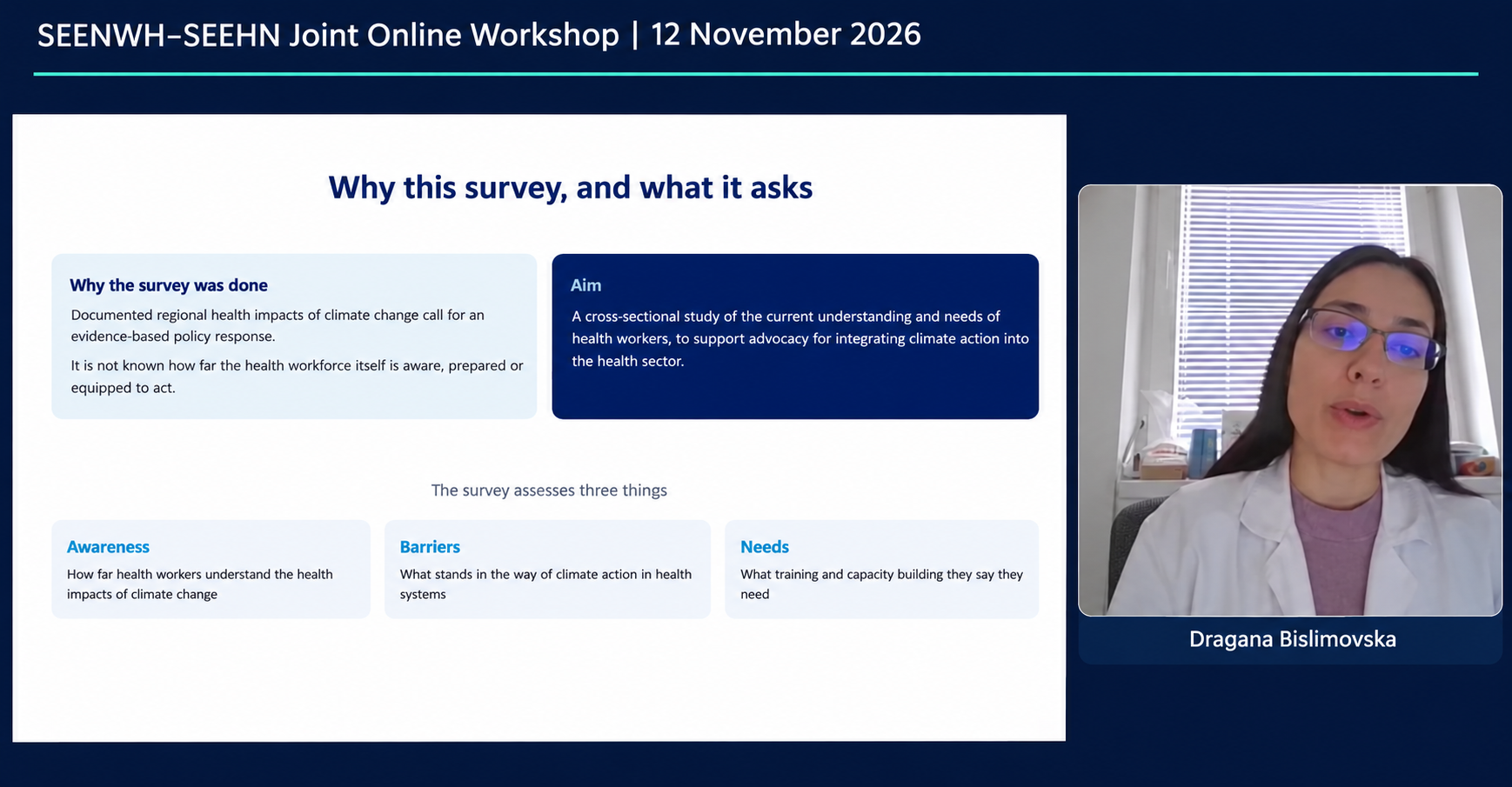
Dr. Dragana Bislimovska of the Institute of Occupational Health of North Macedonia, a WHO Collaborating Centre, presented regional research findings. Her presentation focused on the results of a SEENWH cross-sectional survey of 1,388 healthcare workers from eight countries, examining their awareness of climate-related health risks, the barriers they face, and the support needed to better integrate climate action into healthcare practice.
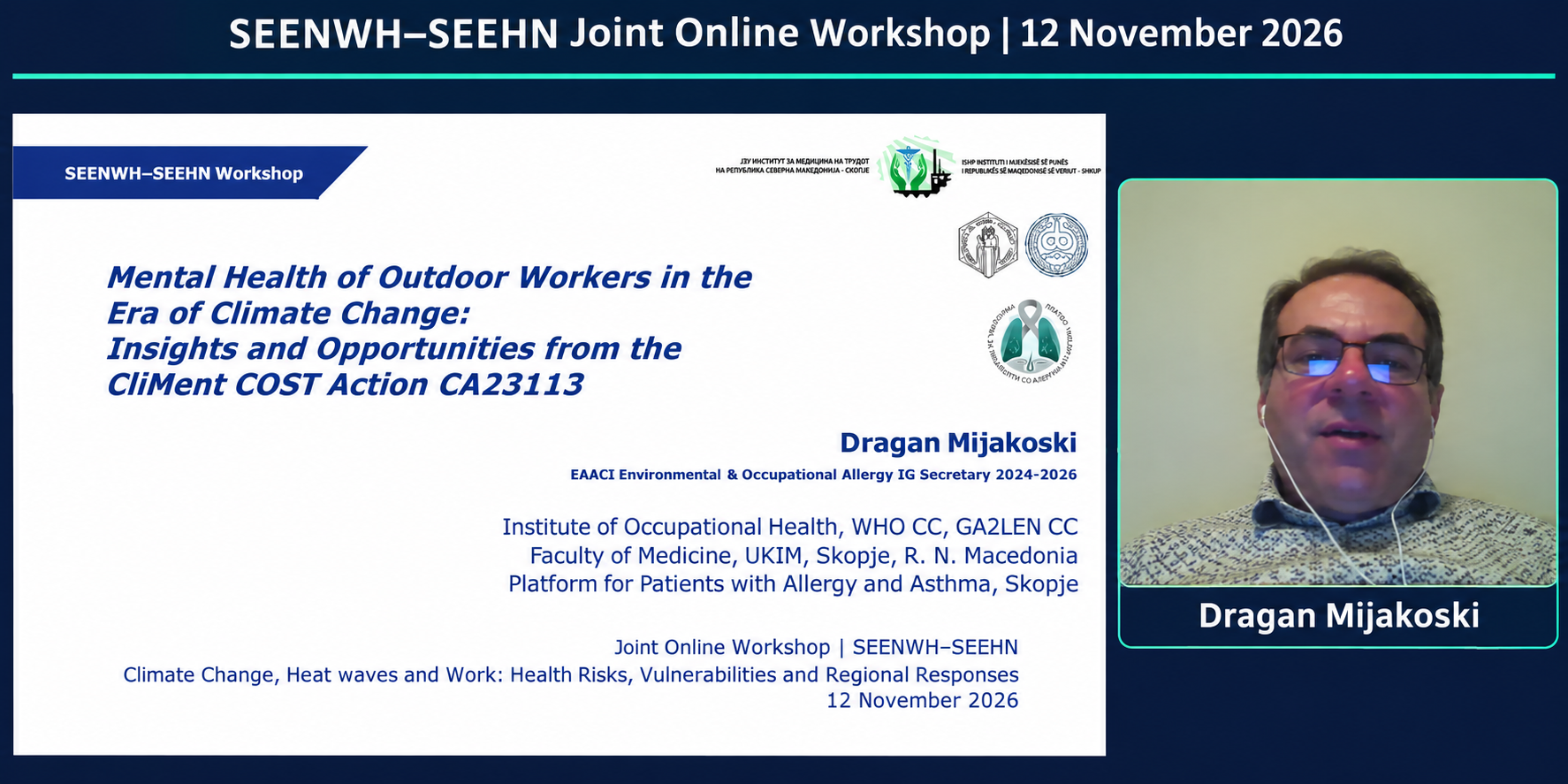
The mental health dimension of climate change was addressed by Professor Dr. Dragan Mijakoski, also affiliated with the Institute of Occupational Health of North Macedonia. Drawing on the CliMent COST Action CA23113, the presentation explored the implications of climate-related exposure for outdoor workers and opportunities for further research and cooperation.
The discussions also considered regional perspectives on climate change, heat and health, including the relevance of occupational health protection to broader public health priorities and health system resilience.
A key part of the workshop focused on exchanging national experiences and good practices. Representatives of the two networks had the opportunity to discuss approaches to preventing climate-related occupational risks, strengthening awareness and preparedness, and identifying areas where regional cooperation could provide added value.
The exchange underscored the importance of integrating scientific evidence, national expertise and practical experience to support effective responses to climate-related health challenges.
The workshop also provided a basis for identifying shared priorities and exploring possible follow-up activities, including further knowledge exchange, research cooperation and capacity-building initiatives.
SEEHN and SEENWH will continue to explore opportunities for cooperation in areas of common interest, building on the scientific contributions and regional exchanges facilitated by the workshop.