Skopje, Republic of North Macedonia | 22 May 2026
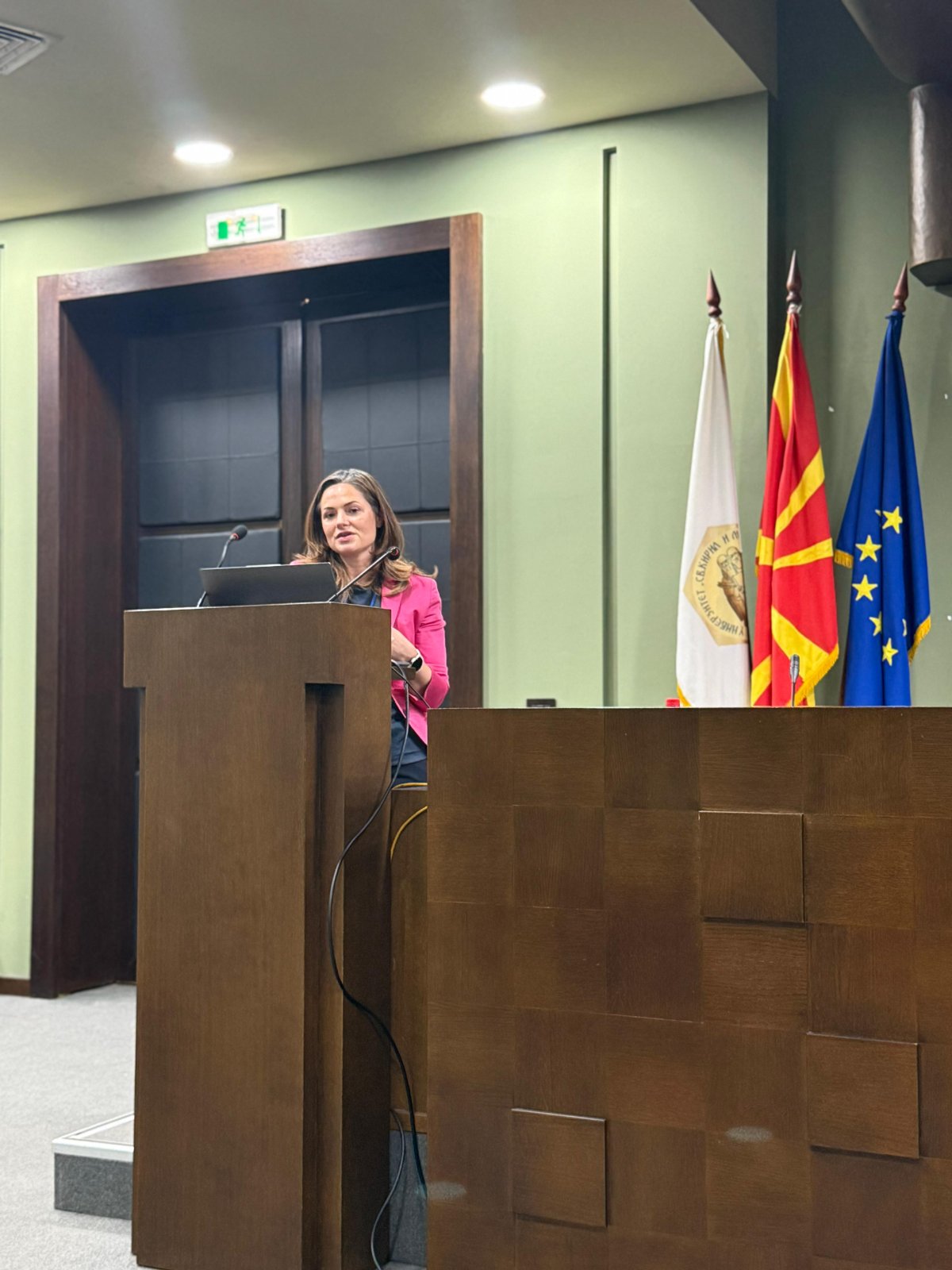
During the 2nd Public Health Conference and the 2nd HSG Europe Preconference, co-organized by the South-Eastern Europe Health Network (SEEHN), Dr. Tatiana Păduraru, Head of the SEEHN Secretariat, delivered a presentation on the critical role of nursing and midwifery leadership as a strategic pillar of health system resilience.
Presented at the thematic session “Politics and Polycrisis: Governance, Financing and Diplomacy in the Face of a Shifting Global Order,” the intervention — “Bridging Policy and Practice: Embedding Nursing and Midwifery Leadership in Health System Resilience — Lessons from Romania” — explored how leadership development can move beyond individual training toward systemic transformation.
The presentation emphasized the central role of nurses and midwives in health systems, noting that they constitute the largest component of the global health workforce while facing mounting pressures from workforce shortages, migration, demographic change, burnout, and rising system demands. Shared regional challenges across South-Eastern Europe further underscore the need to strengthen workforce participation in governance and decision-making processes.
Drawing on findings from Romania’s first national nursing leadership program, implemented in 2022, the presentation examined barriers, enablers, and institutional conditions that shape leadership implementation and sustainability. Using a mixed-methods research approach with nurse leaders, the analysis explored organizational culture, governance readiness, professional development needs, and mechanisms that support change.
The presentation highlighted the importance of translating evidence into policy and practice by strengthening leadership integration across education, governance and health workforce policies. Particular emphasis was placed on the need to support advanced nursing roles, strengthen participatory governance mechanisms and better align competencies, financing and institutional recognition.
Addressing the broader regional dimension, SEEHN emphasized that nursing and midwifery leadership should not be viewed solely as a professional agenda but as a health system resilience strategy with direct relevance to South-Eastern Europe and Europe more broadly.
The intervention reaffirmed SEEHN’s ongoing commitment to supporting evidence-informed governance, health workforce strengthening, leadership development, and regional cooperation as essential components of resilient, equitable, and sustainable health systems.