News
(Croatian Ministry of Health – Institute for Transplantation and Biomedicine)
The SEEHN RHDC in Croatia is organizing jointly with TAIEX (Technical Assistance and Information Exchange Instrument of the European Commission) on April 9 and 10 in Zagreb, another important technical meeting to address key issues in deceased organ donation process (Identification and referral of potential donors; Brain death diagnosis; Donor assessment and evaluation; Family approach).
The TAIEX meeting will bring together 67 professionals from Albania, Bosnia and Herzegovina, Bulgaria, Croatia, Israel, Kosovo, Former Yugoslav Republic of Macedonia, Moldova, Montenegro, Romania, Serbia and Turkey, as well as experts from EU Member States, to share best practises and improve knowledge and skills in this important health care field.
Extensive training of throughout the SEEHN Region will take place under the leadership of Croatian experts and invited experts from Italy, Spain and SEE countries.
Croatia is one of the leading countries in organ donation and transplant medicine not only in Europe but even beyond. Recently, in the beginning of April, during Easter weekend, in only 24 hours nine patients (from Croatia, Hungary and Austria) have received liver transplants and kidney transplants.
This remarkable achievement was enabled by a multidisciplinary work and efforts of coordination and transplantation teams and by the generosity of seven deceased persons and their families who consented to organ donation.

News, Partners’ Publications
The third volume of the open-access international peer-reviewed South Eastern European Journal of Public Health (SEEJPH) has been published online.
The list of research articles and review papers addressing aspects of health sciences and public health in particular, also includes the review paper titled “The South Eastern Europe Health Network: A model for regional collaboration in public health”.
Written by several key participants in the SEEHN operation, the article underlines the importance of inter-country alliances to the economic development and social progress in the past several decades through the example of the South Eastern Europe Health Network (SEEHN), summarising its main accomplishments and tangible improvements in the regional governance for health.
The third volume of the SEEJPH is available online at the following link.

News
A Multi-Country Workshop on Public Health Policies on Migration and Health was held in Tirana, Albania on 19–20 March 2015, gathering close to 60 participants from Member States of the SEEHN[1], Kosovo*[2] and Turkey.
Organized by the Technical Assistance Information Exchange instrument of the European Commission (TAIEX) in cooperation with the Regional Health Development Centre (RHDC) on Surveillance and Control of Infectious Diseases and Institute of Public Health, Albania, the Workshop brought together experts of different sectors from SEEHN countries, Kosovo*, Turkey, EU Member States and International organizations (including WHO Europe) who shared and discussed knowledge, experiences and challenges in terms of establishing a regional cross-sectorial and cross border practical approach to migration and public health policies.
The workshop resulted in developing the following steps for further regional actions to progress in this area, in particular at the SEEHN Regional level:
- the need to define and agree on a “minimum” package of good health services to be provided for irregular migrants, who represent a particularly vulnerable group, in the countries of the SEEHN region;
- the SEEHN should establish a working group to identify, define and agree on the key data essential for action at the Regional level; the Member States of the SEEHN should provide detailed information on the available data in their respective countries;
- the SEEHN should, on the basis of the data provided, assess the situation, and propose, if appropriate, solutions, in particular cross-border solutions both within the SEEHN Region and with the neighbouring countries, in particular the EU Member States, in view of the vocation of the SEEHN countries to join the EU;
- the SEEHN should facilitate an in-depth exchange of information on the health services provided by the “Asylum Centres” in the SEEHN Region as well as in the neighbouring EU Member States with a view to optimise these services both for the benefit of the users and of the health systems of the countries;
- the SEEHN should request in particular Romania to present a health and economic benefits assessment of the use of “health mediators” with a view to develop possibly a common approach at the SEEHN level.
The need to develop strong partnerships within the SEEHN as well as with the neighbouring countries from which in particular irregular migrants (unplanned migration) originate is essential for a comprehensive and effective policy in this area in particular from the public health perspective. In this context the need to exchange experiences and to develop partnerships was stressed, including in relation to the possibility of impacting on the health services in the SEEHN countries as well as at Regional level.
[1] SEE Health Network: The SEE Health Network was established in partnership with the Council of Europe and the WHO Regional Office for Europe within the framework of the Stability Pact Initiative for Social Cohesion. It comprises of Republic of Albania, Bosnia and Herzegovina2, Republic of Bulgaria, Republic of Croatia, Republic of Moldova, Montenegro, Romania, Republic of Serbia, the State of Israel and The Former Yugoslav Republic of Macedonia
[2] Kosovo*: KS=Kosovo*; this designation is without prejudice to positions on status, and is in line with UNSCR 1244 and the ICJ Opinion on the Kosovo Declaration of Independence
[3] Ministry of Civil Affairs on the behalf of Bosnia and Herzegovina’s health authorities: Ministry of Civil Affairs of Bosnia and Herzegovina, Federal Ministry of Health, Ministry of Health and Social Welfare of the Republic of Srpska and Department of Health and Other Services of Brčko District
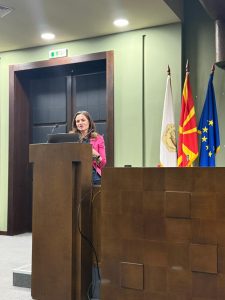
TAIEX Multi-country Workshop on PH policies on Migration and Health, March 2015, Tirana (photo credit: SECIDS)