As the war in Ukraine entered the second year, the EuroHealthNet Partnership and SEEHN, the South Eastern Europe Health Network, express their concern about its pro-longing and lasting impact on mental health of Ukrainian refugees. Peace and security are among the most fundamental determinants of health and wellbeing. The longer the conflict, the greater the impact on mental health. The people of Ukraine continue to struggle, whilst their communities are being destroyed and many face challenges accessing essential services and goods, like medical and public health services, notably mental health support.
While in the early days of the war, a major focus was on providing acute and emergency care to the Ukrainian refugees, the response since has been shifting to addressing medium- and long-term resilience and recovery assistance. There is a need to address the increase in stress-induced addictions (alcohol, tobacco, drugs, poor quality diets), which are paired with the rising cost of living crisis and increased risk of gender-based violence. The prolonged, heightened levels of stress and anxiety that children and adolescents are facing will affect them across their lifetime and impact generations to come.
” Findings from a Multi-Sector Needs Assessment in Moldova, conducted by several national and international stakeholders[1], showed that health was one of the identified primary needs of Ukrainian refugees. Those living in private or refugee accommodation centres reported higher psychosocial support needs than those refugees hosted by Moldovan families.” said Dr Svetlana Nicolaescu, Secretary of State, Ministry of Health Moldova
“Many veterans in Bosnia and Herzegovina still have post-war traumas, even over 20 years after the war ended. They need support and opportunities to re-integrate in work, as research has shown material insecurity is a huge risk factor for the continuation of trauma. Children, as witnesses of war events, are another vulnerable group who need preventative psychological support and timely access to trauma-focused psychotherapy.” said Dr Biljana Lakic, psychiatrist, psychotherapist, SEEHN nominated Focal Point on behalf of the Ministry of Health and Civil Affairs, Republic of Srpska, Bosnia and Herzegovina
“In Slovenia we plan to invite psychologists from Ukraine to act as mental health mediators. They will work alongside Slovenian professionals and provide psychological support to those in need. Generally, mental health services have been strengthened as part of primary health care centres in the community”. said Dr Evita Leskovsek, Public Health Specialist, the Centre for the Development and Study of Health at the National Public Health Institute in Slovenia.
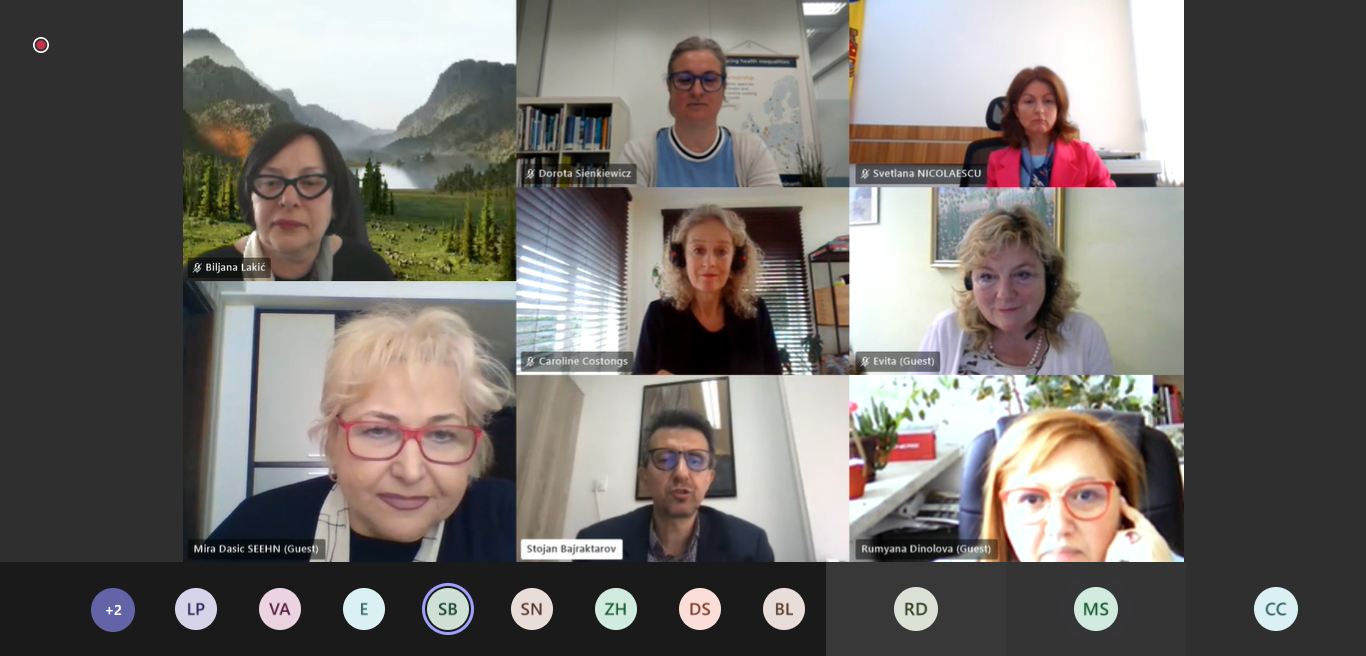
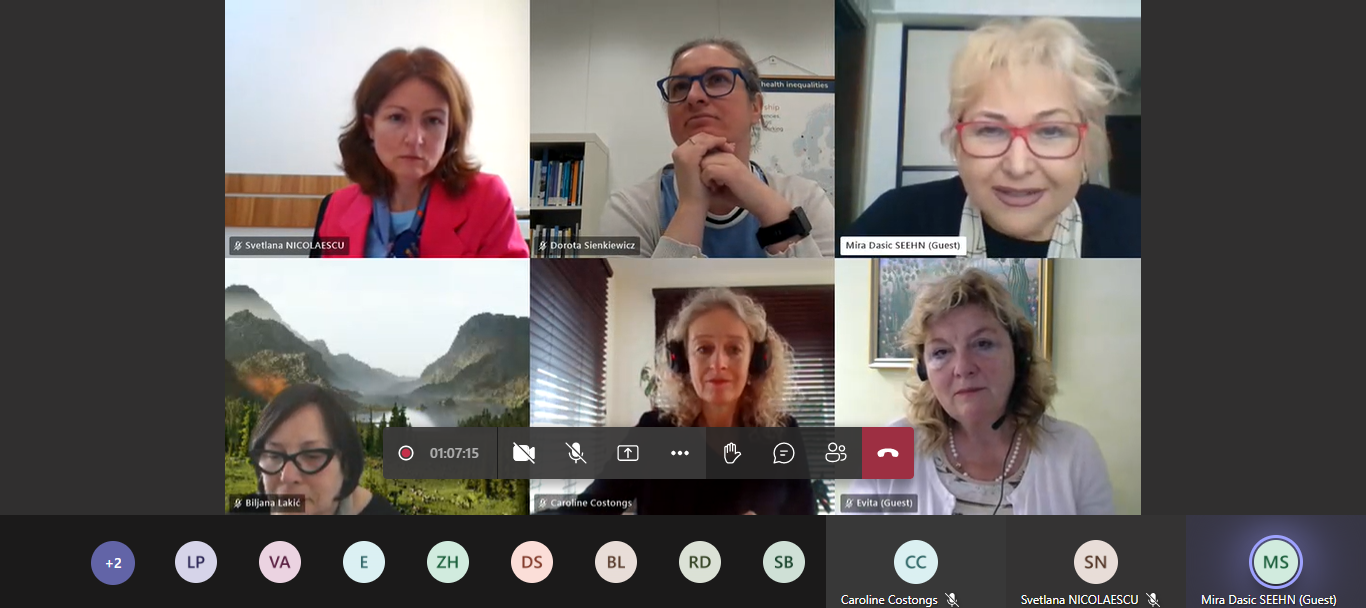
Speaking at a Roundtable organised by EuroHealthNet and SEEHN, representatives of neighbouring countries* of Ukraine and hosting refugees, collectively highlighted the added value of:
- Sharing and applying collective knowledge, continuing improving skills and capacities on how to work in multi-disciplinary ways to improve resilience and mental health across sectors
- Investing in children and adolescents’ mental health and psychosocial well-being, also to prevent a prolonged and intergenerational transmission of trauma as the war continues
- Providing support to daily living and working conditions of carers, including their own mental health, and including training for non-professionals and volunteers, valuing community-based support
- Encouraging social inclusion, employment, sense of belonging and connections, material security, and inclusive education and care for those most in need.
Public health agencies across Europe, particularly from Ukraine’s neighbouring countries, remain committed to joint efforts to ensure positive mental health and psychosocial well-being for the over 8 million Ukrainians displaced by the war.
EU support, as well as international organisations and Partnerships like EuroHealthNet and SEEHN are valuable to help exchange good practices and strengthen capacities to support mental health where needed. The upcoming EU initiative on mental health, which the European Commission is expected to present in June this year, should also include dedicated support to addressing mental health needs of the Ukrainian refugees.
* The neighbouring countries that participated in the Roundtable are Bosnia and Herzegovina, Bulgaria, Hungary, North Macedonia, Moldova, and Slovenia.
[1] REACH Initiative (REACH), in partnership with UNICEF, ECHO, UNHCR, and in cooperation with the Refugee Coordination Forum, the sectoral working groups and taskforces.
ENDNOTES & RESOURCES:
Joint Statement – EuroHealthNet and South Eastern Europe Health Network call for integrated, coordinated and forward-looking action on recovery-oriented mental health of Ukrainian refugees