At the special event at the margins of the CEI Summit dedicated to the endorsement of WHO“Roadmap for Health and Well-being in the Western Balkans (2021-2025)”Prime Ministers commit to facilitating health reform initiatives to accelerate closing sub region’s health gap with EU & attaining SDGs.
nnnn
n
nn
nnnn
nn
n
nnnn
ENDORSEMENT REMARKS
nnnn
Western Balkans AND PARTNERS’ STATEMENTS OF ENDORSEMENT
nnnn
3 December 2021, Budva (Montenegro)
nnnn
Message from the director of the SEEHN Secretariat Dr Mira Jovanovski Dasic at the CEI Special Event on endorsement of WHO Roadmap for the WB:
nnnn
Your Excellency Mr Krivokapić, [Prime Minister of the Government of Montenegro]
nnnn
Dear Dr. Kluge, WHO Regional Director, [Regional Office for Europe]
nnnn
Dear Mr Antonione, [CEI Secretary General]
nnnn
Your Excellences, Ladies and gentlemen
nnnn
I feel honored today to address such a distinguished audience on behalf of the South Eastern-Europe Health Network.
nnnn
In our jubilee year, when we celebrate 20 years of partnership action of the South-eastern Health Network, we welcome our gathering as a true expression of solidarity and unity as the only possible way forward to support our Western Balkans Member States in the current context of COVID-19: Together – in partnership for health and wellbeing.
nnnn
We welcome the Roadmap for Health in Western Balkans as a robust and evidence-based pathway for our future joint and individual investments, policy, and action, where health is in the center of the economy of wellbeing.
nnnn
Thus, we praise our Western Balkans Member States for endorsing the Roadmap. The Joint Statement of Action demonstrates a tangible expression of multilateralism and strong unity in action for closing the health gaps between the Member States in our Region.
nnnn
We commit to fully support the implementation of the Roadmap as an active and strong partner in attaining the three strong and interlinked Roadmap’s objectives:
nnnn
• Health is our crucial mandate, and we will continue working and advocating to position health high in our Region’s political and developmental agendas, most notably through our Ministerial Forums and Pledges. As we are approaching our 6th Ministerial Forum in 2022, we will base our priorities and actions for our Region on the Roadmap, and will further build synergies and cooperation with partners and advocate to increase and better focus investments because of boosting the Roadmap’s implementation
nnnn
• Through our Regional Health Development Centers of excellence, we will continue working with the WHO Regional Office for Europe, European Union, Central European Initiative, RCC, and other bilateral partners and donors to increase outreach and support to our Member States in implementing the Roadmap reform initiatives in the key areas of action.
nnnn
Your excellences, the SEEHN has been created based on solidarity and unity with a strong mandate for peace and stability through health as a neutral interface of action among many stakeholders.
nnnn
Throughout the past 20 years, the South-Eastern Europe Health Network has offered an excellent platform for collective and harmonized action for health in our Region through our well-developed governance mechanisms. Today, with no less eagerness, we stand ready to join efforts to contribute and implement this ambitious but realistic Roadmap in the ultimate interest of our people’s wellbeing and closing the health gap in our Region.
As the pandemic is still unfolding globally and at a time when a fourth and a potential fifth wave is still keeping Europe under enormous pressure, it is too early to assess the full impact of this health emergency.
However to date, the COVID-19 has severely disrupted NCDs prevention and treatment services in many countries which is likely to lead, according to the WHO, to a long-term upsurge in deaths from NCDs.
Immediate action is essential to reverse these trends, and optimizing the skills mix of nurses and midwives can support health systems’ efforts to tackle with the growing burden of the disease.
On November 25 and 26, the South Eastern European Health Network, in cooperation with the European Commission’s Technical Assistance and Information Exchange Tool (TAIEX), organized a multi-country Workshop on Coping with Non-Communicable Diseases (NCDs) in the Nursing and Midwifery Workforce in SEEHN Member States (Western Balkan and beyond).
As Dr. Mira Dasic, Director of the SEEHN Secretariat, mentioned in her introductury remarks, nurses and midwives playa key role in the successful delivery of health- and social-care services. As the health needs of the Region change (demographic challenges, morbidity profile, migration), nurses are becoming an increasingly important part of the response. Nurses and midwives work at all levels of health systems and across diverse settings and contexts they deliver quality care and their role is critical to achieve universal health coverage and to make it a reality for every citizen.
The two-day event aimed to strengthen and modernize the workforce capacities in nursing and midwifery and to provide support and management of the NCDs at the community level. The workshop provided insight into best practices from EU Member States, reflecting on the possibilities of extending or implementing competency-based models for nurses in the SEE region, as well as enabling and applying EU Recommendations and EU standards in addressing NCDs. This multi-country event also explored the digital possibilities of being integrated and thus strengthening the resilience of the health workforce. The workshop was organised in co-operation with Ministry of Health of the Republic of Moldova and SEEHN Regional Health Development Center on Human Resources for Health hosted by the Republic of Moldova.
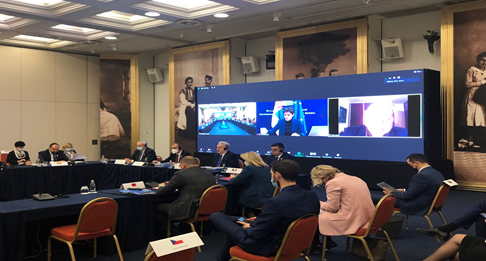
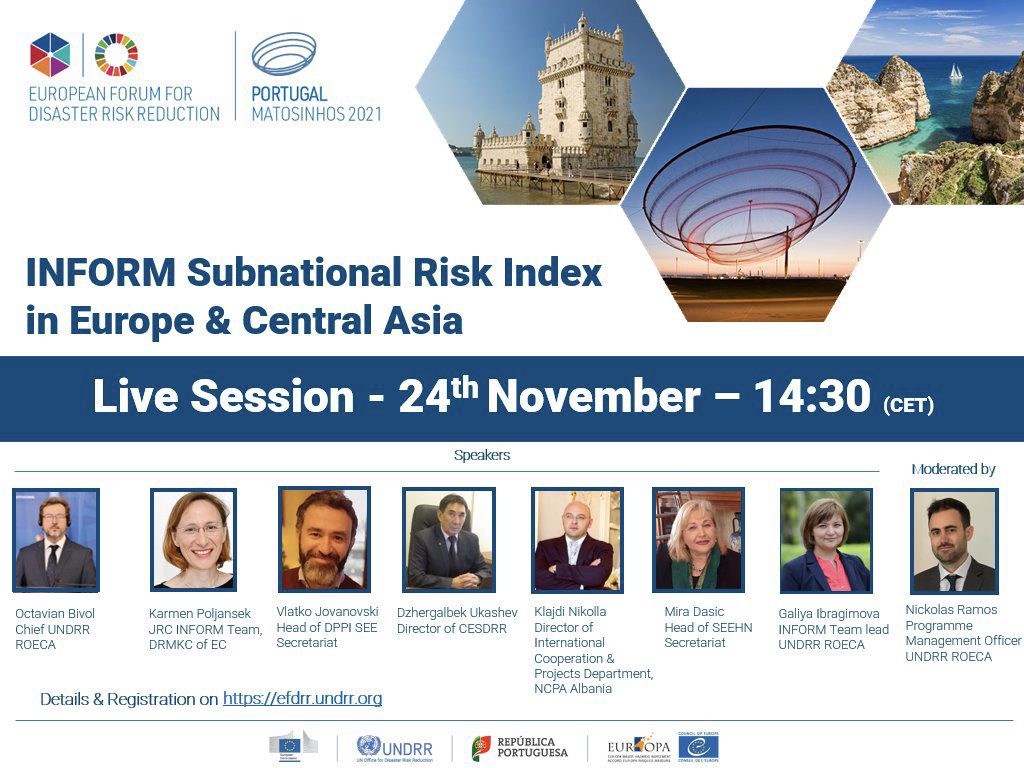
It is my pleasure to address you, on behalf of the SEEHN Secretariat, at the European Forum for Disaster Risk Reduction. I wish to congratulate the organizers for providing us with this platform for discussions.
nnnn
When approached by the Disaster Preparedness and Prevention Initiative for South-Eastern Europe to contribute and implement the project on the global INFORM risk index in Member States of bilateral mandate, SEEHN Secretariat took great interest. The countries that participated in the pilot assessment are Albania, Montenegro and North Macedonia.
nnnn
SEEHN Secretariat, in particular, supported the data collection of health related indicators as part of the subnational INFORM risk index for the above mentioned countries. The process started in January 2021 and we had ensured commitment from the respective ministries of health.
nnnn
Using the subnational INFORM model for South East Europe, data has been gathered at the first administrative level (corresponding to the subnational regions, capitals and municipalities) of Albania, Montenegro and North Macedonia, in total for 44 administrative units.
nnnn
The INFORM model is based on three dimensions of risk: Hazards & Exposure, Vulnerability and Lack of Coping Capacity – to provide an overview of the underlying factors leading to humanitarian risk. Thus, the results are of particular importance to health actors reflecting on the preparedness of the national systems.
nnnn
From the other side, the COVID-19 pandemic reminded us of how important is the preparedness and resilience. These two areas are largely discussed during the last two years especially on how we can improve them and be prepared to an eventual new threat.
nnnn
At this very point, I believe that the sub-national and the regional cross-countries collaboration, and coordination between international actors shall trail a comprehensive and timely preparedness and response action to emergencies.
nnnn
In this respect, the first step would be to share the results and raise awareness on the current situation, with the government stakeholders. This can be done in various ways, during the bilateral meetings, in the framework of the SEEHN Plenary meetings and by using the next year platform of the ministerial Forum.
nnnn
We shall back our communication efforts with solutions by providing capacity building to the countries, or even dive and select the riskier regions – enhance capacities and ensure transfer of knowledge and practices from the better off to the less safe regions.
nnnn
At the same time, our efforts could be channelled to streamline fundraising to this priority and support all the activities proposed earlier.
nnnn
The INFORM index supports a proactive disaster risk management framework. It will be helpful for an objective allocation of resources for disaster risk reduction and management as well as for coordinated actions focused on anticipating, mitigating, and preparing for humanitarian emergencies. It also identifies areas for improvement in national disaster data availability and compliance with implementation of Sendai Framework for Disaster Risk Reduction, SDGs and other global initiatives.
nnnn
In conclusion, I wish to remind ourselves how the COVID-19 pandemic just brought preparedness to disasters back into the top priority line. We shall use the created momentum to build upon it. Despite all the challenges that we have, we keep our work centred to better serve SEEHN Member States.
nnnn
Finally, I wish to emphasize the importance of the topic and to highlight the particular fruitful cooperation of the SEEHN with all parties involved: the Secretariat of Disaster Preparedness and Prevention Initiative for South-Eastern Europe and the United Nations Office for Disaster Risk Reduction and the Governments of the SEEHN Member States involved.
nnnn
I express my thanks on this occasion and encourage this practice to continue in the future to strengthen the regional cooperation within South Eastern Europe.