Session 3: Relevance of various air pollution sources in driving health impacts.
nnnn
nnnn
Press Release
nnnn
On June 8-9, the South-Eastern Europe Health Network participated at the virtual workshop on Air Pollution and Health in Southeast Europe.This event was organized by the Health Effects Institute (HEI), in cooperation with the International Society for Environmental Epidemiology (ISEE), and the European Respiratory Society (ERS), the Medical University of Plovdiv, Bulgaria, and environmental health institutions in Serbia.
nnnn
The goal of the workshop was to review the status of current evidence on the health effects of air pollution in the Southeast European region and its interlinkage to current policy debate and actions.
nnnn
As fine particulate matter (PM2.5) levels in Southeast Europe have remained higher than those in Western Europe for decades, public and governmental interest in the topic increases, and the demand for data and evidence on air pollution levels and trends, as well as health effects, is growing.
nnnn
The workshop is part of the larger HEI project in Southeast Europe funded by the Clean Air Fund.
nnnn
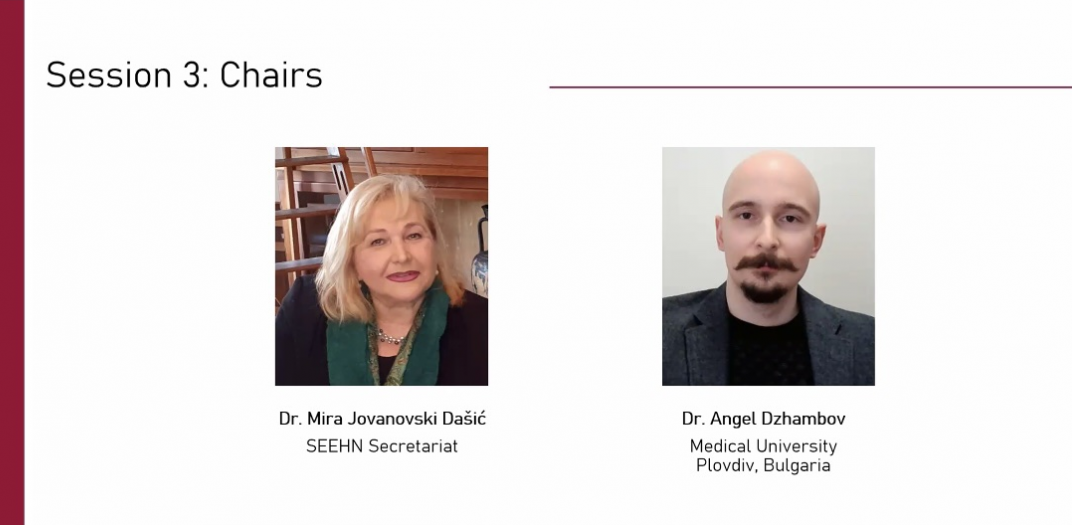
The director of the SEEHN Secretariat co-chaired the third session with Dr Angel Dzambov. The session 3 focused on the Relevance of various air pollution sources in driving health impacts.
nnnn
In her welcoming address, Dr. Dasic showcased the devastating effects of air pollution. She stated that PM2 can lead to a wide range of diseases (e.g. Cardiovascular diseases and reduced lung function, respiratory infections, aggravated asthma etc). The World Health Organization provides evidence of links between exposure to air pollution and type 2 diabetes, obesity, systemic inflammation, Alzheimer’s disease, and dementia. The International Agency for Research on Cancer has classified air pollution, in particular PM2.5, as a leading cause of cancer. A recent global review found that chronic exposure can affect every organ in the body, complicating and exacerbating existing health conditions. Over 400,000 premature deaths (in 2018) are accounted for air pollution in Europe only.
nnnn
The SEEHN director also emphasized the need to join forces to concentrate the efforts across countries, regions, and continents to improve the air quality across the globe.
nnnn
Dr. Branislava I. Matić, Institute of Public Health of Serbia and Dr. Dima Tsanova, Medical University – Pleven, Bulgaria addressed the different sources that contribute to population exposure to key air pollutants in the region. Dr. Hanna Boogaard, HEI, ISEE-Europe underlined the benefits of air pollution interventions.In the concluding remarks of the sessions, Dr. Dasic highlighted that air pollution is a major cause of premature death and disease, and is the single largest environmental health risk in Europe and that we need to join forces to accelerate equitable and sustainable interventions.
You can find below the address delivered by the Director of the SEEHN Secretariat during the panel discussion on “Building countries areas and partners synergies in support to the key priority initiatives and actions”
nnnn
Dear Regional Director, Excellences, Ladies and Gentlemen,
nnnn
It is my immense pleasure to participate at this highly important meeting on behalf of the South Eastern-Europe Health Network Secretariat.
nnnn
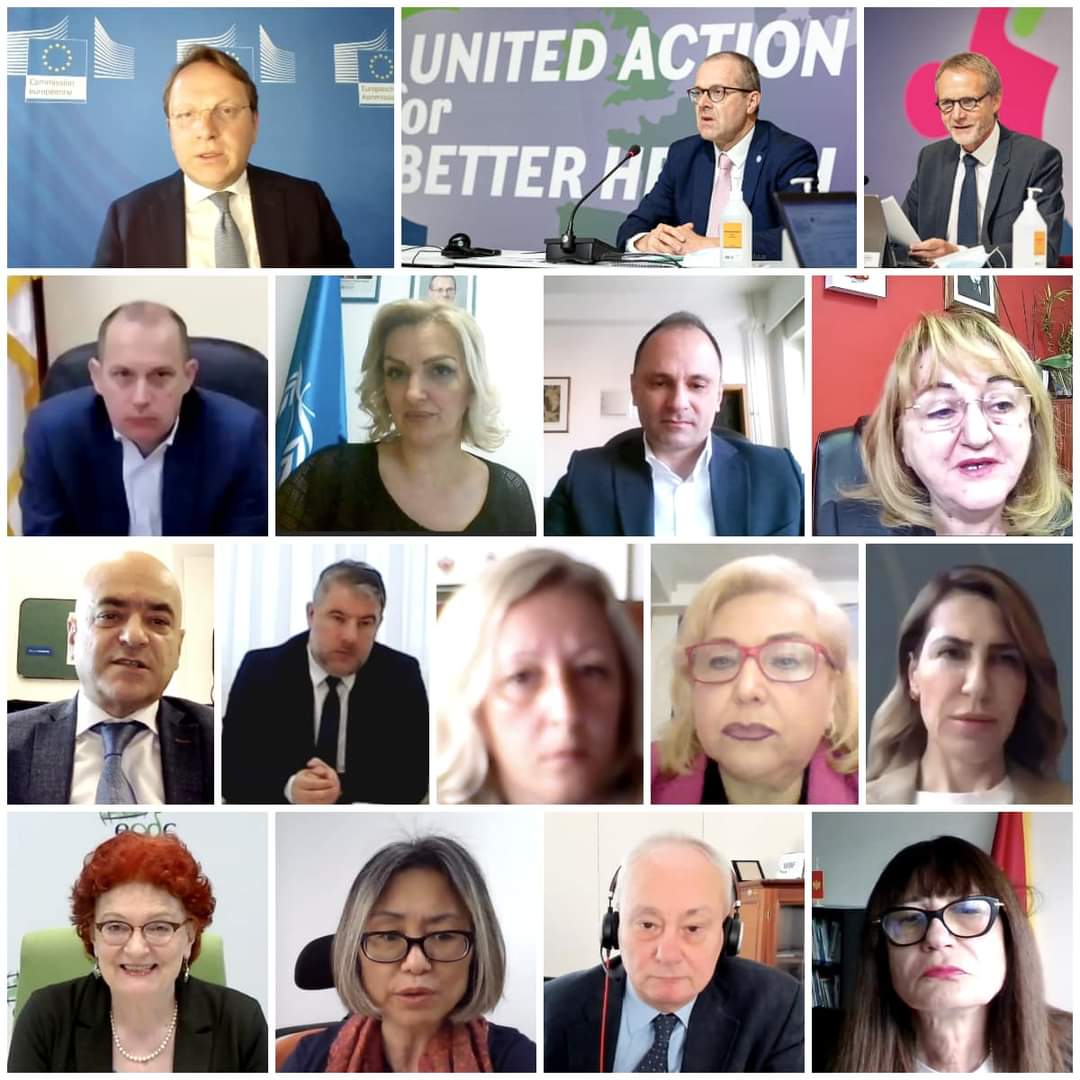
Dear Dr. Kluge, we wish to commend you for your strong leadership for health throughout the European Region and to thank you for hosting this valuable multi country and multi partner dialogue. It is the right moment to gather and openly discuss the critical priorities and synergies for the Western Balkans health and for closing the health gap with the EU.
nnnn
The South Eastern Europe Health Network is the oldest health alliance in the SEE: this year, we celebrate 20 years of collaborative efforts for better health in the SEE, including our Western Balkans Member States. Past 20 years have demonstrated our strong and steady dedication to support our countries and communities to improve health and wellbeing.
nnnn
We are fully supportive to the WHO European Roadmap for Health in the Western Balkans: the time is right to join forces of countries and partners to put health high in and beyond the current pandemic, to invest more and where most needed. SEEHN stands ready to support it through its own efforts, and jointly with partners.
nnnn
Next year we plan for the Ministerial Forum, and where the outcome Ministerial Pledge, would for sure do justice to the Roadmap, as we have today witnessed the statements of the Ministers of Health of our Member States: it will present a strong contribution to achieving the objectives of the Roadmap.
nnnn
Our current activities in the areas of sexual and reproductive health, colorectal cancer screening, childhood malnutrition and obesity, healthy lifestyles health literacy, strengthening health systems to respond to the air pollution challenges, and others, will continue contributing to the same goal. Our efforts related to health of the healthcare workers, mental health and other activities in the pandemic will continue beyond it and support planning for full recovery and improving health beyond the pandemics.
nnnn
The Roadmap represents a sub-regional strategy that strongly orients us to invest into the areas and projects that matter and will have impact, based on the vast evidence that you have presented in the paper. It will help our efforts for resetting our health agenda.
nnnn
Reconstruction, however, can remain intangible unless leaders are able to think creatively and beyond their immediate organizational roles. I would like to command the leadership and the commitment of both our Western Balkans Member States and the WHO Regional Office for Europe for the joint action to accelerate an equitable and sustainable recovery and closing the health gap.
nnnn
We see the WHO European Roadmap for the Western Balkans 2021-2025 as a critical guidance towards devising stronger health systems resilient to future pandemics.
nnnn
We are convinced that this strategic guidance will accelerate the implementation of the European Program of Work and will create an interplay of countries and partners for better health outcomes.
nnnn
With such a vision comes even greater responsibility and more expectations. Let me assure you that the South Eastern Europe Health Network remains a strong partner to implement the Roadmap objectives. It provides us a much-needed devise to plan our action in coherence and unity necessary to achieve its goals.
nnnn
Dear colleagues,
nnnn
Solidarity, unity, and social cohesion are at the very core of the SEEHN and present its foundation. We are looking forward to joining energies and through partnerships to contribute and implement this ambitious Roadmap to the best of our abilities and in the ultimate interest of our people’s well-being and closing the health gap with EU.