World Health Day, 7 April  2019

World Health Day, 7 April 2019

Key messagesn

    n

  • Health is a human right; it’s time for health for all.
  • n

  • We know universal health coverage is possible, let’s make it happen!
  • n

  • Universal health coverage means that all people have access to the quality health services they need, when and where they need them, without financial hardship.
  • n

  • At least half of the people in the world do not receive the health services they need.
  • n

  • About 100 million people are pushed into extreme poverty each year because of out-of-pocket spending on health.
  • n

  • But who are these people and how can we help them? To get a better picture of who is missing out, we need data that is broken down by gender, age, income, location, education and other factors that affect access to health services.
  • n

  • Health is a human right; everyone should have the information and services they need to take care of their own health and the health of their families.
  • n

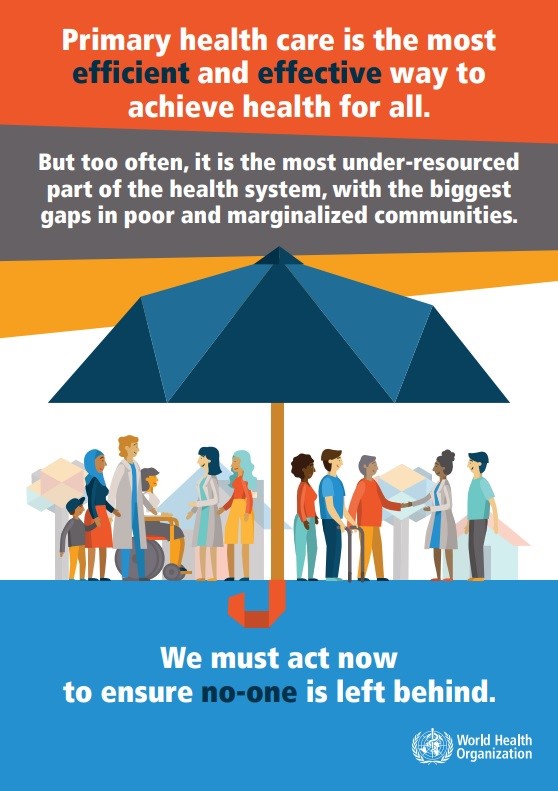
  • Quality, accessible primary health care is the foundation for universal health coverage.
  • n

  • Unsafe and low-quality health care ruins lives and costs the world trillions of dollars every year, we must do more to improve the quality and safety of health services globally.
  • n

  • Primary health care should be the first level of contact with the health system, where individuals, families and communities receive most of their health care—from promotion and prevention to treatment, rehabilitation and palliative care—as close as possible to where they live and work.
  • n

  • At its heart, primary health care is about caring for people and helping them improve their health or maintain their well-being, rather than just treating a single disease or condition.
  • n

  • Primary health care covers the majority of your health needs throughout your life including services such as screening for health problems, vaccines, information on how to prevent disease, family planning, treatment for long- and short-term conditions, coordination with other levels of care, and rehabilitation.
  • n

  • Primary health care is a cost-effective and equitable way of delivering health services and helping countries make progress towards universal health coverage.
  • n

  • A health system with strong primary health care delivers better health outcomes, is cost-efficient and improves quality of care.
  • n

  • Health workers have a crucial role to play educating patients on how to take care of their health, coordinating care and advocating for their patients’ needs to health facility managers and policy-makers.
  • n

  • Primary health-care workers have a continuing and trusted relationship with their patients and know their health history; knowing the full picture helps improve their care and saves money.
  • n

  • Primary health-care workers know the traditions, cultures and practices of their communities, making them indispensable during an outbreak or emergency.
  • n

  • To make health for all a reality, we need: individuals and communities who have access to high quality health services so that they take care of their own health and the health of their families; skilled health workers providing quality, people-centred care; and policy-makers committed to investing in primary health care.
  • n

SEEHN and WHO Regional Office for Europe – joint efforts for securing access to affordable vaccines

SEEHN and WHO Regional Office for Europe – joint efforts for securing access to affordable vaccines

 n

Workshop on mapping out opportunities to improve access to affordable vaccine supply in the Member States of the South-eastern Europe Health Network (SEEHN) was held in Tirana, Republic of Albania from 27 February to 01 March 2019, organized by WHO RO for Europe, Vaccine-preventable Diseases and Immunization Programme, Division of Health Emergencies and Communicable Diseases.

n

This Workshop served as a wide platform for experts involved in national immunization programmes of SEEHN member states, as well as for experts in procurement, market access and market intelligence from WHO, UNICEF and CHAI. They presented, shared experiences and discussed the changing vaccine market, vaccine supply shortages and unaffordable vaccine pricing as well as the complex issues countires are facing with. Participants, also had the unique possibility through meaningful discussions and participatory approach to better understand and utilize the available the vaccine market information and to identify options for improving in-country and cross-border cooperation by defining strategic approaches for securing access to affordable vaccines.

n

The Workshop was well-received and highly praised by all participants who committed themselves to continue the discussion within their countries, to fill-in the distributed questionnaire as well as to complete the action plan for the steps forward to be taken at national and regional level.

n

Correspondingly, participants agreed to inform on additional more focused support needed at national level in order to continue working on this complex issue.

n

SEEHN member states have experienced difficulties in recent years in securing uninterrupted access to vaccines as well as to getting affordable vaccine prices. The meeting was organized as follow up on the Statement of Intent to commit to immunization as a priority, signed in February 2018 in Podgorica by Ministers of Health of all SEEHN member states plus Slovenia and Croatia as partner countries.

nn[ngg src=”galleries” ids=”1″ display=”basic_thumbnail” images_per_page=”31″]

SEEHN participated at the SEE Regional Policy Dialogue: Towards Improved Structural Reforms and Fiscal Frameworks “Structural Reforms and Securing Budget for Their Implementation is Key for Building Competitive Market Economies”

SEEHN participated at the SEE Regional Policy Dialogue: Towards Improved Structural Reforms and Fiscal Frameworks “Structural Reforms and Securing Budget for Their Implementation is Key for Building Competitive Market Economies”

nn

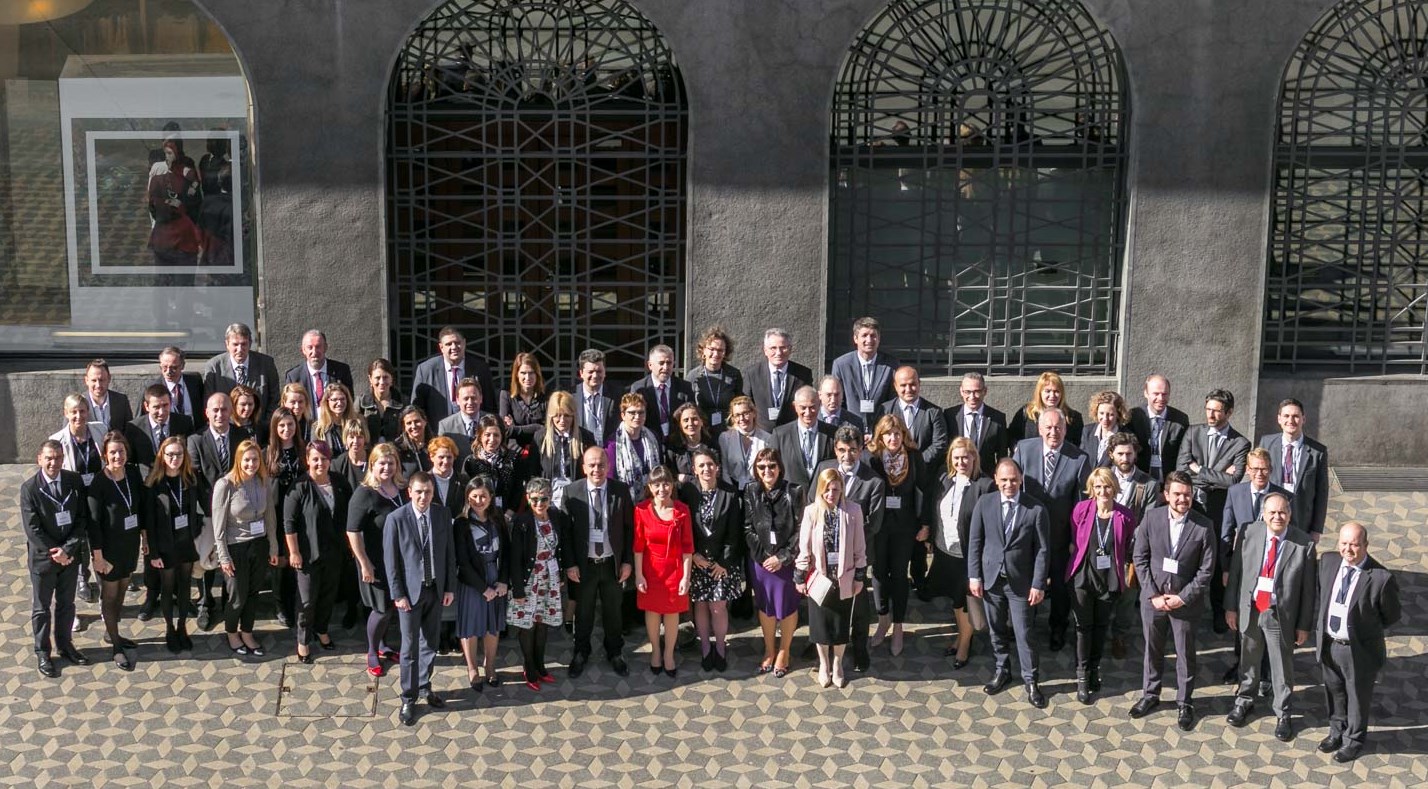
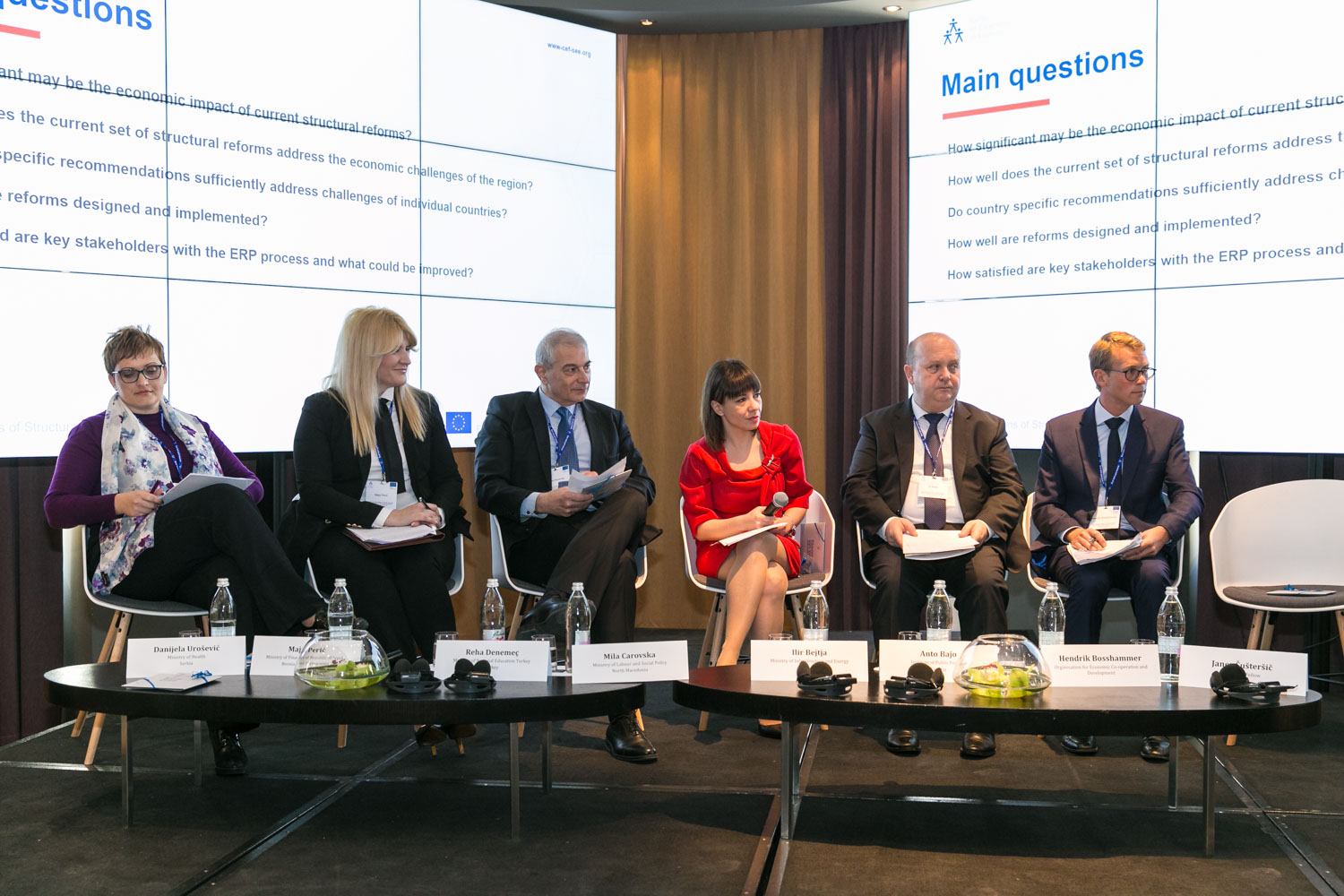
Dr. Danijela Urosevic, Assistant Minister of Health of the Republic of Serbia and Chair of the SEEHN Executive Committee, participated to the SEE Regional Policy Dialogue: Towards Improved Structural Reforms and Fiscal Frameworks held in Ljubljana, 26-27 February 2019.

n

This SEE regional policy dialogue was a kick-off to the three-year project Strengthening Line Ministries’ Capacities to Asses Fiscal Implications of Structural Reforms (FISR project) funded by the European Union and implemented by the Center of Excellence in Finance(CEF).

n

The meeting brought together versatile interest groups that discussed structural reforms and their improved integration into fiscal frameworks of the countries. The discussion was facilitated through the prism of increased competitiveness and growth of the region and enhanced EU enlargement.

n

On their path to the EU, the economies of the Western Balkans and Turkey need to become sufficiently vital to withstand the competitive pressures of the EU single market.

n

Key policy instruments in this process are the Economic Reform Programmes (ERP), inclusive of structural reforms, designed to boost growth and competitiveness while ensuring fiscal discipline and sustainability.

n

The project will promote greater fiscal policy coordination especially between finance and line ministries and support exchange of good practices across the countries of Western Balkan and Turkey.

nnn