SEEHN Member States Convene in Podgorica for a Technical Meeting on Strengthening NCD Surveillance

SEEHN Member States Convene in Podgorica for a Technical Meeting on Strengthening NCD Surveillance

Podgorica, Montenegro—On 25 and 26 March 2025, SEEHN organized a technical meeting in Podgorica on NCD Population-Based Surveys in the South-Eastern Europe Health Network (SEEHN) Member States.

Hosted by the Institute of Public Health of Montenegro, the initiative reinforced the region’s dedication to enhancing non-communicable disease (NCD) surveillance and fostering data-driven public health policies. The event provided a platform for collaboration and knowledge exchange with representatives from SEEHN Member States, public health experts, and key international partners—including the WHO Regional Office for Europe.

 Among the distinguished speakers and moderators were:

  • Dr. Snežana Barjaktarević Labović, Acting Director, Institute of Public Health of Montenegro
  • Dr. Tatiana Paduraru, Acting Director, SEEHN Secretariat
  • Dr. Ivana Zivkovic, General Director, Directorate for Public Health, Ministry of Health, Montenegro
  • Dr. Ivo Rakovac, Regional Adviser on NCD Surveillance, WHO Regional Office for Europe
  • Experts from various SEEHN Member States presenting country-specific experiences

Over two days, participants engaged in plenary discussions, roundtable sessions, and country presentations, covering critical topics such as:

  • Best practices and challenges in conducting NCD population-based surveys
  • Financial and sustainability models for long-term NCD surveillance
  • Using survey data for policy development and health system transformation
  • Strengthening regional collaboration and aligning with WHO standards

The meeting fostered a dynamic dialogue to address NCD data collection, standardization, sustainability, and policy utilization challenges.

By sharing insights and experiences, participants explored opportunities to create a more effective and harmonized approach to NCD surveillance across the region. The meeting also outlined several key outcomes, including developing actionable recommendations for sustainable NCD data collection and the need to support SEEHN Member States in aligning with WHO guidelines to close the gap with other European countries.

The conclusions drawn from this meeting will serve as a roadmap for SEEHN Member States, guiding them toward more robust NCD data systems and evidence-based policy approaches. With continued collaboration, these efforts are expected to enhance public health strategies and outcomes in the region significantly.

SEEHN Highlights Regional Cooperation and Data Advancements at WHO Europe Workshop on Health Workforce

SEEHN Highlights Regional Cooperation and Data Advancements at WHO Europe Workshop on Health Workforce

The South Eastern Europe Health Network (SEEHN) took part in the regional online workshop “Unlocking the Power of Data and Human Resources for Health Information Systems to Support Health and Care Workforce Development in the WHO European Region”, held on March 25, 2025.

Convened by WHO Europe, the high-level event focused on strengthening the quality and use of health workforce data across the region.

Representing SEEHN, Roxana Hainagiu, Chief Executive Officer of the SEEHN Regional Health Development Centre (RHDC) on Nursing and Midwifery, contributed as a speaker in the session “National Health Workforce Accounts: Data Collection and Reporting.”

Moderated by Maggie Langins, Policy Advisor for Nursing and Midwifery at WHO Europe, the session convened national experts to explore progress and challenges in health workforce data coordination and reporting.

The session opened with a joint presentation by Alba Llop-Girones, Technical Officer for Nursing and Midwifery and Health Workforce Data and Evidence Technical Lead at WHO/Europe, and Mathieu Boniol, Statistician at WHO Headquarters. They outlined the structure and current status of the WHO Europe/Eurostat/OECD Joint Data Collections, emphasizing their alignment with National Health Workforce Accounts (NHWA), and shared global trends, challenges, and emerging solutions in workforce data management.

Following this, Sue Tranka, Chief Nursing Officer for the Welsh Government, UK, offered an in-depth overview of nursing data availability in the UK, highlighting efforts in disaggregated data collection. Christelle Durand, Statistical Analyst at the Federal Public Service of Public Health in Belgium, shared insights on Belgium’s implementation of a mandatory registry for regulated healthcare professionals. Her presentation underscored how legislative changes and system integration are enhancing real-time health workforce intelligence.

Ms. Hainagiu presented key outcomes from the SEEHN sub-regional workshop—supported by WHO—focused on strengthening NHWA reporting and improving data quality in preparation hosted by the SEEHN RHDC on Nursing and Midwifery in August 2024 in Bucharest.

She highlighted the strategic role of the SEEHN RHDC on Nursing and Midwifery in fostering knowledge exchange, building capacity, and improving regional data quality. By sharing challenges, lessons learned, and good practices from member countries, the RHDC showcased how regional hubs can consolidate scattered information, align with global reporting frameworks, and support effective workforce planning—especially in nursing and midwifery.

The findings of the August 2024 Bucharest workshop identified persistent challenges across the region, including inconsistent indicator frameworks, lack of standardized definitions, limited digital infrastructure, and weak coordination among ministries, professional bodies, and academic institutions. Many countries continue to face difficulties in maintaining complete registries of nursing and midwifery professionals. During the discussions, participants emphasized the need for increased investment in digital transformation and capacity building to enhance data quality and enable evidence-based decision-making.

The WHO impact report of the workshop reported tangible progress on data collection. With WHO support, countries in the region achieved a 26% increase in submitted nursing workforce data within four months of the workshop, including 37 previously unreported indicators. These improvements spanned key areas such as workforce stock, distribution, education, and financing.

Ms. Hainagiu reaffirmed the role of the SEEHN RHDC as a driver of collaboration and regional capacity building, helping countries close data gaps and elevate nursing and midwifery leadership. Ms. Hainagiu also highlighted the added value of structured regional collaboration, particularly in advancing governance, aligning legislation, and accelerating digital transformation.

The workshop marked a significant milestone in the implementation of the EUR/RC73/8 Framework for Action. It provided a vital platform for countries to enhance their Human Resources for Health Information Systems (HRHIS), engage in peer learning, and synchronize efforts with global data collection initiatives led by WHO, OECD, and Eurostat. SEEHN remains committed to leveraging the RHDC on Nursing and Midwifery to enhance regional visibility, foster policy dialogue, and ensure that robust data and evidence drive sustainable health workforce development for resilient health systems.

SEEHN and IPH Montenegro Discuss Regional Action to Reduce NCD Burden and Strengthen Cancer Screening Efforts

SEEHN and IPH Montenegro Discuss Regional Action to Reduce NCD Burden and Strengthen Cancer Screening Efforts

Podgorica, Montenegro – 25 March 2025

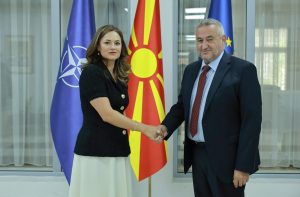
The Acting Director of the South-Eastern Europe Health Network (SEEHN) Secretariat, Dr. Tatiana Paduraru, met with the Director of the Institute of Public Health of Montenegro (IPH Montenegro), Dr. Snežana Barjaktarević Labović, to discuss joint efforts in tackling non-communicable diseases (NCDs) and strengthening cancer screening programs across the region.

With NCDs accounting for approximately 95% of overall mortality in the SEE region, both parties underscored the urgent need for coordinated national and regional action. Prevention remains a cornerstone of this effort, as studies show that every dollar invested in prevention yields a sevenfold return within five to seven years. The discussion focused on identifying effective strategies to integrate prevention programs into national health systems while reinforcing regional collaboration.

Another key topic of the meeting was capacity building for Montenegro’s national team on breast and cervical cancer screening programs. The discussion explored ways to enhance expertise and best practice sharing, including a potential study visit to Slovenia, a SEEHN member state with advanced screening protocols. This initiative aims to strengthen Montenegro’s screening strategies and improve early detection and treatment outcomes.

The SEEHN Secretariat and IPH Montenegro reaffirmed their commitment to advancing regional public health priorities and fostering cross-border cooperation to improve health outcomes for all SEE citizens.