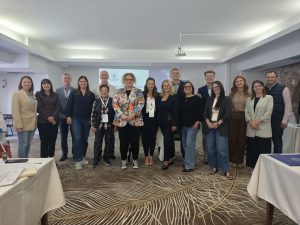
COVID-19 caused major disruption around the globe. Regrettably the most vulnerable are paying the heaviest toll. This year WHO on World Health Day is pleading for a fairer and healthier world for everyone. SEEHN is also striving for universal health coverage, with the aim to improve access to quality, affordable health care and to advocate for equal access to care, everywhere, without experiencing financial hardship. The pandemic proved that no one is safe until everybody is safe. And even more without qualified and healthy staff there is no response. Therefore, SEEHN sees of outmost importance to continue celebrating the Year of the Health Care Workers (HCW) on this World Health Day and to emphasize the importance and crucial role of HCW played in the health systems. HCW are the ones that can ensure better access to the health services, closer to the patient, through better quality and in this way to improve equity and inclusiveness. Currently, during the pandemic nurses undertook an important role to roll-out the vaccination campaigns. SEE Health Network strongly supports the investment in nursing and midwifery as an investment in Health for All and Leaving No One Behind! Nurses from SEEHN member states expressed their VOICE on: What does it mean to be a nurse? SEEHN express deepest gratitude to nurses and midwifes for the efforts to make our world healthier and safer every day!
Dr. Mira Dasic, director of the Secretariat of the South Eastern Europe Health Network addressed the 7th International Public Health Conference which took place in Albania on the 23 March 2021. The event was co-organized by the Albanian Ministry of Health, WHO, UNFPA, and UNICEF.
High-level representatives of the Government and interested stakeholders as well as international partners attended the event that focused on strengthening the culture of prevention and on how to assure universal access to essential services for all the population.
“Integration of Public Health services into Primary Health Care (PHC)” was the first-ever national public health conference dedicated to primary health care in Albania.
It provided a dialogue platform for professionals and academia to share experiences and to discuss policy, practice, and research, priority challenges to, and lessons learned in developing primary health. It also aimed at sharing best practices on innovative models of services to be developed, and efficient mechanisms for better and more evidence-based policies and practices within the field.
Dr. Mira Dasic attended the parallel session 1 Successful PHC strategies: effective integration of PH functions into PHC with a presentation on SEEHN (Western Balkans and beyond) potential to advocate for better integration of primary health care and public health in the face of COVID-19 pandemic.
The intervention was structured around 3 points: brief introduction on SEEHN, PHC and PH current examples and future possibilities. The SEEHN Director paid tribute to the Declaration of Alma-Ata which is considered to be a strategic milestone in underlying the importance of primary health.
In her remarks, Dr. Dasic encapsulated key messages on the importance of investments in people, partnerships, platforms, and political will. Addressing increasingly complex health needs calls for a multisectoral approach that integrates health-promoting and preventive policies, solutions that are responsive to communities and health services that are people-centered. Strengthening systems at the community and peripheral health facility level contribute to building resilience, which is critical for withstanding shocks to the health system, like the one we are living now.
She underlined to the audience that it is crucial to recommit to strengthening primary health in order to achieve universal health coverage: “leave no one behind” and to secure the health of the whole population.
The SEEHN director stressed the importance of rethinking and reorganizing the system to put the person at the centre: „Through the integration of PHC and PH the existing gap can be closed and move closer to the goal and achieve equitable health for everyone. The PHC as the first point of contact has a crucial role in promoting healthier lifestyles.” PHC professionals should “make every contact count”, which is about making healthy living a priority, Dr. Dasic explained.
The conference was also an opportunity to brief the participants on the regional initiatives SEEHN coordinated starting with the efforts to strengthen PHC in the Network`s Member States back in 2018 and culminating with the recent project; “Strengthening capacities of nurses – front line healthcare workers during the COVID-19 response – Strong nurses for strong health systems and a healthier world” funded by CEI.
The presentation also offered a short glance at the prospects of another SEEHN initiative to be soon implemented with the support of the TAIEX mechanism and hosted by the RHDC on Human Resources for Health hosted by the Republic of Moldova to tackle the PHC skill-mix of nurses and their ability to provide advice on NCDs management.
The SEEHN Secretariat avail itself of this opportunity to welcome the endeavors of Albania to recommit to strengthening primary health care and extend its appreciation for the warm welcoming and the excellent organization of the event.
Dr. Mira Dasic, director of the Secretariat of the South Eastern Europe Health Network addressed the 7th International Public Health Conference which took place in Albania on the 23 March 2021. The event was co-organized by the Albanian Ministry of Health, WHO, UNFPA, and UNICEF.
High-level representatives of the Government and interested stakeholders as well as international partners attended the event that focused on strengthening the culture of prevention and on how to assure universal access to essential services for all the population.
“Integration of Public Health services into Primary Health Care (PHC)” was the first-ever national public health conference dedicated to primary health care in Albania.
It provided a dialogue platform for professionals and academia to share experiences and to discuss policy, practice, and research, priority challenges to, and lessons learned in developing primary health. It also aimed at sharing best practices on innovative models of services to be developed, and efficient mechanisms for better and more evidence-based policies and practices within the field.
Dr. Mira Dasic attended the parallel session 1 Successful PHC strategies: effective integration of PH functions into PHC with a presentation on SEEHN (Western Balkans and beyond) potential to advocate for better integration of primary health care and public health in the face of COVID-19 pandemic.
The intervention was structured around 3 points: brief introduction on SEEHN, PHC and PH current examples and future possibilities. The SEEHN Director paid tribute to the Declaration of Alma-Ata which is considered to be a strategic milestone in underlying the importance of primary health.
In her remarks, Dr. Dasic encapsulated key messages on the importance of investments in people, partnerships, platforms, and political will. Addressing increasingly complex health needs calls for a multisectoral approach that integrates health-promoting and preventive policies, solutions that are responsive to communities and health services that are people-centered. Strengthening systems at the community and peripheral health facility level contribute to building resilience, which is critical for withstanding shocks to the health system, like the one we are living now.
She underlined to the audience that it is crucial to recommit to strengthening primary health in order to achieve universal health coverage: “leave no one behind” and to secure the health of the whole population.
The SEEHN director stressed the importance of rethinking and reorganizing the system to put the person at the centre: „Through the integration of PHC and PH the existing gap can be closed and move closer to the goal and achieve equitable health for everyone. The PHC as the first point of contact has a crucial role in promoting healthier lifestyles.” PHC professionals should “make every contact count”, which is about making healthy living a priority, Dr. Dasic explained.
The conference was also an opportunity to brief the participants on the regional initiatives SEEHN coordinated starting with the efforts to strengthen PHC in the Network`s Member States back in 2018 and culminating with the recent project; “Strengthening capacities of nurses – front line healthcare workers during the COVID-19 response – Strong nurses for strong health systems and a healthier world” funded by CEI.
The presentation also offered a short glance at the prospects of another SEEHN initiative to be soon implemented with the support of the TAIEX mechanism and hosted by the RHDC on Human Resources for Health hosted by the Republic of Moldova to tackle the PHC skill-mix of nurses and their ability to provide advice on NCDs management.
The SEEHN Secretariat avail itself of this opportunity to welcome the endeavors of Albania to recommit to strengthening primary health care and extend its appreciation for the warm welcoming and the excellent organization of the event.
Dr. Mira Dasic, director of the Secretariat of the South Eastern Europe Health Network addressed the 7th International Public Health Conference which took place in Albania on the 23 March 2021. The event was co-organized by the Albanian Ministry of Health, WHO, UNFPA, and UNICEF.
High-level representatives of the Government and interested stakeholders as well as international partners attended the event that focused on strengthening the culture of prevention and on how to assure universal access to essential services for all the population.
“Integration of Public Health services into Primary Health Care (PHC)” was the first-ever national public health conference dedicated to primary health care in Albania.
It provided a dialogue platform for professionals and academia to share experiences and to discuss policy, practice, and research, priority challenges to, and lessons learned in developing primary health. It also aimed at sharing best practices on innovative models of services to be developed, and efficient mechanisms for better and more evidence-based policies and practices within the field.
Dr. Mira Dasic attended the parallel session 1 Successful PHC strategies: effective integration of PH functions into PHC with a presentation on SEEHN (Western Balkans and beyond) potential to advocate for better integration of primary health care and public health in the face of COVID-19 pandemic.
The intervention was structured around 3 points: brief introduction on SEEHN, PHC and PH current examples and future possibilities. The SEEHN Director paid tribute to the Declaration of Alma-Ata which is considered to be a strategic milestone in underlying the importance of primary health.
In her remarks, Dr. Dasic encapsulated key messages on the importance of investments in people, partnerships, platforms, and political will. Addressing increasingly complex health needs calls for a multisectoral approach that integrates health-promoting and preventive policies, solutions that are responsive to communities and health services that are people-centered. Strengthening systems at the community and peripheral health facility level contribute to building resilience, which is critical for withstanding shocks to the health system, like the one we are living now.
She underlined to the audience that it is crucial to recommit to strengthening primary health in order to achieve universal health coverage: “leave no one behind” and to secure the health of the whole population.
The SEEHN director stressed the importance of rethinking and reorganizing the system to put the person at the centre: „Through the integration of PHC and PH the existing gap can be closed and move closer to the goal and achieve equitable health for everyone. The PHC as the first point of contact has a crucial role in promoting healthier lifestyles.” PHC professionals should “make every contact count”, which is about making healthy living a priority, Dr. Dasic explained.
The conference was also an opportunity to brief the participants on the regional initiatives SEEHN coordinated starting with the efforts to strengthen PHC in the Network`s Member States back in 2018 and culminating with the recent project; “Strengthening capacities of nurses – front line healthcare workers during the COVID-19 response – Strong nurses for strong health systems and a healthier world” funded by CEI.
The presentation also offered a short glance at the prospects of another SEEHN initiative to be soon implemented with the support of the TAIEX mechanism and hosted by the RHDC on Human Resources for Health hosted by the Republic of Moldova to tackle the PHC skill-mix of nurses and their ability to provide advice on NCDs management.
The SEEHN Secretariat avail itself of this opportunity to welcome the endeavors of Albania to recommit to strengthening primary health care and extend its appreciation for the warm welcoming and the excellent organization of the event.
A sub-regional consultationonsexual and reproductive health (SRH) was organized on 10-11 March with representatives from Albania, Bosnia and Herzegovina, Croatia, Kosovo, North Macedonia, Moldova, and Serbia, under the lead of the UNFPA Regional Office for Eastern Europe and Central Asia.
nnnn
The meeting focused on the status of sexual and reproductive health and agreed on actions for sustaining and accelerating the progress for sexual, reproductive, maternal, newborn, child, and adolescent health. It also considered the COVID19 pandemic trends and potential impact on SRH in the region.
nnnn
The specific objectives of the two days’ sub-regional consultations aimed at:
nnnn
– discussing the current status of Sexual and Reproductive Health, especially, in the context of universal health coverage;
nnnn
– sharing experiences and results of implementation of the “Action Plan for Sexual and Reproductive Health; Towards achieving the 2030 Agenda for Sustainable Development in Europe – leaving no one behind”;
nnnn
– finding solutions on maintaining access to Sexual and Reproductive Health interventions in the context of the COVID-19 pandemic.
nnnn
In her opening remarks, Dr. Mira Dasic, the Director of the Secretariat of the South Eastern Health Network praised the efforts of the UNFPA Regional Office for Eastern Europe and Central Asia to sustaining and accelerating the progress in UHC for SRMNCAH in the region.
nnnn
The SEEHN director acknowledged the consequences the pandemic had on the Sustainable Development Agenda, stating that the low- and middle-income countries suffered the most and encountered a decrease in service delivery up to 47%, and that lockdowns and quarantine measures have dramatically limited access to sexual and reproductive health prevention services, procedures and medications.
nnnn
At the same time, she made a strong call to acknowledge that the setbacks and disruption caused by COVID-19 need to catch-up as soon as possible to leave no one behind.
nnnn
Dr Dasic also stressed the importance of cooperation and partnership to come and support those next steps and recommendations for action on Sexual and Reproductive Health in the context of universal health coverage, so that we build a complementary, joint forces framework, supporting each other to maximize results in the South Eastern Europe.
nnnn
SEEHN Secretariat was pleased to be part of this strategic planning exercise involving as partners, the WHO Regional Office for Europe, the Ghent University, and the East European Institute of Reproductive Health acting also as SEEHN Regional Health Development Center.
On February 25, a Regional Webinar “What is currently known about countering misinformation and resilience against misinformation” was held in a virtual format.
nnnn
Information literacy proves to be a critical resource and the role of nurses in combating COVID-19 related misinformation is now important more than ever.
nnnn
The webinar aimed at providing valuable insights on tools to guide the communities through a minefield of misinformation during these challenging times.
nnnn
Three panellists: Ms. Tina D Purnat, Technical Officer, Digital Health Technologies, WHO Supporting WHO COVID-19 Infodemic response pillar discussed on “Infodemic management as a function of health emergency preparedness and community resilience”; Mr. Radoje Cerović, Psychologist and Communication Expert, Digital Transformation strategist presented “Crisis and Risk Communication: Montenegro case study” ; and Ms Einav Shimron, SEEHN National Health Coordinator Deputy Director General for Media and International Relations, Ministry of Health, Israel shared the “Israeli experience on the topic”.
nnnn
They explored in-depth the barriers and the enablers to countering mis- and disinformation and examined best practices for tackling the phenomena by stressing the importance of trustworthiness of information and also discussed how to make societies more resilient to the aggressive infodemia.
nnnn
In her opening remarks, the Director of the SEEHN Secretariat Dr Mira Dasic stressed once again the crucial role played by the primary health care nurses stating that: “The primary health care Nurses are at the forefront of COVID-19 response, especially at this stage with their double contribution: they provide care and play a critical role in emergency risk reduction, preparedness and response and, at the same time, nurses are expected to ensure the COVID-19 vaccination system”.
nnnn
Mr Gian Matteo Apuzzo, Senior expert and project manager, on behalf of Central European Initiative (CEI) Executive Secretariat, stressed the tremendous importance of communication during a pandemic. He also praised SEEHN to be one successful implementer of the health emergency response projects that CEI commissioned last year to help countries with in their COVID-19 response.
nnnn
Ms Purnat, highlighted the key drivers that shall shape the approaches in social listening. “Three aspects should be considered by authorities in managing infodemia: (1) accountability to communities we work with, (2) our commitment to evaluation, and (3) supporting community resilience”.
nnnn
Mr Cerovic through the Montenegrin case study presented the developed communication strategy and approaches on how to counter misinformation.
nnnn
Ms Shimron reflected on the benefits of the community specificities-based approach in tackling the impact of fake news and the importance of using trust frameworks and opinion leaders in messaging and tailoring the message in the native language of the communities.
nnnn
This event was also the final activity of the project “Strengthening capacities of nurses – front line healthcare workers during the COVID-19 response – Strong nurses for strong health systems and a healthier world” funded by CEI and implemented by the SEEHN Secretariat.
On 9 February 2021 representatives from SEEHN Member States, WHO Regional Office for Europe, Slovenia, CDC, ECDC and Kosovo*, gathered in a virtual meeting.
nnnn
The discussion focused around the COVID-19 Vaccination challenges and opportunities. More than 40 participants joined the conversation and shared valuable experience on the state of affairs in their countries.
nnnn
The current sensitive situation related to COVID vaccination in terms of availability, distribution and access are at different degrees in most of the countries.
nnnn
The WHO EURO representative stressed that safe and effective vaccines are the critical tool to contain the pandemic. An overview of the landscape of the potential COVID vaccines was presented and the unprecedented effort was put together to tackle the pandemic that could be used in the future to boost solutions for other challenges. Regional mechanism for monitoring the countries COVID-19 preparedness needed to identify the programmatic areas that need strengthening.
nnnn
The State of Israel presentation showed that they are a role model, so far, in terms of vaccination strategy and implementation and they shared important lessons learned that could be used in SEE Region.
nnnn
Slovenia highlighted the importance of access to the vaccination to all the citizens, including minorities and migrants.
nnnn
The country presentations revealed and highlighted the most common specific challenges: the overloaded human resources, delays in vaccine delivery, the media pressure and population acceptance of the COVID vaccines etc.
nnnn
The ECDC Representative presented the stress test and reflected on the support provided to the countries who carried out this exercise that is mainly a self-assessment of the preparedness degree. The Western Balkans countries participated to it on the 1.02.2021. The preliminary results were shared and discussed on the 5.02.2021. The highlights emerged from the stress test were:
nnnn
• The opportunity to rehearse with the small amount in local settings; possibility to adapt and adjust; robust idea of forward supply chain.
nnnn
• Flexibility and adaptation: priority groups, vaccine delivery model, supply chain management, etc.
nnnn
• Exchange experience and keep the immunization program in parallel.
nnnn
The CDC representative reflected on the state of the affairs on the vaccination plan implementation since mid-December until now, which accounts to over 42 million doses administered so far. Common complexities and further considerations shall be given to: varying cold-chain requirements, need for socially distanced vaccination practices, sub-prioritization might be required when limited supply, one vs. two doses series, vaccine efficacy and safety monitoring, communication and education critical to success of the vaccination program. CDC is building upon a vast communication campaign aimed to reinforce trust, empower healthcare worker providers, engagement with communities and individuals.
nnnn
The discussions held proved the importance of this topic and yet again, that solidarity brings benefit and shows to be crucial in fighting back the spread of the virus.
World Cancer Day is marked yearly, on February 4 to raise awareness across the world and to stimulate joint action in the fight against the global cancer epidemic.
nnnn
The “I am and I will” campaign acknowledges that everyone has the capacity to address the cancer burden. The theme promotes how our personal actions can be powerful and impactful while recognizing the extraordinary power of cooperation and collective action. Together our actions matter. We can work together to overcome barriers to early diagnosis, treatment and palliative care and achieve global targets to reduce preventable mortality.
nnnn
In the efforts to contain the COVID-19 pandemic, we lost focus to a more silent but aggressive fight against cancer, with many patients experiencing disrupting treatment, delayed diagnosis and affected access to medicines. In 2020, 3.5 million people in the European Union were diagnosed with cancer and another 1.3 million people lost their lives to it. Without action to reverse current trends, by 2035 cancer burden is estimated to increase by almost 25% making it the leading cause of death in Europe.
nnnn
The recently released European Cancer Beating Plan serves as a unique opportunity for the SEEHN Member States to reinforce their national strategic directions on cancer control.
nnnn
The SEEHN strategic vision and various initiatives as well as a dedicated Regional Health Development Center (RHDC) on NCDs hosted by Montenegro, reflect the strong engagement in addressing the burden of cancer. The SEEHN encourages its Member States to run national awareness campaigns to support cancer prevention, early diagnosis and lifesaving treatments.
On 25 January 2021, the SEE Health Network Secretariat Director Dr Mira Jovanovski Dasic and the UNFPA EECARO Regional Director Ms. Alanna Armitage co-signed virtually a new Memorandum of Understanding (MoU).
nnnnnnnn
Under the MoU, both sides agreed to continue enhancing regional cooperation in public health as one of the highest priority in underpinning political cooperation and economic development in the SEE region, by undertaking exchange of information, publications and joint development and/or implementation of projects and activities in the areas of mutual interest.
nnnn
The MoU is an important step in reinforcing the commitment to engage in three transformative results for the health and well-being of the people in the region: ending unmet need for family planning, ending preventable maternal death, and ending gender-based violence and harmful practices.
nnnn
The cooperation between SEEHN and UNFPA will be particularly facilitated by the dedicated SEEHN Regional Health Development Centre on Sexual and Reproductive Health, hosted by the East European Institute for Reproductive Health in Romania, a long-standing partner of UNFPA and a recognized expertise and innovation incubator in the region.
nnnn
The agreement highlights the importance and benefits of strengthening the regional collaboration on sexual and reproductive health in the region. Improving sexual and reproductive health is one of the key health priorities on the international agenda and goal of the Action Plan for Sexual and Reproductive Health: Towards Achieving the 2030 Agenda for Sustainable Development in Europe – Leaving No One Behind.
The South Eastern Europe Health Network is hosting the third round of the Online Emergency Training of Trainers on COVID-19 for Primary Health Care nurses to be held from 18 to 22 January 2021.
As we continue to navigate through the pandemic, the South Eastern Health Network remains focused on supporting Member States in their efforts to strengthen emergency preparedness and response mechanisms, while enabling their national representatives to incorporate evidence-based expertise and insights about COVID-19 case management.
These training sessions aim at improving the clinical performance of frontline nurses by providing tools to assist nurses from the eligible Member States to be better equipped for future pandemics and emergencies.
In these SARS-CoV-2 times, the health care workers face serious psychological pressure. The specific session will explore perceptions of the most significant sources of stress in the first and second stages of the coronavirus pandemic and will make recommendations to adopt the supportive, encouragement & motivational, protective, and training & educational interventions, especially through information and communication platform.
Training participants are primary health care nurses from Republic of Albania, Bosnia and Herzegovina (two entities: Federation and Republic of Srpska), Montenegro, Republic of Moldova, Republic of North Macedonia and Republic of Serbia.
The training is part of the project “Strong nurses for strong health systems and a healthier world”, Ref. no. 305.998-20, funded by Central European Initiative and implemented by the SEEHN Secretariat.
The Emergency Training of Trainers on COVID-19 for Primary Health Care Nurses Programme launched on December 14, 2020, its second round in a virtual gathering with an outstanding line-up of expert speakers on COVID emergency response topics.
38 participants from 5 SEEHN Member States eligible to the program joined the first day of the training that will run for the next four days, until the 18th of December, 2020.
Considering the extraordinary circumstances, we face, the South Eastern Health Network puts all the forces thus the training programme is an insightful and interactive webinar during which expert speakers will share their knowledge on some of the key elements related to Covid-19 response as a powerful means for improving the clinical performance of frontline nurses.
The Training of Trainers modules will cover the following: the concept of triage of COVID-19 patients, use of PPE to reduce the risk of SARS-CoV-2 exposure, importance of clinical signs of COVID-19 infection in patients as well as the importance of adequate of stress and mental health management during pandemics.
Taking the floor in the opening session, the Director of the SEEHN Secretariat, Dr. Mira Dasic stressed the importance of the role of nurses as core pillars of the health systems. Nurses are at the forefront of COVID-19 response, providing care and play a critical role in emergency risk reduction, preparedness and response. Primary health care nurses are often the first ones to get in direct contact with potential COVID -19 positive patients. They also provide the essential care for the patients, coordinating efforts with other health response team during emergencies. We all know that without well-prepared and protected healthcare staff, there is no response.
The Emergency Training of Trainers on COVID-19 for Primary Health Care Nurses Programme is a capacity-building programme on emergency preparedness and response, designed for frontline Primary Health Care nurses. The programme enables its participants to incorporate evidence-based expertise and insights about COVID-19 case management.
The regional Training-of-trainers’ course is part of the project “Strengthening capacities of nurses – front line healthcare workers during the COVID-19 response – Strong nurses for strong health systems and a healthier world”.
The project is funded by Central European Initiative and implemented by the SEEHN Secretariat in SEEHN selected Member States: Albania, Bosnia and Herzegovina, Montenegro, Republic of Moldova, Republic of North Macedonia and Republic of Serbia.
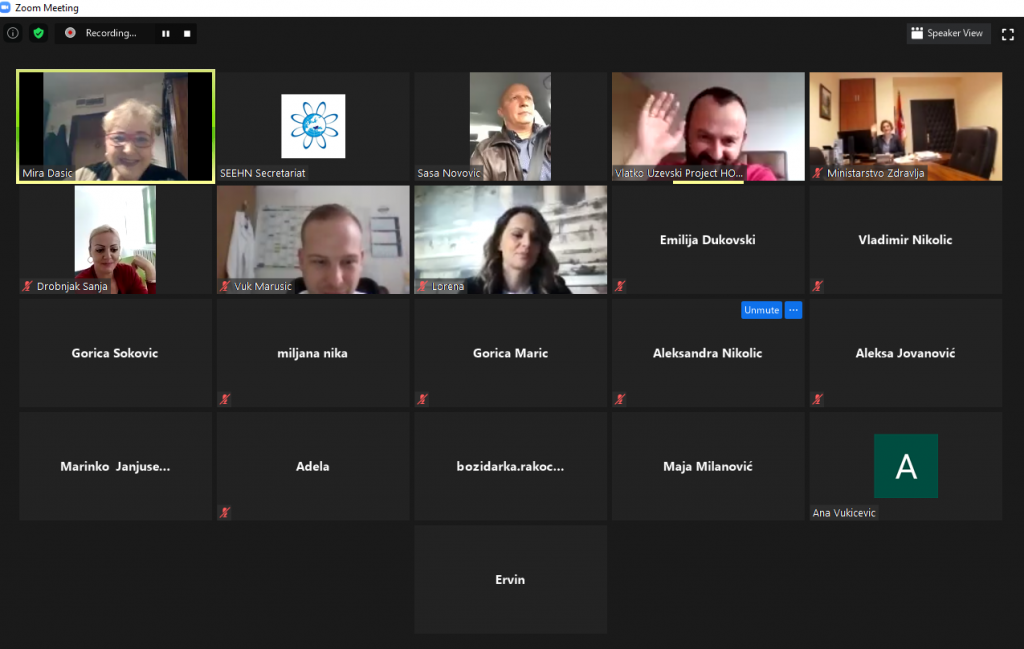
The Emergency Training of Trainers on COVID-19 for Primary Health Care Nurses started yesterday, November 30, in virtual format, gathering more than 40 participants.
Welcoming remarks were delivered by the Director of SEEHN Secretariat, Dr. Mira Jovanovski-Dasic, Mr. Gian Matteo Apuzzo, Senior CEI expert, as well as by the two project experts Dr. Luca Rosi and Dr. Nicola Petrosillo.
Dr Dasic emphasized in her speech the critical role nurses play at the forefront of COVID-19 preparedness and response and the need for concrete actions to empower nurses and support them in their daily work to improve case management.
She highlighted that quality health care worker education is not a one-time engagement. Global health trends shift, technology advances, and new practices are developed, therefore continuous health worker training helps the workforce to adapt and deliver higher quality care. The Director of the SEEHN Secretariat also commanded the expert team for their excellent experience and expertise in the field.
This regional Training-of-trainers’ course is part of the project “Strengthening capacities of nurses – front line healthcare workers during the COVID-19 response – Strong nurses for strong health systems and a healthier world”.
The project is funded by the Central European Initiative and implemented by the SEEHN Secretariat in selected Member States: Albania, Bosnia and Herzegovina, Republic of North Macedonia, Montenegro, Republic of Serbia and Republic of Moldova.
The training programme is been driven by the recognition of the challenges faced by nurses in the South-Eastern European region and aims at strengthening the capacities of the primary health care nurses in SEEHN Member States through online trainings on COVID-19 emergency response.
In the next sessions, the participants will also virtually interact and share their experiences. By the end of the training, participants will have a thorough grounding on COVID-19 prevention, promotion and advocacy, to ease their work and to equip them with additional skills on COVID-19 case management.
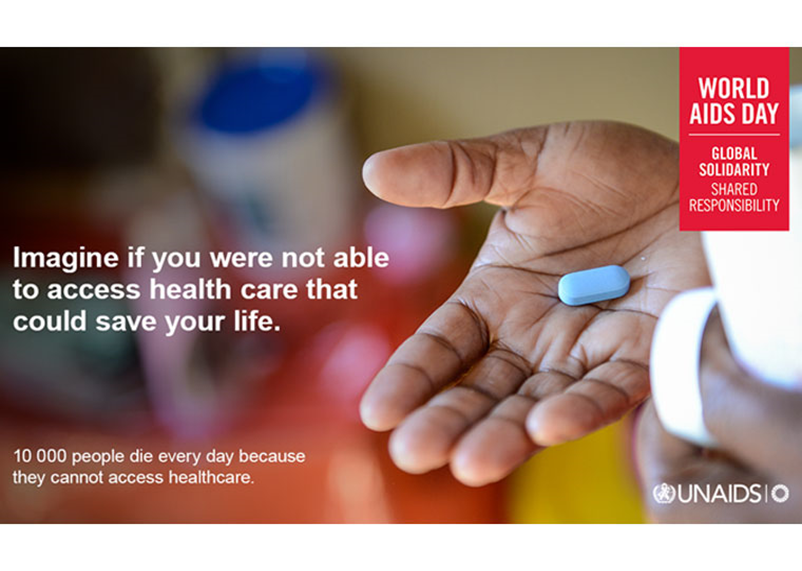
SEEHN joins the global campaign dedicated to raising awareness related to HIV/AIDS on the World AIDS Day 2020.
nnnn
Every year, on 1 December, the world commemorates World AIDS Day. People around the world unite to show support for people living with and affected by HIV and to remember those who lost their lives to AIDS.
nnnn
In 2020, the world’s attention has been focused by the COVID-19 pandemic on health and how pandemics affect lives and livelihoods. COVID-19 is showing once again how health is interlinked with other critical issues, such as reducing inequality, human rights, gender equality, social protection and economic growth. With this in mind, this year the theme of World AIDS Day is “Global solidarity, shared responsibility”.
nnnn
The COVID-19 pandemic has revealed the entrenched inequalities existing in our societies. This health crisis, like many others, is hitting the poorest and the most vulnerable the hardest.
nnnn
Across the WHO European Region, the number of people living with undiagnosed HIV is increasing. More than 136 000 people were newly diagnosed in 2019, according to data published today by ECDC and WHO/Europe. “Roughly 20% of these diagnoses were in the European Union (EU)/European Economic Area (EEA) and 80% were in the eastern part of the WHO European Region.
nnnn
The HIV diagnosis (53%) occurs at a late stage of the infection when the immune system has already started to fail. This is a sign that testing strategies in the Region are not working properly to diagnose HIV early.
nnnn
WHO/Europe and ECDC emphasize that to reduce the number of future HIV infections, Europe needs to focus on 3 main areas:
nnnn
prioritizing a range of prevention measures such as awareness-raising, the promotion of safer sex and condom use, the provision of needle exchange programmes and opioid substitution therapy, and pre-exposure prophylaxis for HIV (also known as PrEP);
providing efficient HIV counselling and testing services including rapid diagnostic services, community-based HIV testing and HIV self-testing; and
ensuring rapid access to quality treatment and care for those diagnosed.”
nnnn
HIV infection has no cure yet. Though, antiretroviral (ARV) drugs can control the virus and help prevent transmission so that people with HIV, and those at substantial risk, can enjoy healthy, long and productive lives.
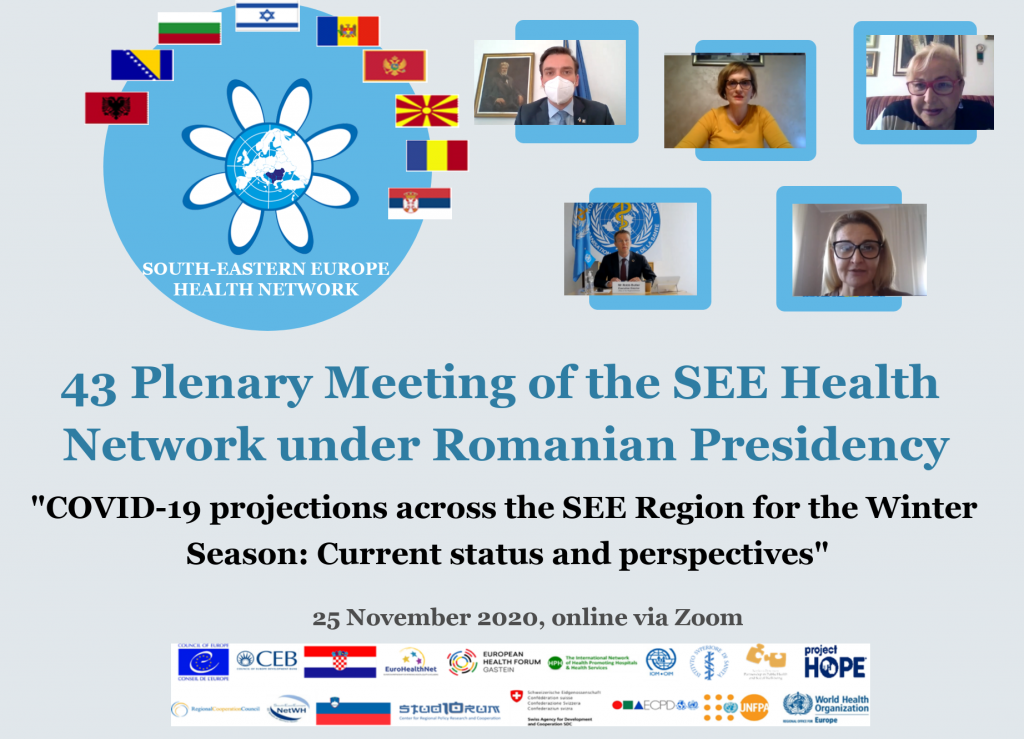
The South-Eastern Europe Health Network held its 43rd Plenary Meeting on the 25 November 2020. In light of the current regional situation, the meeting theme was “COVID-19 Projections Across the SEE Region for the Winter Season: Current Status and Perspectives“.
nnnn
The 43rd Plenary was hosted by the Romanian Presidency of the Network, with the Romanian Secretary of State Dr Andrei Baciu chairing the opening session on strategic considerations.
nnnn
The meeting gathered representatives of Diplomatic Missions of the SEEHN Member States accredited to Romania, National Health Coordinators and/or Alternates of the Member States to the SEEHN, directors of the SEEHN Regional Health Development Centers (RHDC) and representatives from the partner countries and partner international organizations.
nnnn
The opening remarks were given by Dr. Danijela Urosevic, Chair of SEEHN Executive Committee, Dr. Mira Jovanovski Dasic, Head of Secretariat, SEE Health Network, Mr. Robb Butler, Executive Director of the WHO Regional Director`s Office and Ms. Tanja Miščević, RCC`s Deputy Secretary General.
nnnn
Considering the worrying resurgence of COVID-19 across the South Eastern European region, the Plenary meeting gave the opportunity to take stock of the situation, anticipate the scenarios for the forthcoming winter season and examine how we can move forward together in a spirit of solidarity and mutual support. Also, the meeting provided a platform to discuss immunization options and health system preparedness in the SEE Region during COVID-19.
nnnn
In the closing session of the Plenary, the Romanian Presidency presented its Report reflecting on SEEHN major developments, activities and challenges during its term (July-December 2020) and handed over to Republic of Serbia the chairmanship of the Network.
nnnn
At the same time, general policy matters such as the organization of the fifth SEEHN Ministerial Forum to be held in 2021 or 2022 and the celebration of the 20 years of SEEHN in 2021 as well as organizational matters were properly discussed in a closed executive session of the representatives of the SEEHN Member States.
The SEEHN was saddened to learn of the tragic loss of lives in Piatra Neamt hospital on Saturday. SEEHN Secretariat conveys its deepest condolences and sympathy to the families of the victims and to the Romanian people. We praise the courage and spirit of sacrifice of the Romanian doctors trying to save the patients with the risk of their own life. In these moments of great sorrow we wish to voice the SEEHN`s full solidarity with the Romanian people. Our thoughts and prayers are with the families of those who lost their life and we wish those who were injured a swift and full recovery.
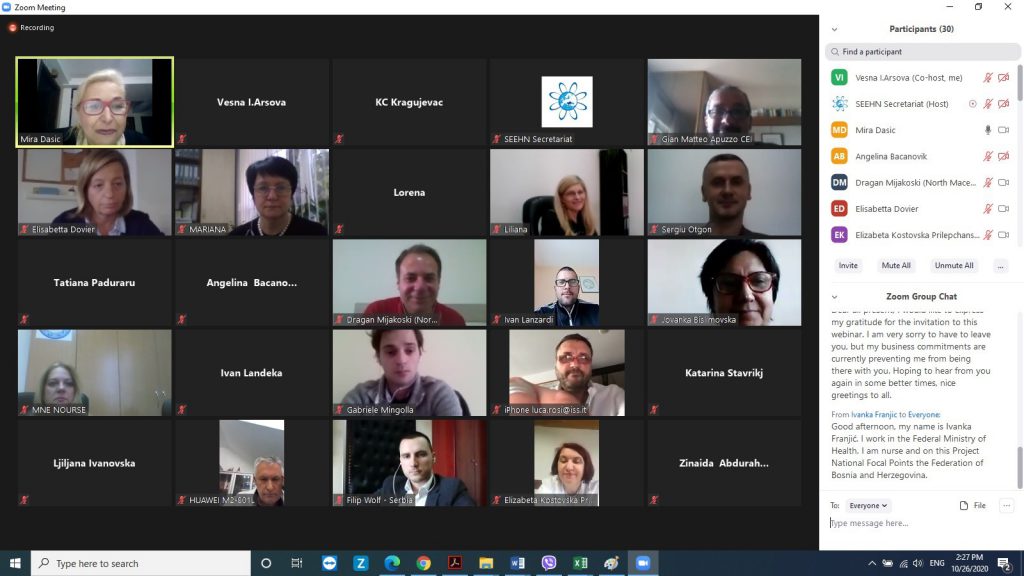
SEEHN Secretariat organized the First Regional Webinar “Primary Healthcare as main gatekeeper and crucial systemic element in the COVID-19 containment”, on 26 October 2020.
nnnn
This regional event is part of the project “Strong nurses for strong health systems and a healthier world” that is mainly funded by CEI and implemented by the SEEHN Secretariat in very close collaboration with SEEHN six Member States.
nnnn
Around 35 participants from BiH, MDA, MKD, MNE, SRB, CEI representatives and experts from the National Institute of Public Health from Italy’ and Lazzaro Spallanzani National Institute for Infectious Diseases’ and from the Istituto Superiore di Sanita’ joined online.
nnnn
Nurses are one of the core pillars of the health systems and are at the forefront of the COVID-19 response – providing care and playing a critical role in emergency risk reduction, preparedness and response. Primary health care nurses are often the first ones to get in direct contact with potential COVID-19 positive patients providing guidance and collecting samples for the diagnostic. They also provide the essential care for the patients, they coordinate efforts with other health professionals and other members of the response team during emergencies. Without well-prepared and protected healthcare staff, there is no effective response to health threats.
nnnn
Participants contributed to discussions on the primary health care crucial role as gatekeeper and first line contact with potential COVID-19 patients.
nnnn
Discussions focused on the ways to bridge the gap between nurses, patients and GPs and or hospitals in order to enhance community containment and to improve COVID-19 case-management. One of the highlighted nurses’ roles was on how to strengthen the prevention, promotion and advocacy work of the nurses.
nnnn
The COVID-19 pandemic is still not entirely known, evidence is gathered on the way and it is essential to have a regional platform to share experience. Every piece of information counts, any new way of doing things matters to improve efforts against COVID19.
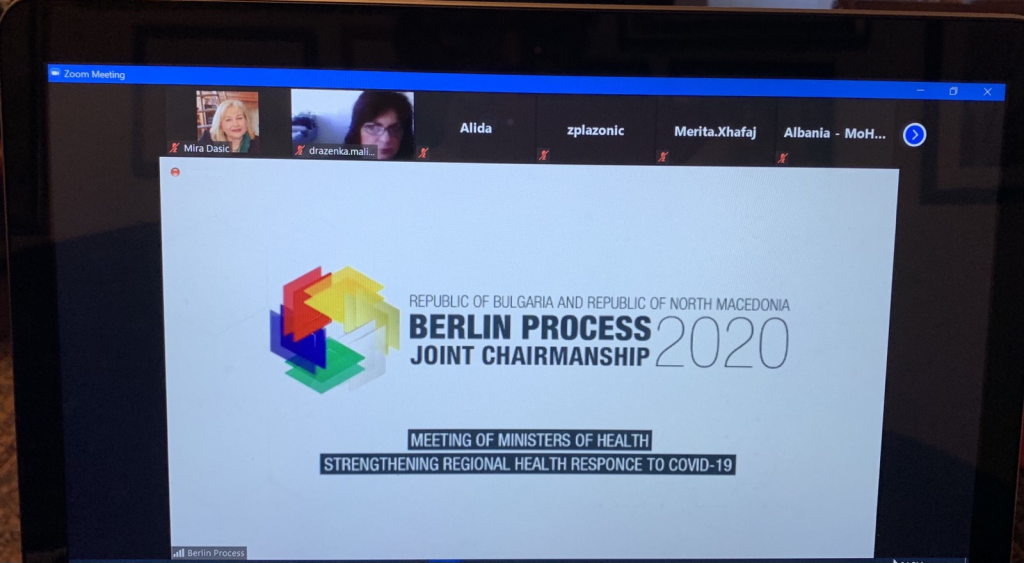
Dr. Mira Dasic, Director of the SEEHN Secretariat participated at the online Meeting of the Ministers of Health within the Berlin Process, on 22 October 2020 co-chaired by North Macedonian Minister of Health, Dr. Venko Filipche and the Bulgarian Health Minister Dr. Kostadin Angelov.
nnnn
For the first time this year, the Health sector has been included on the agenda. The discussions focused on the COVID-19 health response in the region and beyond. It comprised dialogues on coordinated approach to free movement of people, goods and services while keeping the epidemic situation under control.
nnnn
EU representative on Health and Crisis Management, Advisor Ms Isabel De la Mata, WHO Regional Director for Europe Dr. Hans Kluge, prof. Dr. Johanna Hanefeld from the Center for International Health Care, Robert Koch Institute, Dr. Andrea Aman Director of the European Center for Disease Prevention and Control and Dr. Mira Dasic, SEEHN Secretariat Director, joined these high-level discussions. Representatives from Albania, Bosnia and Herzegovina, Bulgaria, Croatia, Italy, Kosovo*, Montenegro and Poland also contributed to this important meeting.
nnnn
The flu season started and the incidence of COVID is raising in all the countries over the South Eastern Europe Region and this meeting was of outmost importance to discuss the next package of measures to contain the outbreak and to support Western Balkan populations and beyond. It was also highlighted that at this critical time the support of international donors is of utmost importance.
nnnn
During her intervention, Dr. Dasic mentioned some of the SEEHN specific activities linked to the outbreak.
nnnn
Among them are:
nnnn
Building critical skills and knowledge necessary for health workers to respond rapidly and efficiently to COVID-19;
Assessment of the stress and burn out among the healthcare workers during the COVID-19 pandemic;
Increase of the knowledge on COVID-19 among Primary Health Care nurses;
Establishing of the Thematic Network on Sexual and Reproductive Health to gather more data on the COVID-19 associated pregnancies and newborns.
nnnn
Throughout this COVID-19, pandemic one thing came clear that no single country or organization can face these global and regional public health challenges alone. For this reason, establishing and strengthening partnerships will be another key component for all counterparts’ efforts ahead.
nnnn
One of the outcomes of this meeting is the establishment of a system of information exchange on the pandemic management experiences in the region. It is extremely important to foster better coordination in Western Balkan countries and beyond to be able to cope effectively with the COVID-19 pandemic in the next period.
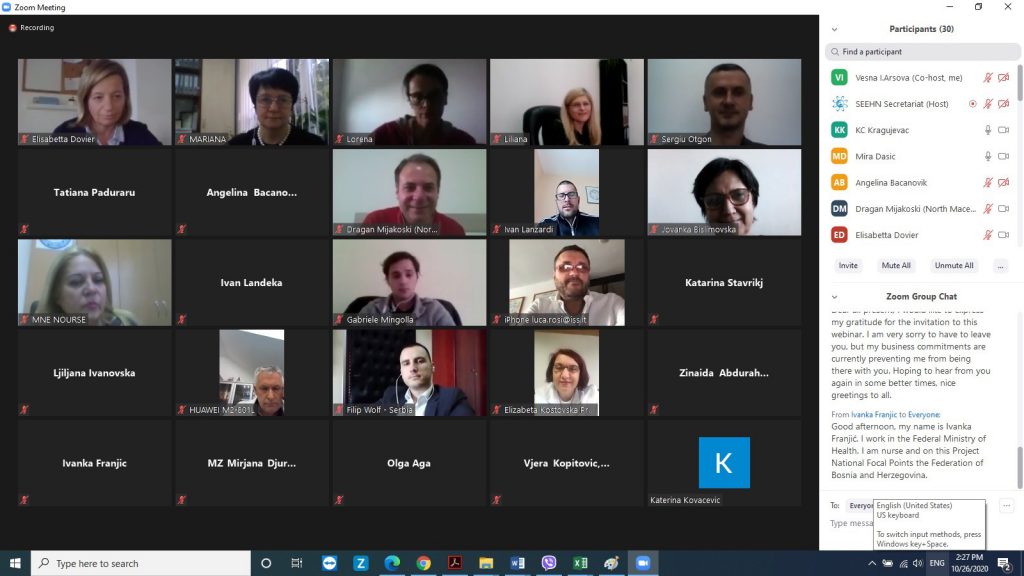
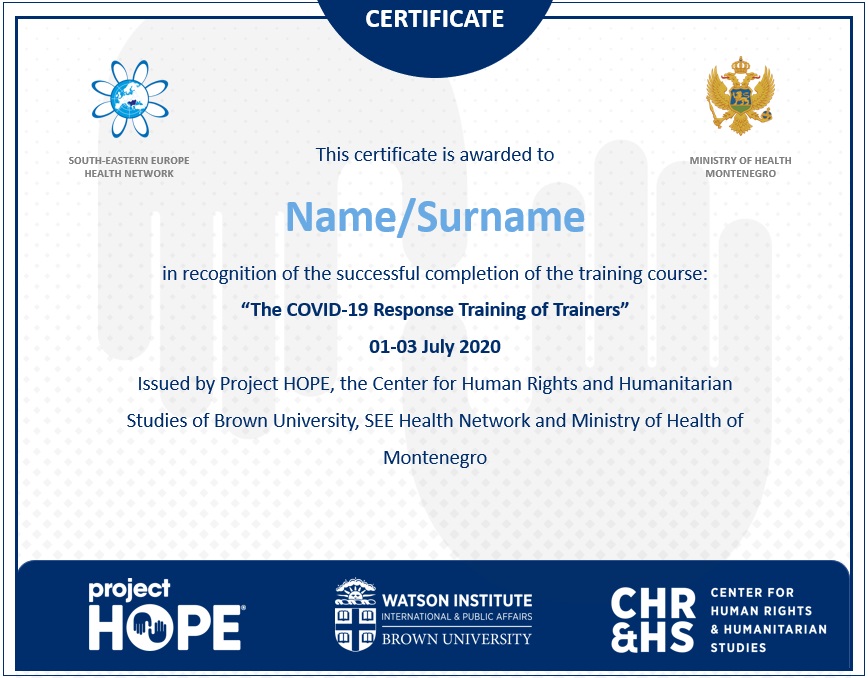
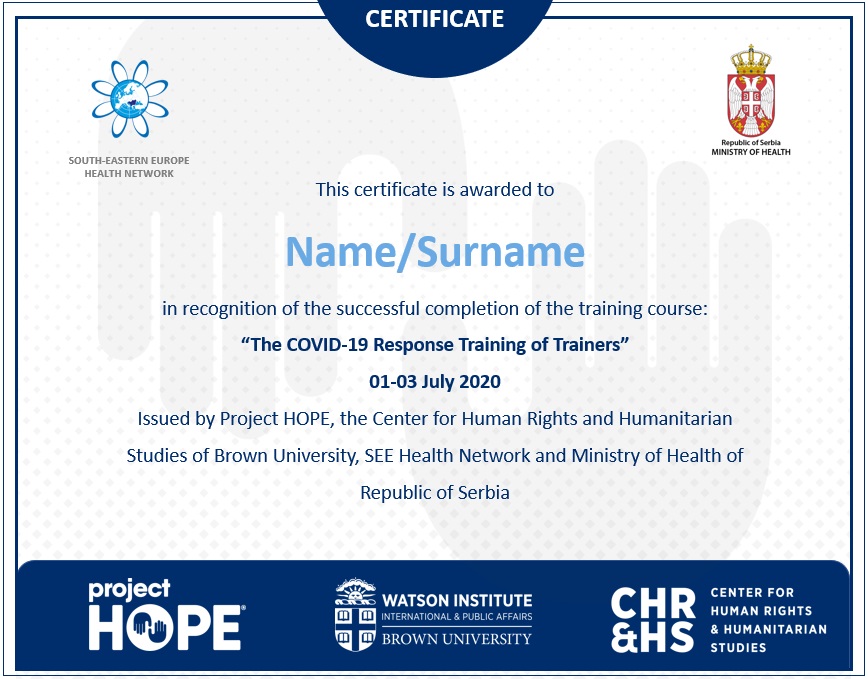
In the first phase of the COVID- 19 Training of trainers, 32 participants from Albania, Montenegro and Serbia successfully completed the online training course and were awarded certificates during the online ceremony held on 8 October 2020.
nnnn
The SEEHN Secretariat teamed up with Project Hope to develop a six-month COVID-19 ToT online program for healthcare workers, designed to teach and evaluate the trainees from the selected SEEHN Member States on core competencies, including on infection prevention and control; contact tracing; screening and triage; diagnosis and management; and risk communication and public health messaging.
nnnn
ToT model for healthcare workers was developed by Project HOPE in partnership with experts from Center for Human Rights and Humanitarian Studies at the Watson Institute of Brown University, United States. The training materials were translated to Albanian, Montenegrin and Serbian and will be used during the second dissemination phase that will be conducted in the forthcoming period by the certified trainers.
nnnn
SEEHN Secretariat extends its appreciation to Project HOPE for the partnership in this important training program as part of a joint effort to rapidly scale-up COVID-19 response in the selected SEEHN member states. The Secretariat also expresses its gratitude to the national focal points and to the training participants for their efforts and contributions for the successful implementation of the program.
nnnn
SEEHN reaffirms its commitment to further working on strengthening the health workforce capacities in SEE region.
In a global effort, every year, we celebrate World Hypertension Day, to promote public awareness of the causes and consequences of raised blood pressure (BP), and to mobilize national and local authorities to create enabling environments conducive to healthy behaviours.
nnnn
This year, due to the COVID-19 pandemic, the World Hypertension League (WHL) is celebrating World Hypertension Day on October 17th, and the dedicated theme is Measure Your Blood Pressure, Control It, Live Longer.
nnnn
Hypertension is the leading cause of mortality and disability all over the world and is at the top of the list among single risk factors accounting for cardiovascular disease deaths and second after smoking as a preventable cause of death.
nnnn
Furthermore, emerging reports have demonstrated a high prevalence of hypertension among patients with COVID-19.
nnnn
Hypertension is an important avoidable risk factor and one of the goals of the United Nations 2025 agenda is the achievement of a 25% reduction in uncontrolled hypertension. Enhanced community Blood Pressure (BP) screening programs and routine measurement of BP by health‐care professionals at all clinical encounters will contribute to achieving this goal.
nnnn
SEE Health Network supports the global efforts and the promotion of awareness about the risks of hypertension in the South Eastern Europe Region.
nnnn
The 39th SEEHN plenary meeting included joint work on hypertension and deaths from cardiovascular diseases in an effort to reduce the burden of NCDs within the region.
nnnn
A dedicated RHDC (Regional Health Development Center) on NCDs (Non Communicable Disease), hosted by Montenegro, is mandated to coordinate regional initiatives highlighting that cost-effective interventions can have a significant impact on prevention and reduction of high blood pressure and the diseases it causes.
nnnn
The SEEHN joins the WHL challenge and encourages its Member States to participate in the WHD celebration. Rigorous BP measurement and NCD awareness endeavors in the community and clinical settings, and the acquired results of the screening activities will contribute to the efforts in the reduction of uncontrolled hypertension.
This year’s World Mental Health Day, comes at a time of great preassure on our daily lives as a result of the COVID-19 pandemic. Therefore, its celebration on the 10th of October as a tool for global education, awareness and advocacy on mental illness and its major effects on peoples’ lives worldwide is more timely than ever before.
nnnn
Mental health conditions are highly prevalent and represent one of the leading causes of suffering and disability in the European Region.
nnnn
Nowadays challenges
nnnn
The outbreak has further exposed the limitations of our mental health care systems in particular worsening of the existing mental health conditions, triggering new ones, and making access to mental health services even more scarce. The crisis has had a huge psychological impact. Most populations have experienced uncertainty in recent months, when trying to find meaning in rapidly changing events, and being unable to follow the familiar patterns of daily life. With the rise of the burnout among health workers from the frontlines of the pandemic there is an urgent call to confront the mental health fallout of the COVID-19 crisis and to support the resilience of communities experiencing lockdowns.
nnnn
Therefore, these exceptional circumstances are a timely reminder of the importance of investing in mental health for societies to prosper.
nnnn
nnnn
SEEHN & Mental Health
nnnn
For over a decade, SEEHN has been the undisputed vehicle of health development in the area of mental health in the Region, the thematic area being assumed as of outmost priority on the agenda of the health ministries across the SEE region. The nine SEE ministries of health committed their governments to reform the old psychiatric hospital system to the new community mental health centers aimed to help people live better lives. A dedicated RHDC to mental health was also established in Bosnia and Herzegovina to accelerate change in the region.
nnnn
A key initiative of the SEE Health Network, recently launched, focus on generating knowledge necessary for health workers to respond rapidly and efficiently to COVID-19 through assessment of the stress and burn out among the healthcare workers during the COVID-19 pandemic.
nnnn
Strong partnerships
nnnn
Strong partnerships are needed to improve services and change societal attitudes about mental health, to support new initiatives, including raising awareness. In this sense, much is expected from the new WHO European Programme of Work. SEEHN welcomes that mental health has a central position within it and on behalf of its Member States, strongly supported it at the 70th session of the WHO Regional Committee for Europe.
nnnn
The inclusion of mental health as one of the flagship initiatives complementing the European Programme of Work, shaping a mental health coalition within the region is an encouraging effort meant to trigger change, and to mobilize around critical issues and for which high-visibility, high-level political commitment can be transformative.








 The Emergency Training of Trainers on COVID-19 for Primary Health Care Nurses started yesterday, November 30, in virtual format, gathering more than 40 participants.