News
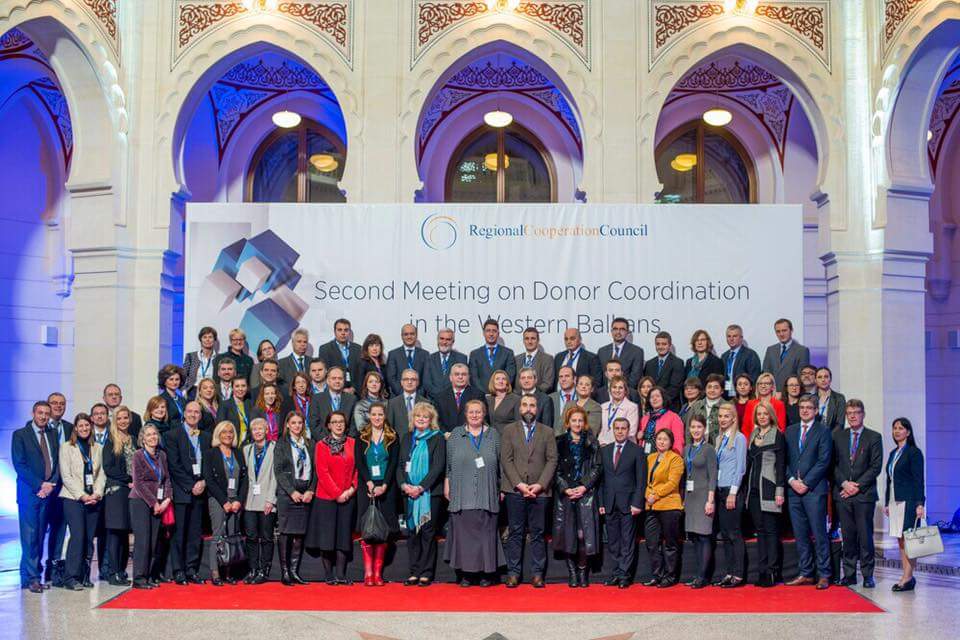
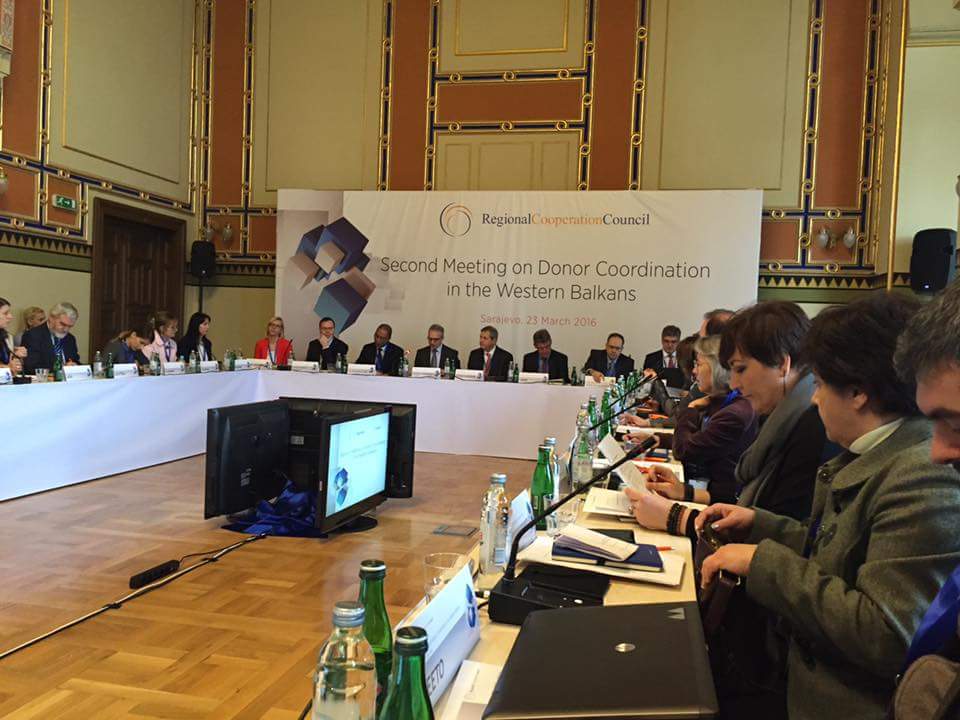
On 23 March the SEE Health Network participated at the Regional Cooperation Council (RCC) Second Donors Conference held in Sarajevo, Bosnia and Herzegovina. It was represented by its current Presidency of Bosnia and Herzegovina (BIH) by its two leading Bosnian representatives, the National Health Coordinators (NHC) Dr. Amela Lolic and Dr. Goran Cerkez.
n
The RCC Second Donors Conference discussed various important issues related to the implementation of the SEE 2020 Strategy “Jobs and Prosperity in a European Perspective” endorsed in October 2013. For the first time in the history of the region and beyond health has found its appropriate place and visibility in the “Inclusive Growth” Pillar with four health objectives and respective measures.
n
During the Confer ence plenary sessions the SEEHN Senior Representatives pointed out that:
nn
n
- The network has both its political and technical dimensions and mechanisms responsible for implementing regional health actions of common interest often called as “multisectorial project”, such as health and tourism, health and education, E-health or health and security;
n
- The region and Europe live in time of terrorism, threats and bioterrorism in that context;
n
- Health has an important role to play in implementing the SEE 2020 Strategy particularly in the time of the global and European refugee crisis with the movement of thousands of migrants to the EU; health has an important role;
n
n
The SEE ministries of health do work in line with the SEE Growth Strategy 2020 as well as for achieving the goals of the WHO European health policy framework 2020 and the EU “Health in All Policies” approach.
n
The SEEHN Senior Representatives highlighted that by reducing the funding for health care and public health actions the region reduces funding for development, prosperity and progress as health is a contributor for health, wealth, well-being and prosperity rather than only a consumer, which is usually the general understanding. A sick person consumes significant resources and often mobilizes the public, family and social services.
n
For all above reasons, the SEEHN Senior Representatives and the Bosnian Presidency appealed to the RCC and the donors present in Sarajevo to support several important health and public health areas that are already part of the SEE 2020 Strategy as follows:
nn
n
- Cross-border Public Health and Emergencies preparedness including communicable diseases surveillance and control, antimicrobial resistance, emergencies and joint actions to mitigate natural disasters, man-made disasters as well as the issue of the huge influx of migrants to the SEE region;
n
n
n
- Strengthening the health systems and public health capacities to fight the epidemics of noncommunicable diseases and mental health disorders in the region (including improving quality of health services and introducing high technologies such as transplantations and improved donor collection and exchanges as started already) that are the main factor contributing to improving health and well-being and, thus, contributing to better productivity of the human/labor capacities in the region;
n
n
n
 Working on the health workforce outstanding issues and their mobility as the health sector is one of the biggest “employers” of the region with close to 10% of its workforce.
n

News
The South Eastern European Journal of Public Health (SEEJPH) published the “Ten years onwards: Comparison of the South Eastern European regional public health strategy 2004 and the South Eastern European 2020 strategy” article, written by Christiane Wiskow, Maria Ruseva and Ulrich Laaser, which strives to show the ongoing regional collaboration that has continuously contributing to the development of the public health in the South Eastern Europe (SEE) region since 2000 when the public health collaboration in SEE (PH-SEE) was initiated.nnThis article gives an overview of the two frameworks for regional collaboration in the area of public health, such is the framework developed in 2004 by a network of public health professionals and academics, and another one developed by the SEE Health Network as an integral part of the SEE 2020 strategy, both with reviewed situation analysis using the SWOT methodology.nnThe comparison is made regardless the differences in structure and wording, showing that both strategies are consistent in the majority of their goals and actions which includes improving equity in health with a focus on vulnerable and low-income groups, hence improving health for all, strengthening human resources for health and public health, respectively and strengthening and improving intersectoral cooperation and governance. In addition to the commonalities, there are also apparent differences between the two strategies in the aspects of social participation, regional public health information, the cross-border public health and the quality improvement.nnNevertheless, despite the time lag of nearly ten years, the commonalities of the strategies for regional public health collaboration are very significant and the differences between them are partially due to the different development context. The authors of this article are giving conclusion that the collaboration between the two networks, FPH-SEE and SEEHN particularly in the area of public health education, could be of mutual benefit and will contribute in further strengthening for the improvement of regional health information.nn nnOn the link below you can read the full article published on the SEEJPHnnTen years onwards: Comparison of the South Eastern European regional public health strategy 2004 and the South Eastern European 2020 strategy
News
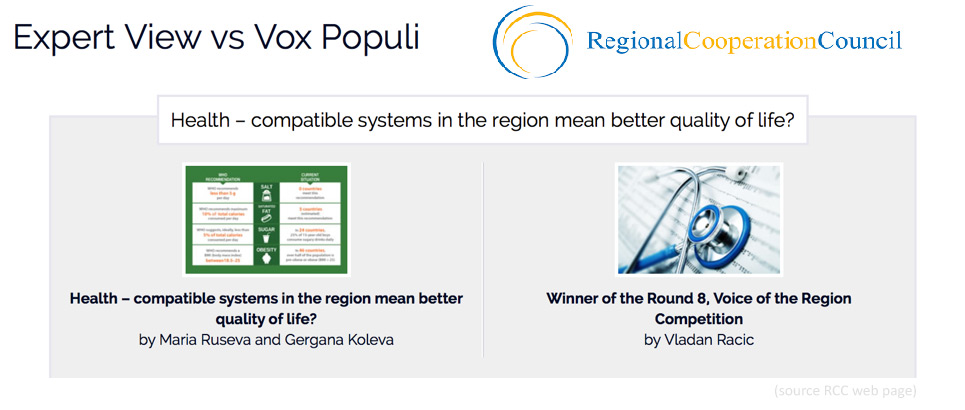
In April 2015, in the effort to increase public engagement in policy making, the Regional Cooperation Council (RCC) announced a competition “Voice of the Region”, inviting citizens to take part and give their views through essay, video or photography on issues they face in everyday life. The competition was organized in 8 rounds on different topics, enriching the debate with an invited expert view on each of them.nnAs part of the long-term fruitful cooperation with SEEHN and the importance of recognizing health and well-being as contributor to the economic growth, one theme was dedicated to health, debating on whether compatible systems in the region mean better quality of life. Giving the opportunity for everyone to write articles and be part of the competition RCC opens doors for people to inform themselves and do some health research.nnDr Maria Ruseva, an international expert on public health and health systems together with Gergana Koleva an international public health consultant had written their expert view underlining the need of involving the non-health sectors and industries in the process of achieving the goal of every country which is ensuring a better quality of life for its citizens. They say this is necessary because of the explicit risks to health certain services and products carry – risks which often materialize as diseases and impose a health and economic burden on individuals and societies only years later when damages are harder to reverse than to have had prevented in the first place. Very important point of view is recognizing the need of investing in health which contributes to sustainable growth at the same time as it limits societal exposure to health risks through appropriate policies and actions. This is the reason why in Bulgaria, the Ministry of Health recently announced a plan to introduce a tax on foods with salt and sugar content above the allowed levels. The proposal follows similar public health taxes launched in Hungary in 2011 (known as the “chips tax”) and in Finland the same year (known as the “sweet tax”). It aims to signal to food manufacturers to shift to healthier product alternatives or face declining demand, and at the same time serves as a behavioral nudge to consumers to encourage better eating habits.nn nnVladan Racic’s essay “Nothing but health…” was chosen as winner of the round 8 of the Voice of the Region Competition. His winning arguments emphasize that neither money, education or power would matter without health, and thus prevention is very important: “There is an old adage “value your health now before it’s too late””. Being the voice of the region for health, Vladan wrote that it is necessary that those in power realize that health is the most important factor of a society.nn nnOn the links below you can read:n

 ence plenary sessions the SEEHN Senior Representatives pointed out that: