News
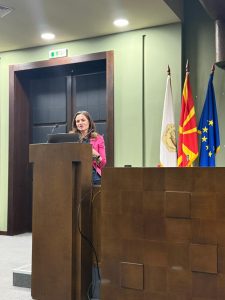
Preparing health professionals to meet the expanding health and social needs of ageing societies while enabling them to pursue rewarding career paths in their country of origin is a rising priority for governments in South-eastern Europe, whose health sectors have been weakened in recent years by external and internal migration. To discuss strategies for strengthening the technical capacity of the region’s health workforce through transformative education and solutions to the geographic imbalance, a high-level meeting organised by WHO Regional Office for Europe in collaboration with the South-eastern European Health Network (SEEHN) and hosted kindly by the Medical University of Varna, Bulgaria, took place on 9-10 November in Varna.
Attended by representatives of health and education ministries, national public health institutions, and universities from Albania, Bosnia and Herzegovina, Bulgaria, Croatia, and the Republic of Moldova, and by WHO experts, the meeting outlined the need for improved alignment between health workforce education and training curricula on the one hand and evolving professional competencies required by new models of health care and changing public health needs on the other. Participants discussed solutions to existing barriers to cooperation between the health and education sectors and highlighted the need to establish a systematic process for health workforce planning with shared responsibility between ministries of health, employment and finance.
Other priorities emphasised in the course of the meeting included the need to shift towards evidence-based professional education and to retain faculty who can deliver it, to secure political support for enhanced teaching and training modalities, and to increase intersectoral cooperation by initiating policy dialogues on planned curriculum reforms with all stakeholders.
The vision of transformative education includes development of competencies and skills – both through basic health workforce education and through continuing professional development – that are linked to nationally and contextually relevant needs, as well as to global standards of excellence. Such education aims to maximise the contributions of all health workers.
Translating this vision into practice is essential to implementing Health 2020, the European policy framework for improving the health of populations and reducing health inequities, in which health professionals play a central role. It is also essential to implementing the SEE 2020 Strategy “Jobs and prosperity in an European Perspective”. To operationalize this vision, countries need strengthened sub-regional collaboration, continued technical support and cooperation, and greater alignment between educational institutions and the systems that are responsible for health service delivery.
The meeting in Bulgaria followed the WHO Regional expert consultations on transformative health professionals’ education and training in support of Health 2020 and a series of sub-regional technical meetings on health workforce mobility and retention in 2013 in the Republic of Moldova and in 2014 in Slovenia , which drew commitment by members of SEEHN to build a sustainable health workforce responsive to the current and future health needs of their populations.
News, News from the SEEHN Member States
The Jubilee Scientific Conference celebrating the 10th anniversary of the Faculty of Public Health in Pleven took place on 1-3 October 2015 under the title of “Public Health Policy and Practice”.
Divided into three plenary sessions, various conference topics were tackled in the context of both the negative public health trends that Bulgaria faces and the urgency to find appropriate solutions. Bringing into focus the epidemiology of infectious and chronic non-infectious diseases, the ethics of public health and clinical practice as well as health promotion and management, quality of health care and medical rehabilitation and ergotherapy, the Jubilee Conference has provided health professionals and managers with the opportunity to exchange valuable experience and ideas and to enhance their professional connections in the field of public health research and practice for prevention and control of public health processes.
The abstracts of the Jubilee Scientific Conference comprise the latest edition of the Journal of Biomedical and Clinical Research, issued by the Medical University – Pleven twice per year. Entirely dedicated to conference itself, this edition also features the Rector of the Medical University Prof. Dr. Slavcho Tomov who describes the Faculty of Public Health as the “leading structure within our university and a solid educational center for training of public health professionals and managers”.
News
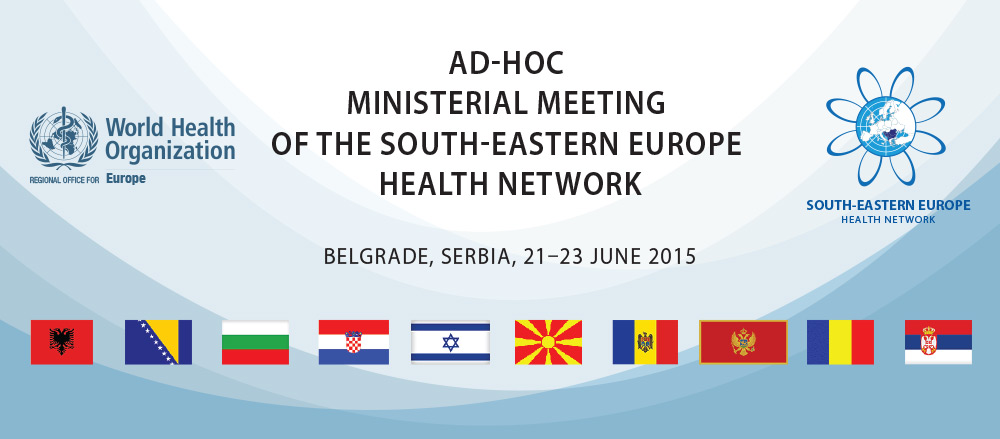
Ministers from ten countries in the South-Eastern Europe Health Network (SEEHN) met in Belgrade on 22-23 June 2015, and agreed on joint regional and national actions towards securing universal health coverage. In addition to promoting an equitable Europe free of impoverishing health expenditures, the Belgrade Statement, endorsed by the ministers, also commits countries to promote and scale up political commitment to implementing Health 2020, and agree on more specific regional actions for strengthening human resources for health and coordinating cross-border support in public health emergencies, among other tasks.
“A year ago I promised the Regional Committee that I would continue to work for improved health outcomes and to link health to equity and also to sustainable development. This is happening more and more in our Region, and our decision-makers are increasingly obliged to take a wider perspective in their work. Coherent, inter-connected government policies – with a strong intersectoral component – are the way forward. This also applies to the SEEHN and individually to your countries” said Dr Zsuzsanna Jakab in her opening speech.
Ministers welcomed the opportunity to exchange views, experiences and lessons learned on the top common priorities for collaboration between the countries. Health systems strengthening, disease prevention, sustainable health financing, health information systems, information exchange, health literacy and intersectoral partnerships, implementing the international health regulations (IHR 2005), immunization rates, and preparation and response in emergencies such as the 2014 floods in the Balkans, were issues raised by countries. Discussions also included enhancing the network’s governance structures at both political and technical level.
Jointly organized by Dr Zlatibor Lončar, Minister of Health of the Republic of Serbia and current President of SEEHN, and Dr Zsuzsanna Jakab, WHO Regional Director for Europe, the meeting brought together ministers, deputy ministers and state secretaries from the 10 Member States of the South Eastern Europe Health Network.
Download links
The Belgrade Statement