The role of the South-eastern Europe Health Network in fostering cross-border learning to improve health across the region

The role of the South-eastern Europe Health Network in fostering cross-border learning to improve health across the region

An interview with Dr Mira Jovanovski Dasic, Head of the South-eastern Europe Health Network (SEEHN) Secretariat

What role can EU health policies play in strengthening the ties between countries in the SEE and the EU?

EU health policies can play a multifaceted role in strengthening the ties between South-Eastern European (SEE) countries and the European Union (EU).

Firstly, these policies can establish a framework for harmonising healthcare standards and regulations across SEE countries, bringing them into closer alignment with EU standards. This not only improves the quality and safety of healthcare services but also facilitates cross-border healthcare access for citizens.

Secondly, EU health policies can act as a catalyst for knowledge exchange and the sharing of best practices. Initiatives such as collaborative research projects and information sharing enable SEE countries to gain insights from the experiences of EU Member States in healthcare management, disease prevention, and public health strategies. This exchange of knowledge can lead to more effective healthcare systems and policies in SEE. We are actively fostering this collaboration with Romania and Bulgaria, both members of the SEEHN. These countries, along with others, aspire to join the EU family in near future.

Thirdly, EU health policies for the SEE region often prioritise health security and preparedness for public health emergencies. Collaborative efforts on issues such as pandemic preparedness, vaccine distribution, and healthcare infrastructure development empower SEE countries to strengthen their collective response to health crises. This collaboration not only enhances healthcare resilience but also fosters a sense of solidarity and mutual support among countries in the region.

In summary, EU health policies offer SEE countries a framework to align their healthcare systems with EU standards, promote knowledge exchange and best practices, and enhance collective health security. These efforts can foster closer ties between SEE countries and the EU, promoting regional integration and cooperation across healthcare and beyond.

Why is a network such as the SEEHN important in supporting countries to improve the health and resilience of their populations?

The SEEHN plays a crucial role in supporting Member States to improve the health and resilience of their populations in several ways:

  • Knowledge exchange and sharing best practices: The SEEHN provides a platform for member countries to share their experiences, successes, and challenges in areas such as mental health and vaccine inequalities. This exchange of knowledge allows Member States to learn from each other’s strategies and best practices, accelerating the adoption of effective health promotion and disease prevention measures.
  • Resource mobilisation: The SEEHN can facilitate the pooling of resources, expertise, and funding opportunities. This collaborative approach can help member countries access resources they might not have individually, enabling them to implement more comprehensive and sustainable health programmes.
  • Advocacy and policy development: The SEEHN often engages in collective advocacy efforts to promote policies and initiatives that address common health issues. This united front enables Member States to influence regional and international bodies for  improved policies and resources in health promotion and disease prevention.
  • Technical assistance and capacity building: The SEEHN offers technical assistance and capacity-building programmes, assisting member countries to strengthen their healthcare systems, workforce, and infrastructure. This support is essential for implementing effective health promotion and prevention strategies.
  • Data sharing and monitoring: The SEEHN facilitates data sharing and joint monitoring of health indicators, enabling Member States to track progress, identify disparities, and continuously adjust strategies to improve health outcomes.
  • Crisis preparedness and response: The SEEHN enhances collective resilience by coordinating preparedness and response efforts during health crises, including pandemics.
  • Cross-border collaboration: In the context of the SEEHN, which includes countries in SEE, cross-border collaboration is particularly important. The SEEHN fosters regional cooperation, vital for addressing health challenges that transcend national borders, such as infectious diseases and environmental health issues.

In conclusion, networks like the SEEHN play a vital role in supporting countries to improve the health and resilience of their populations by facilitating knowledge exchange, resource mobilisation, advocacy, technical assistance, and data sharing. Beyond addressing health challenges, the SEEHN serves as a peacebuilding platform at heart, promoting cross-country collaborations in a region still recovering from past conflicts.

Could you give an example of a project or programme supported or promoted by the SEEHN or one of your members that has advanced mental health and/or vaccine uptake in the population?

The SEEHN has set up a Regional Health Development Centre (RHDC) on mental health, hosted by Bosnia and Herzegovina. Mental health is a top priority for Bosnia and Herzegovina, the current rotating presidency of the network.

In response to mental health challenges during the pandemic, the SEEHN implemented the “Mental Health and Resilience Training for Healthcare Workers responding to COVID-19 in SEE Region”, funded by Project HOPE. Approximately 8000 healthcare workers were trained on stress, trauma, and resilience concepts, providing a regional emergency response to combat healthcare worker burnout.

Additionally, the SEEHN conducted a study “Rapid Mapping Out of the Current Situation in the Area of Mental Health in the SEE Region 2000-2022: Towards Better Mental Health and Well-Being”. The study revealed:

  • SEE countries are home to almost 70 million people.
  • They face multifaceted challenges, including demographic decline, economic disparities, reliance on limited financing sources, and gaps in mental healthcare provision.
  • Developments over the past 20 years have focused on community-based practices, accreditation, standardisation of legislation and practices, and greater involvement of service users.
  • Future efforts should prioritise investments in capacity building, ensure quality assurance and monitoring, improve routine data collection, and harmonise legislation with international standards.

In the short-term, the SEEHN has also developed flyers for healthcare workers translated into Albanian, Macedonian, and English.

Regarding vaccine uptake, through our RHDC on Communicable Diseases, hosted by Albania, the SEEHN, has worked to enhance vaccination rates and improve accessibility and availability of vaccines for the SEEHN Member States markets. During the COVID-19 period, the SEEHN Secretariat, in collaboration with our RHDC, conducted webinars to promote vaccination and improve vaccination rates. Moreover, the SEEHN, Project HOPE, and the Center for Human Rights and Humanitarian Studies at the Watson Institute of Brown University, organised the COVID-19 vaccine-training programme for frontline responders in 2021. The training gathered over 150 frontline workers from the SEEHN Member States, providing a platform to discuss the latest science behind different, concerns and answers, vaccine rollout communications, prioritisation systems, and country specific guidelines. The training was expanded to reach over 1200 participants in the respective SEEHN Member States.

If you had unlimited funding to address one priority of your network, what would you choose to invest in and why?

One important area that could significantly benefit from increased funding is human capital, specifically in capacity building and the healthcare infrastructure to support it. This would involve investing in health workforce, strengthening it through training, recruitment, and retention of healthcare professionals, such as doctors, nurses, technicians, and other essential staff. Adequate staffing is critical for providing quality care and addressing shortages in healthcare.

Interview conducted by Anne-Sophie Travert, Global Health Policy Advisor, French Ministry for Europe and Foreign Affairs, and Lina Papartyte, Project Coordinator, EuroHealthNet, at the European Health Forum Gastein (EHFG) 2023.

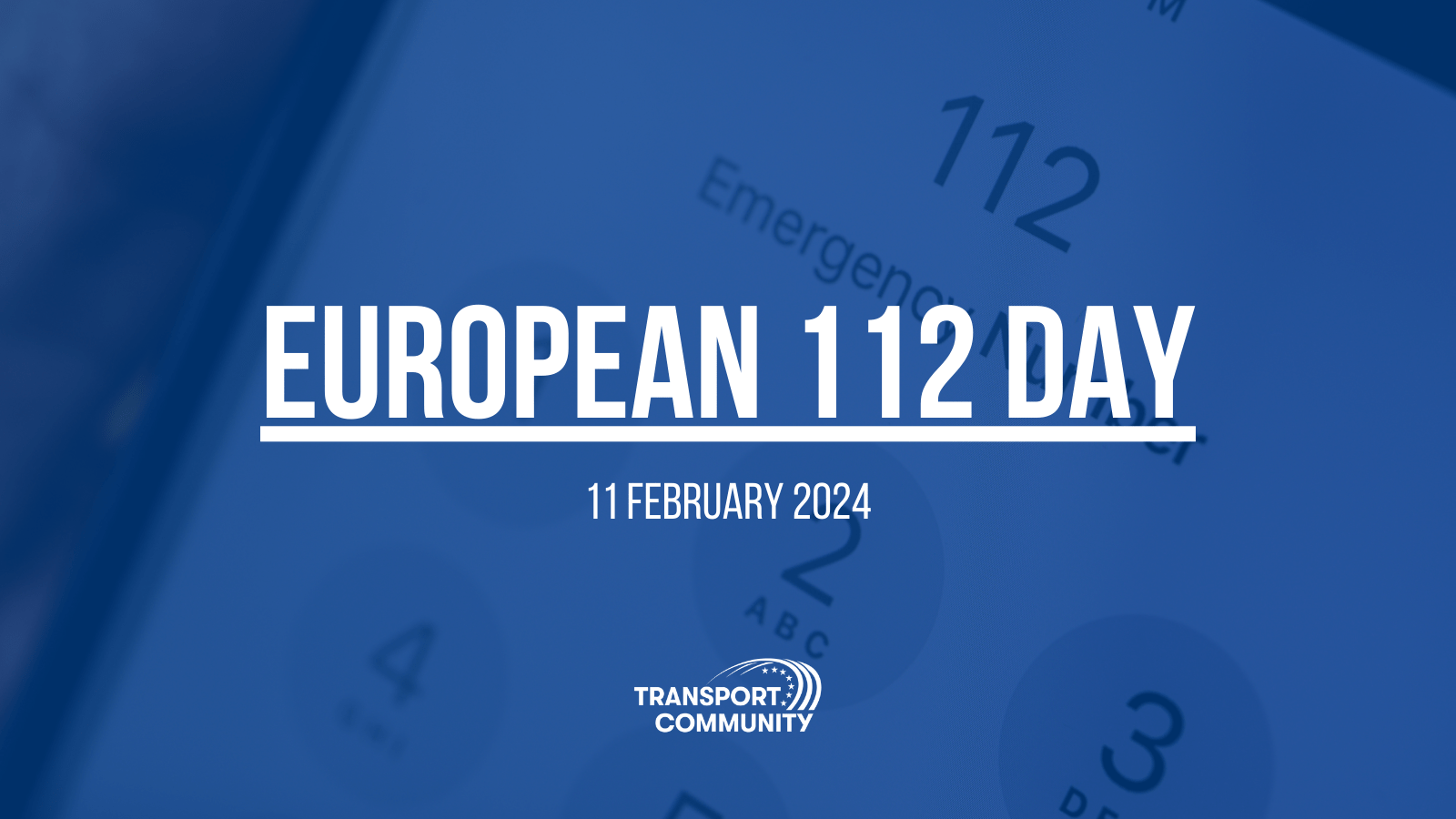
European 112 Day

European 112 Day

WESTERN BALKANS – 11 February marks European 112 Day, a day dedicated to raising awareness about the European emergency number 112 and recognising the crucial work of emergency services personnel across Europe. As we commemorate this important day, the Transport Community Permanent Secretariat joins institutions, communities, and organisations across the continent in highlighting the significance of prompt and efficient emergency response.

Whether it is medical emergencies, accidents, natural disasters, or any other unforeseen event requiring immediate attention, 112 ensures that help is just a phone call away. The emergency services personnel’s commitment and resilience in the face of adversity are truly commendable, and we extend our deepest gratitude for their invaluable service.

In addition to recognising the efforts of emergency responders, European 112 Day serves as a reminder to the public about the importance of knowing and utilising the 112 number responsibly.

Read more…

Credits to : Transport Community

INTERVIEW WITH DR. MIRA JOVANOVSKI DASIC, HEAD OF THE SOUTH-EASTERN EUROPE HEALTH NETWORK (SEEHN) SECRETARIAT

Mental health is a significant concern at the European level. While there are funding opportunities, there are also persistent inequalities between countries. How can these disparities be tackled?
Mental health is indeed a pressing public health concern in Europe. Despite promising funding opportunities, we must recognize disparities among regions and countries. To tackle these issues, a collective and strategic approach is essential. First and foremost, we must acknowledge and understand the unique challenges faced by each area. More than a one-size fit all, a tailored approach is required. We must dwelve into the root causes, ranging from cultural to economic factors.
Collaboration is key. European countries must share best practices, resources and expertise. By establishing a network of collaboration, we can leverage each nation’s strengths to uplift those facing greater challenges. This sense of solidarity will promote collective responsibility for the mental well-being of all European citizens.
Moreover, targeted funding mechanisms are crucial. We must design grants, subsidies, and incentives tailored explicitly to regions and populations experiencing the most significant mental health disparities. Lastly, we must address stigma through robust educational campaigns. Promoting awareness and understanding will create an environment where seeking help is accepted and encouraged.

Moving on to South-Eastern Europe, what are the characteristics of the mental health systems in this region, and how can their needs be addressed?
The South-Eastern Europe Health Network (SEEHN) is a political and institutional forum set up by the governments of Albania, Bosnia and Herzegovina, Bulgaria, Montenegro, Moldova, Romania, Serbia and North Macedonia to promote peace, reconciliation and health in the region. In 2011, Israel became the 9th member state of the Network. The Network covers a region with a population of nearly 60 million in 2020. Excluding Israel, these countries witnessed a significant demographic decline of 6.3 million people (11.1%) from 2000 to 2020. The economic context is characterized by disparities between GDP growth and declining populations, suggesting complex factors like migration and an ageing population. This economic context is crucial as mental health is closely linked to socioeconomic conditions.
Mental health in the region faces challenges such as a higher stigma of mental illness, lack of systematic implementation of mental health policies, and non-transparent decision-making on resource allocation. SEEHN conducted a comprehensive study from 2000 to 2020 to address these needs. The results revealed disparities in mental health policies, quality assurance, financing, and workforce across SEE countries.
While progress has been made, there’s room for improvement. For example, our analysis found that mental health policies and legislation exist in most countries, but there are opportunities for enhancement, particularly concerning national suicide prevention programs.
Future efforts should focus on capacity building, quality assurance, harmonizing legislation with international standards, and fostering inter-sectoral cooperation. These strategies are crucial for effectively addressing the mental health needs of the populations in these countries.

What would be the essential principles of a European Strategy for mental health?
The recent initiative launched by the Commission of the European Union serves as an excellent example from which we can derive a sub-regional tailored strategy. This initiative prioritizes mental health equally with physical health through 20 flagship initiatives and EU funding of 1.23 billion EUR. The guiding principles are adequate and effective prevention, access to high-quality and affordable mental health care, and reintegration into society after recovery.
Adequate and effective prevention involves promoting good mental health through comprehensive initiatives such as a European initiative to prevent depression and suicide, a European Code for Mental Health, and the strengthening of brain health research. Access to high-quality and affordable mental health care requires significant investment in training and capacity-building, ensuring mental health is integrated into all policies, and improving access to treatment and care. Reintegration into society after recovery involves protecting vulnerable groups, especially children and young people, and leading by example internationally by raising awareness and providing quality mental health support in humanitarian emergencies.
This comprehensive approach addresses mental health in all policies to recognize multiple risk factors affecting mental health. Concrete actions will cover a wide range of guidelines and include efforts to promote good mental health, invest in training and capacity-building, ensure good mental health in the workplace, protect children and young people, address vulnerable groups, and lead by example internationally in mental health support during humanitarian emergencies.

AWARENESS AND EDUCATION

How could civil society be involved in preventing, combating, and managing mental health problems?
Civil society plays a crucial role in creating a supportive environment to address mental health challenges. Through awareness campaigns, educational initiatives, and advocacy, civil society can contribute significantly to breaking the stigma associated with mental health issues.
Civil society organizations can collaborate with healthcare professionals and policymakers to create accessible and inclusive mental health services. Promoting mental health literacy, providing resources for early intervention, and establishing support networks empower individuals and communities to address mental health challenges proactively.
Civil society’s engagement in policy advocacy ensures mental health remains a priority on the public agenda. By actively participating in developing and implementing mental health policies, civil society organizations can contribute valuable perspectives that consider the needs and concerns of diverse communities.
Additionally, fostering partnerships between civil society organizations and health professionals can lead to innovative community-based programs that address mental health challenges at the grassroots level.

Are there examples of national good practices that could be translated to the South-Eastern European region?
For more than 20 years the South-Eastern Europe Health Network (SEEHN) has been a key player in the mental health development in the region. Instruments like the Dubrovnik Pledge focused on strengthening social cohesion and mental health. The SEE ministries of health committed their governments to reform the old psychiatric hospital system as an essential component of their overall health system reform process. New community mental health centres were established to help people with mental health problems live better lives.
A dedicated Regional Health Center for mental health was also established in Bosnia and Herzegovina to accelerate change in the region. A critical mass of experts is now playing a crucial driving role in the mental health field and reform process.

Politici de Sănătate nr. 47

THE INTERVIEW IS ENTIRELY PUBLISHED ON www.politicidesanatate.ro