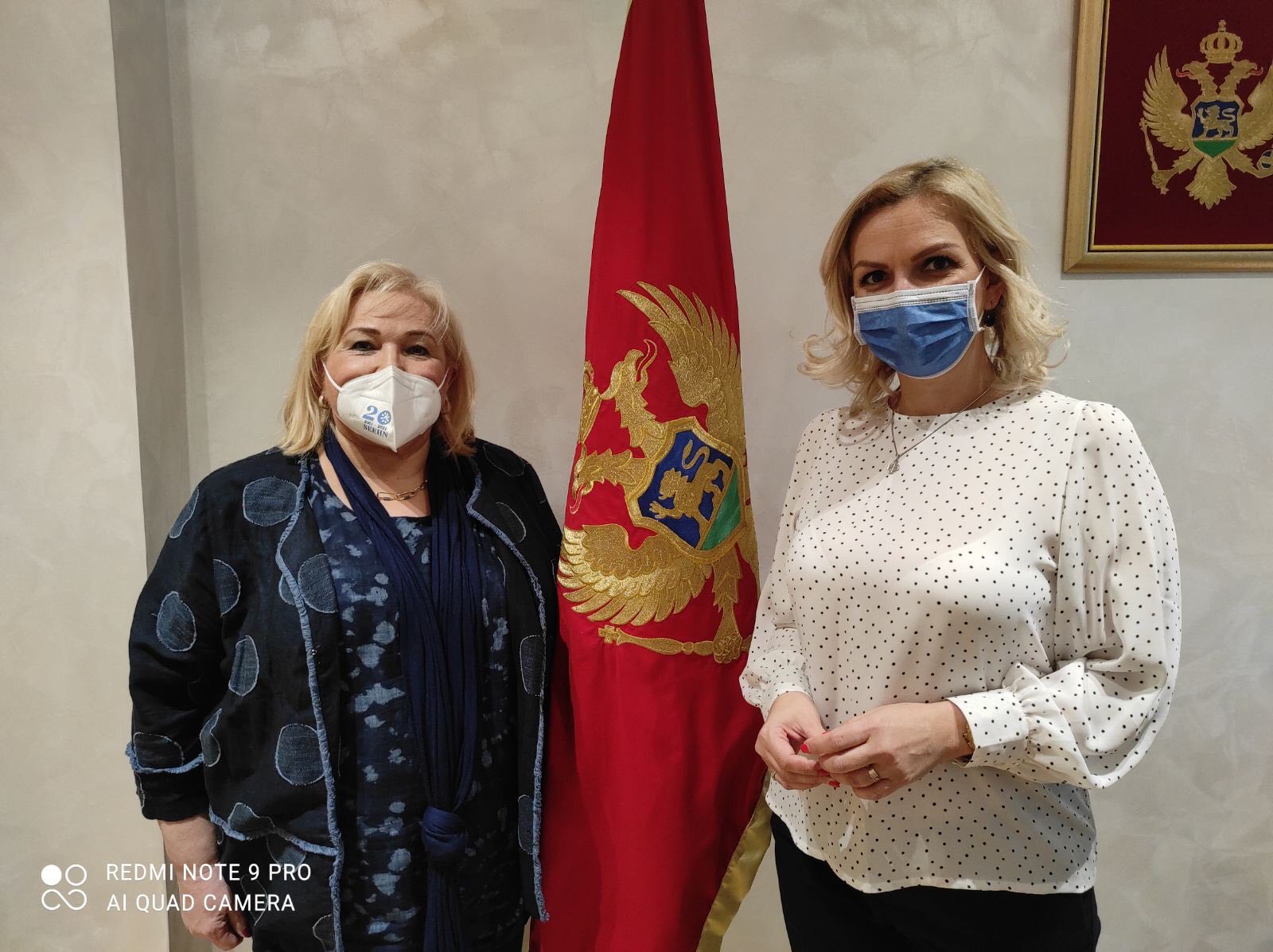
On September 8 2021, Dr. Mira Dasic, Director of the SEEHN Secretariat, met with Dr. Jelena Borovinic-Bojovic, Minister of Health of Montenegro.
nnnn
The focus of the meeting was on the current cooperation, the potential for improvement in recognized areas, the planned projects in the upcoming period and how to strengthen and enhance the work of the Regional Health Development Centers (RHDC).
nnnn
The COVID -19 pandemic has made it critically clear how utterly important is solidarity and our collective responsibility to exit the exceptional circumstances we face today.
nnnn
Sustained efforts to ensure a coherent health security design and to strengthen the surveillance of emerging diseases is a regional necessity. By working together for a strong SEEHN, we can ensure that the SEE region is better prepared for future crises. This will contribute to achieve good health, well-being and prosperity in the countries of the SEE region.
nnnn
These principles are also set out in the SEEHN Joint Statement address for the forthcoming WHO EURO RC meeting on 13-14 September.
This year, the South Eastern Europe Health Network (SEEHN) celebrates its 20th anniversary.
nnnn
Today, the Network is a success story of impactful regional cooperation to promote shared values and to encourage mutual efforts towards peace, health and well-being of the people of SEEHN Member States.
nnnn
Yet the beginnings of its creation are a very vivid reflection of the dramatic transition that the region has overcome in the last 2 decades.
nnnn
During the ’90s, the countries in South Eastern Europe faced great challenges. Plagued by conflict, political unrest, slow economic growth and historic divisions, after the fall of the communism in East Europe, the possibility of establishing dynamic networks of cooperation in the region appeared unlikely.
nnnn
It was not until 2001, that under the umbrella of the Stability Pact for South East Europe, and thanks to the remarkable efforts of the World Health Organization’s Regional Office for Europe, the Council of Europe and the Council of Europe Development Bank, that the time seemed ready for a process of cross-border cooperation between the Balkan states not only in the political arena but also in the field of public health.
nnnn
It was for the first time in the process of rebuilding a region when health was seen as an engine of well-being and social and economic development and considered as a potential common ground for cooperation projects that could have a significant impact on social cohesion.
nnnn
This was the long-awaited unique opportunity to start exploratory discussions for regional health cooperation that took place in Sofia and Bucharest, which would lead to the remarkable result of the creation of the first cross-border health policy alliance in the region. In fact, having coutries in the region sit together was itself an achievement.
nnnn
The signing of the Dubrovnik Pledge, in September 2001, by seven of its Member States: and the creation of SEEHN has been recognized as a major political success for peace and cross-border cooperation. Countries that were once being pulled apart by conflict were coming together to benefit from the regional interconnection.
nnnn
The South-Eastearn Europe Health Network was established thanks to the hard work and dedication of excellent individuals, that should be recognized for their contribution and awareness that the Network is a vehicle for peace, health development and wealth.
nnnn
But personal ties alone were not enough to stitch these countries together in a way that would have widespread benefit. Further Agreements needed to be concluded and perfected to ensure the smooth functioning of the Network that would allow it to implement its commitments. New areas of cooperation needed to be added in response to the societal challenges and new memberships needed to be perfected adding new milestones to the history and to define the identity of a Network that allowed it to evolve towards an instrument of joint progress in the region that it is today.
nnnn
In addition to this, its enduring and dynamic partnership network with international organizations, European countries, nongovernmental organizations, and other institutions have provided strong political, technical and financial support and cooperation. This have helped the Network to strengthen regional health policies, implement health projects in key public health areas of regional concern and establish Regional Health Development Centers.
nnnn
For the past two decades, SEEHN has paved the way for health, peace, social inclusion, economic development, wealth, well-being and sustainable development. This is the story of a dream, a true story of a fairy tale that deserves to be told, so that future generations can know and keep alive this legacy.
nnnn
This year, two decades after its founding, in a time of great uncertainty, we can still celebrate the past as we look to the future. But we must think hard about what we want the next 20 years to bring.
nnnn
Today, the nine Member States of the Network, Albania, Bosnia and Herzegovina, Bulgaria, Israel, Montenegro, Moldova, North Macedonia, Romania and Serbia stand united, working together in a region abundant with human and natural resources, cultural treasures and growing markets, ready to face the challenges of the present and those that are to come.
nnnn
Twenty years from now, we hope the SEEHN countries will find new horizons to upgrade the cooperation in the health field inspiring the region to blossom into an area of prosperity and opportunity beyond what we can envision.
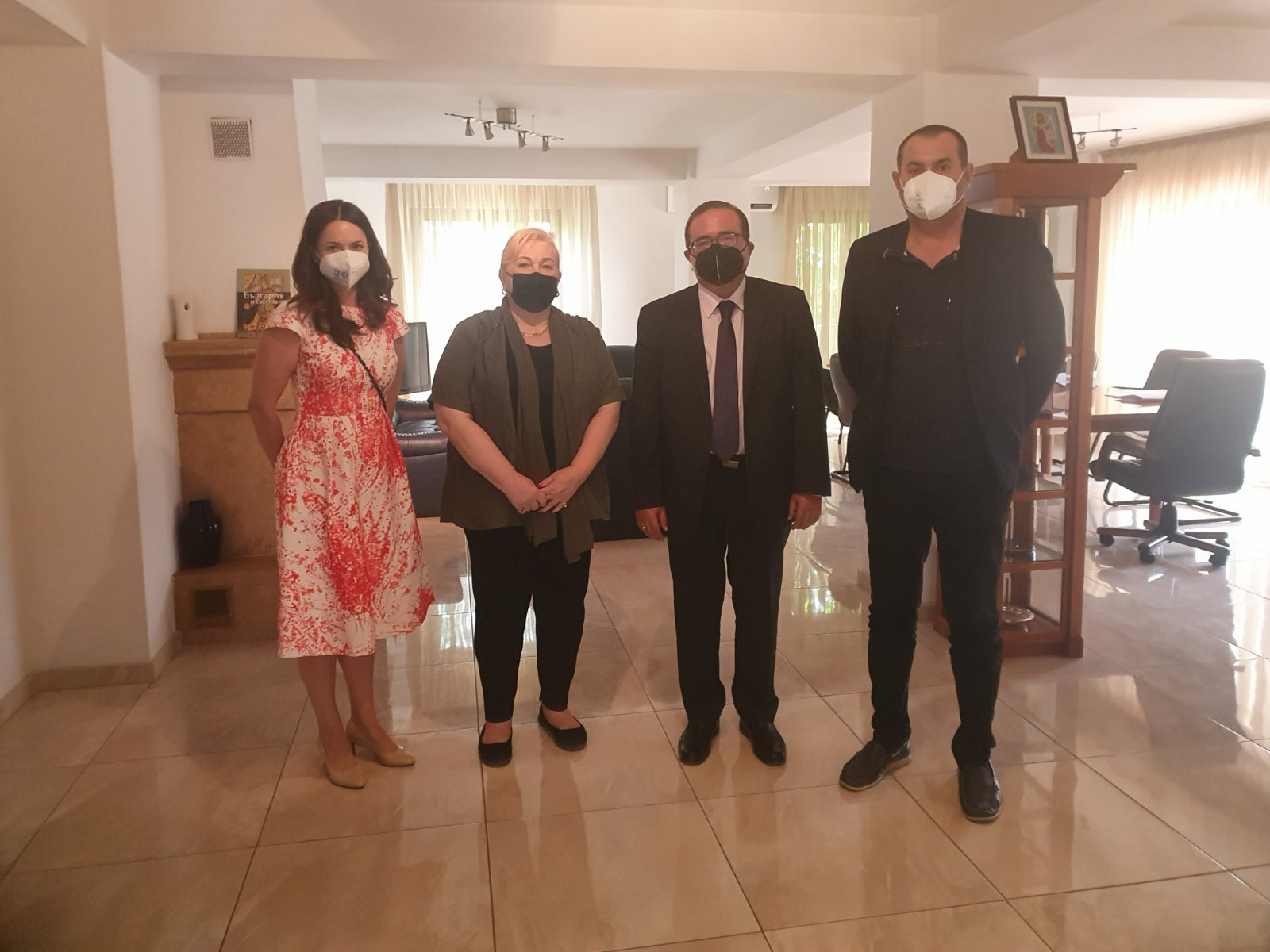
Dr Mira Dasic met Counselor Mr. Dimitar Karastoyanov, Embassy of the Republic of Bulgaria to North Macedonia, on 28 July 2021.
nnnn
Dr Dasic presented the SEE Health Network and its recent most important activities. A particular attention was payed to the Regional Health Development Centers (RHDCs) as hubs of regional expertise with focus on the RHDC on Antimicrobial Resistance hosted by the Republic of Bulgaria. She underlined the ways and possibilities on how to strengthen the national and regional capacities to enable adequate response to this increasingly important topic.
nnnn
The counterparts discussed the prospective of the future collaboration at the multilayer level and at the level of the member state of the SEEHN. Health Regional cooperation needs to continue with activities to build resilience and to strengthen the Health systems in the SEE Region to the benefit of our populations.