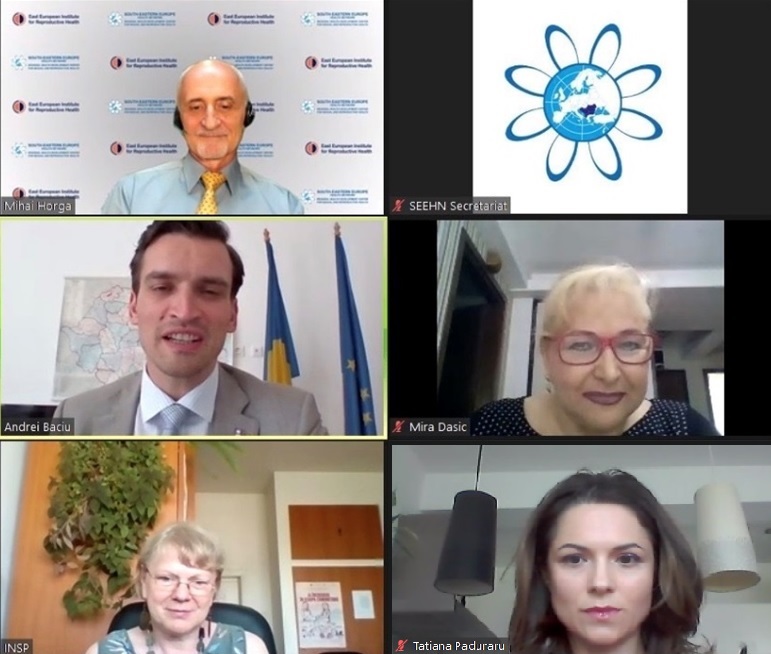
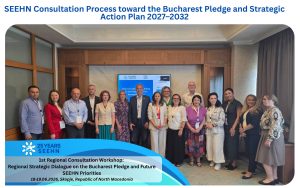
SEEHN Secretariatntoday hosted virtually a meeting with the State Secretary, Ministry of HealthnRomania and SEEHN National Health Coordinator Romania, Dr Andrei RomicanBaciu, Mrs Adriana Galan SEEHN NHC alternate and Dr Mihai Horga,ndirector SEEHN Regional Health Development Center for Sexual and ReproductivenHealth ( hosted by Romania) to discuss how to better plan, prepare andncoordinate regional efforts under Romanian Presidency mandate July 1, 2020 – December 31, 2020.
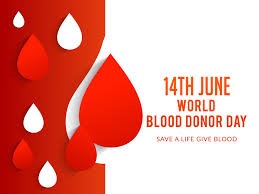
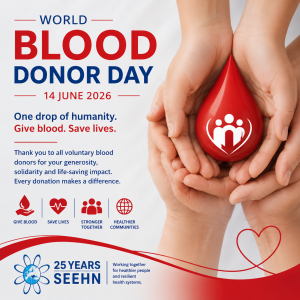
World Blood Donor Day is an event at international levelncelebrated every year on 14 June, to raise awareness on the need for safe bloodndonations; to praise and to thank regular blood donors; and to encourage morenpeople to give blood on a regular basis.
nnnn
There is no real substitute for human blood and onendonation can save three lives. Every couple of seconds someone around the worldnneeds blood. Blood transfusions save millions of lives each year, both innemergency and non-emergency situations.
nnnn
It needs to be highlighted that the services providingnsafe blood and blood products are an essential element of every health carensystem.
nnnn
This year, 2020 is marked by the COVID-19 pandemic. COVID-19 convalescent plasma can be a life-savingnact of solidarity.
nnnn
nnnn
WHO encourages governments, national healthnauthorities and national blood services to work together to:
nnnn
ensurensystems and infrastructure are in place to increase collection of blood fromnvoluntary, regular unpaid donors;
establishnand strengthen quality assurance systems for blood and blood products to ensurensafe blood and blood products;
providenquality donor care;
promotenand implement appropriate clinical use of blood; and
overseenthe whole chain of blood transfusion.
nnnn
SEE Health Network joins the celebration of the WorldnBlood Donor Day and underlines that everyone should have access to safe bloodnand blood products.
South Eastern Europe Health Network (SEEHN) celebratesnthe # No Tobacco Day to raise awareness on the importance of the protection ofnthe new generations in the SEE Health Network – 9 Member States.
nnnn
Every year, WHO recognizesnindividuals or organizations in each of the six WHO Regions for theirnaccomplishments in the area of tobacco control. This recognition takes the formnof WHO Director-General Special Recognition Award and World No Tobacco DaynAwards.
nnnn
This year among the EuropeannRegion awardees, is Dr Ghenadie Turcanu, program coordinator, Center for HealthnPolicies and Studies, Republic of Moldova.
nnnn
SEEHN is congratulatingnand recognizing the champions in the SEE Region that are role models in thentobacco control area.
nnnn
Tobacco products kill more than 8 million people everynyear. Tobacco use is responsible for 25% of all cancer deaths globally. Usenof nicotine and tobacco productsnincreases the risk for cancer, cardiovascular and pulmonary disease. Over 1 million people die from second-hand smoke exposure every year.
nnnn
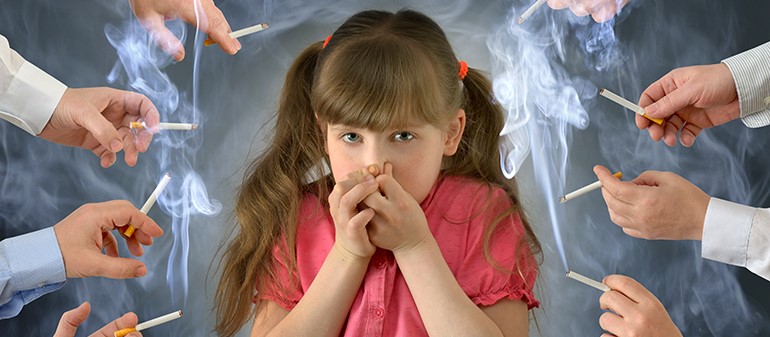
Itnneeds also to be highlighted that the third-nhand smoke is residual nicotine and other chemicals left on indoor surfacesnby tobacco smoke. People are exposed to these chemicals byntouching contaminated surfaces or breathing in the off-gassing from thesensurfaces. This residue is thought to react with common indoor pollutants toncreate a toxic mix including cancer causing compounds, posing a potentialnhealth hazard to nonsmokers — especially children.
nnnn
Tobacco and related industries’ target children andnadolescents by using market tactics that include:
nnnn
Overn15,000 flavors, most of which attract children and adolescents
Socialnmedia influencers in marketing
Sponsornevents and parties
Schoolnscholarships
Sleek,nsexy designs
Productnplacement in entertainment media
Freenproduct samples
Singlenstick cigarettes that make addiction more affordable
Sellnproducts at eye level for children
Productnplacement and advertising near schools
nnnn
nnSEE Health Networknhas the dream of tobacco free generations, decrease of second-hand smoke andnthird-hand smoke and the deaths and diseases that they cause. This is a questnfor all public health professionals around the Region through enforcement ofnthe anti-tobacco legislation and strong mechanisms of implementation andncontrol. nnnn