The SEEHN Fourth Ministerial Forum “Health, well-being and prosperity in South-Eastern Europe (SEE) by 2030 in the context of the 2030 Agenda for Sustainable Development” concluded with the signing and approval of the Chisinau Pledge.
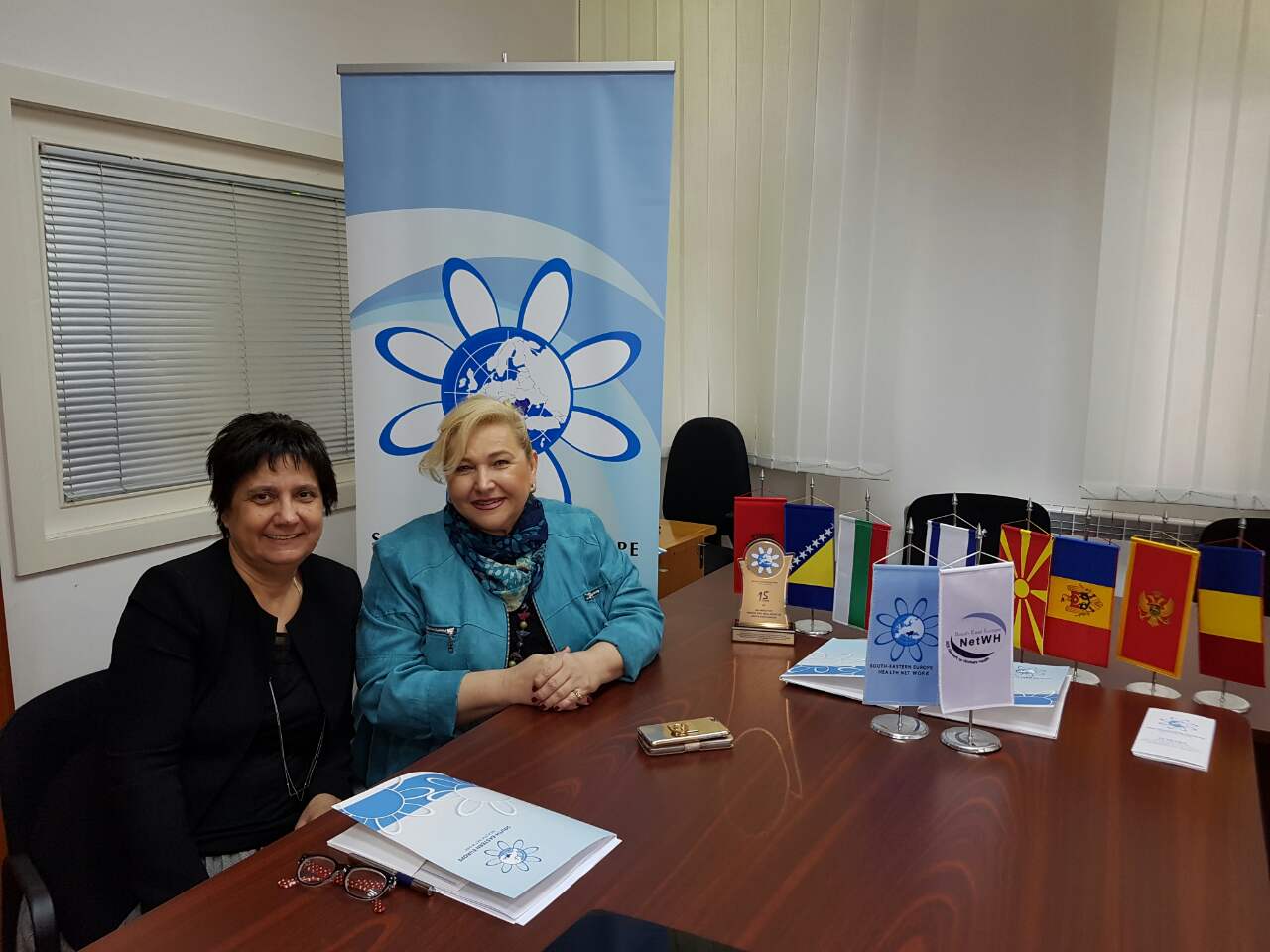
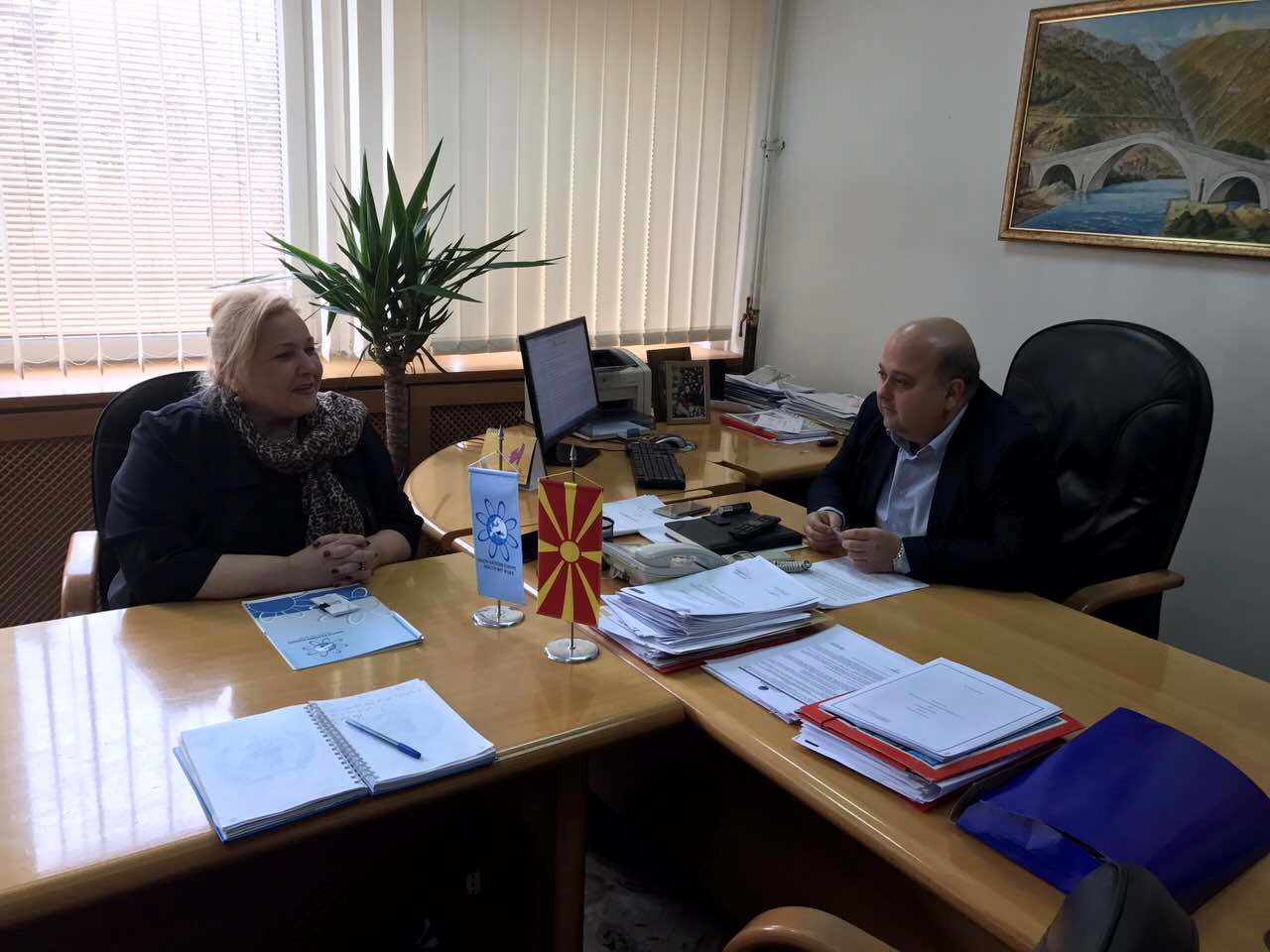
In this framework, SEE Network on Workers’ Health (SEENWH), WHO Collaborating Center expressed their commitment, through signing the Chisinau Pledge during a bilateral meeting held on 09 of May 2017 in the premises of SEEHN Secretariat between Dr. Mira Jovanovski Dasic, Head of SEEHN Secretariat and Prof. Dr. Jovanka Karadžinska-Bislimovska, Coordinator of SEENWH.
This opportunity was used to discuss possible areas for cooperation for the future period.
In addition, upon the request of the SEEHN director, Dr. Dragan Miakoski from Institute of occupational health of the Republic of Macedonia (IOHRM) delivered his presentation prepared for the World Health Day on “Occupational diseases associated with depression”. The presentation included data from a research conducted among health workers in the Republic of Macedonia, which showed shortages at different levels.
The Fourth Forum, under the theme “Health, well-being and prosperity in South-Eastern Europe by 2030 in the context of the 2030 Agenda for Sustainable Development” was held in Chisinau, Republic of Moldova on 3-4 April 20017.
The Forum was hosted by The Government of the Republic of Moldova and organized jointly by the South-eastern Europe Health Network in collaboration with the WHO Regional Office for Europe.
The high-level representatives of governments in the SEE region and beyond, discussed in an open and constructive atmosphere and identified common challenges, strategic achievements and priorities of the SEE regional cooperation in public health. They mutually introduced joint subregional and national actions in the SEE region, for implementing and achieving the United Nations Sustainable Development Goals (SDGs), with the objective of better health, equity and accountability, as high priority for underpinning political cooperation and economic development in the SEE region.
More than 15 years of SEE cooperation (2001–2016) is streamlining towards the global and European efforts, for achieving improved health, equity and accountability, building on major European resolutions, charters, communiqués, treaties, frameworks and action plans, including the new European policy framework for health and well-being, Health 2020.
The endorsement of the Chisinau pledge, by nine south-eastern European countries – Albania, Bosnia and Herzegovina, Bulgaria, Israel, Montenegro, Republic of Macedonia, Republic of Moldova, Romania and Serbia, on April 4th 2017, established the basis for the continuation of the cooperation in public health, in the forthcoming period.
The prevalence of depression in the SEEHN is growing, relatively following the pulse of the rest of the countries in Europe, which register an increase of more than 18% between the year 2015 and 2015.
Depression affects people of all ages, from all walks of life and it impacts on people’s ability to carry out even the simplest everyday tasks, with sometimes devastating consequences for relationships with family and friends and the ability to earn a living.
At worst, depression can lead to suicide, now the second leading cause of death among 15-29-year olds.
It is difficult to get precise data on the number of people suffering from depression in the SEE Countries because the reporting of depression disorders is underestimated.
It is affirmative that the perception of depression in the SEE Countries is changing and the knowledge that depression can be prevented and treated is creating better condition for undertaking measurements.
Today, on April 7th the World Health Organization, marked the World Health Day with the campaign theme Depression, aiming to better inform the general population about depression: its causes and possible consequences, including suicide, and what help is or can be available for prevention and treatment.
On this occasion, many events have been organized within the SEEHN Member Countries. Among them, we would like to highlight the press conference that has been held at the premises of the World Health Organization in Sarajevo, with the participation of representatives of the Federal Ministry of Health, the Swiss Agency for Development, a representative of the University Clinical Center in Sarajevo, a representative of user associations Phoenix and the Acting Director of the Regional Health Development Center (RHDC) on Mental Health, Dr. Dunja Smitran.
Since 2011 activities related to Mental Health have been widely covered by the RHDC on MH in Sarajevo
The Director of the SEEHN Secretariat, Dr. Mira Jovanovski Dasic, on April 6th attended the expert meeting on the theme Depression and Mental Health, organized by the Institute for Occupational Health – WHO Collaborating Center in Skopje and Partner of the SEEHN, in line with the campaign of the World Health Organization (WHO) to emphasize the importance of talking about depression as a vital component of recovery.
Dr. Dasic, together with the WHO and other UN representatives, took part at the Celebration of the World Health Day organized by the Macedonian Doctors Association, supported by the Minister of Health of the RM, Mr. Nikola Todorov and the President of the Doctors Association, Dr. Goran Dimitrov.
Depression can be prevented and can be treated. A better understanding of depression will contribute to reducing the stigma attached to this condition and encourage people who are faced with the problem to seek professional help. The campaign slogan is: Depression: let’s talk.
On 27 March 2017 the new Head of the Secretariat of the South-Eastern Europe Health Network (SEEHN) Dr. Mira Jovanovski-Dasic met with the Deputy Minister of Health of the Republic of Macedonia Mr. Jovica Andovski. This was the first official activity of Dr Jovanovski-Dasic in the capacity of the Head of the SEEHN Secretariat.
Deputy Minister Andovski pointed out that the Republic of Macedonia is fully committed to cooperation within the framework of the SEEHN as the key initiative for addressing health issues in the region.
Dr. Jovanovski-Dasic gave an insight into future plans for continuation of the successful collaboration and potentials for its further development. She also shared information about the 4th South-Eastern Europe Health Ministerial Forum which will take place in 3-4 April 2017 in Chisinau, Moldova.
Mr. Andovski and Dr. Jovanovski-Dasic agreed that there are many challenges in this region, in the field of health at different levels: political, technical and administrative. SEEHN in the past 15 years has proved to have huge potentials to be a sustainable initiative of regional ownership. It is expected that SEEHN through the establishment of its own Secretariat will particularly highlight these possibilities .
The South-eastern Europe Health Network (SEEHN) joins the global efforts in managing changes of their health systems performance to end tuberculosis, particularly in the South Eastern European countries.
In the context of the World TB Day, celebrated on 24 March 2017, the SEEHN will have a meeting organized by WHO Regional Office for Europe on “Managing Change in Health System Related to Key Communicable Diseases”. This pre-Forum event will be held on 2 April 2017 in Chisinau, Republic of Moldova prior to the Fourth SEE Health Ministerial Forum “Health, well-being and prosperity in South-eastern Europe by 2030 in the context of the 2030 Agenda for Sustainable Development”.
The event has the aim to stress the importance TB control and its decrease in the region. It is an excellent opportunity to discuss with the key stakeholders of the SEE countries the present approaches and strategies on how to improve the communicable disease response through health system strengthening. Health services financing, new model of services delivery and new approaches to strategic planning of the human resources are among critical elements of the systems that may be reformed. Sustainability and self-reliance are the key focuses in the coming years.
The WHO Europe TB profiles are specific for each country. They vary throughout the SEE countries. Detailed information might be downloaded following the links:
On 03 and 04 April 2017 the ministers of the nine countries members of the SEE Health Network will gather at their Fourth SEE Health Ministerial Forum in Chisinau, the Republic of Moldova. The Forum is co-organized by H.E: Ms. Ruxanda Glavan, President of the SEEHN, Minister of Health, Republic of Moldova and Dr. Zsuzsanna Jakab, Regional Director, WHO Regional Office for Europe. (more…)
The 38th Plenary Meeting of the South-eastern Europe (SEE) Health Network and Second High Level Pre-Forum Meeting was held on 14-15 December 2016 in Chisinau under the Presidency of the Republic of Moldova. This important event was organized with the kind financial support of the Regional Cooperation Council (RCC).nnThe SEE National Health Coordinators, the Directors of the SEE Regional Health Development Centres as well as partners discussed in an open and constructive environment all major strategic, governance and technical issues of the network..nnThe 38th Plenary reviewed the level of preparation for the Fourth Forum, defined possible challenges facing the Forum and took important decisions, in particular, related to the approval and signing of the Forum´s outcome documents. More importantly during the 38th Plenary in Chisinau the current state of the SEE Health Network was assessed. Practical decisions were taken and agreed on its further strengthening, improved performance and visibility.nnAn important decision was taken for extending the Presidency of the Republic of Moldova in the first six months of 2017 and for organizing the Fourth Ministerial Forum in Chisinau.nnFinally, during the 38th Plenary the SEE Health Network reached an unanimous agreement on the selection of the Head of the SEEHN Secretariat.nnhttps://www.facebook.com/OMSMoldova/?hc_ref=PAGES_TIMELINEnnhttp://www.ms.gov.md/?q=stiri/republica-moldova-este-gazda-reuniunii-seehnnnhttps://www.facebook.com/sanatatemoldovann
14-15 December 2016, Chisinau, Republic of Moldova
The SEE Health Network Presidency, Executive Committee and Secretariat will be convening the 38th Plenary of the network on 14th December 2016 in Chisinau, Republic of Moldova under the Presidency of the Moldavian Minister of Health, H.E. Ms. Ruxanda Glavan.
The 38th Plenary will be attended by the SEE National Health Coordinators and the Directors of the SEE Regional Health Development Centers as well as by the partners. This important event is organized with the kind financial support of the Regional Cooperation Council (RCC).
Its main goal is to review the level of preparation for the Fourth Forum[i], to define possible challenges facing the Forum and to take important decisions to that end and, in particular, related to the approval and signing of the Forum´s outcome documents. More importantly even, the 38th Plenary will assess the current state of the SEE Health Network and will brainstorm on and take practical decisions on its strengthening and better performance and visibility.
In addition, the 38th Plenary will also:
Review and discuss the Moldavian Presidency Report for the second half of 2016;
Review and discuss the Roadmap of the Bulgarian Presidency in the first half of 2017;
Agree on a potential candidate for the post of the Head of the SEEHN Secretariat.
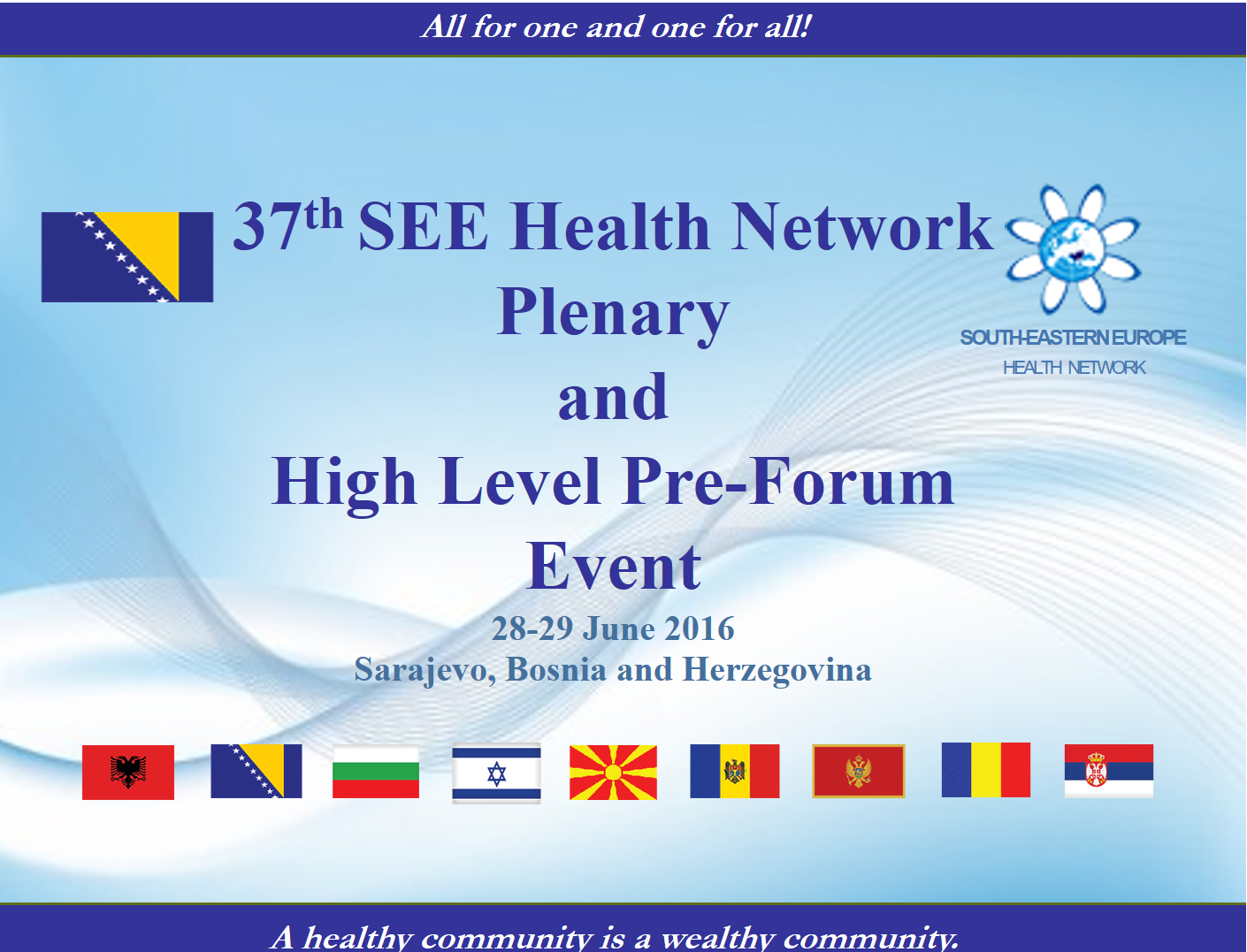
of the 37th Plenary Meeting of the South-eastern Europe Health Network (SEEHN) and High Level Pre-Forum Event
Sarajevo, Bosnia and Herzegovina, 28-29 June 2016
On 30 June 2016 the Presidency of Bosnia and Hercegovina of the SEE Health Network was completed with a full and unprecedented success, its peak being the 37th Plenary Meeting of the South-eastern Europe Health Network and High Level Pre-Forum Event “Health, Wellbeing and Prosperity in South East Europe in the framework of the UN Sustainable Development Goals 2030”, held on 28-29 JUne 2016 in Sarajevo.
This High Level Pre-Forum Meeting and 37th Plenary of the SEE Health Network is the most important event that will lead the SEE Governments and health professionals to a successful Fourth SEE Health Ministerial Forum in November 2016 in Chisinau, the Republic of Moldova.
The 37th Plenary Meeting of the South-eastern Europe Health Network and High Level Pre-Forum Event fulfilled its objective, e.g. conducted the first round of inter-country consultations on five important documents to be ready for the Ministers of Health at their forthcoming Fourth Ministerial Forum.
The 37th Plenary Meeting of the South-eastern Europe Health Network and High Level Pre-Forum Event confirmed the strong commitment of all SEE governments to the extended sub-regional cooperation for introducing and/or strengthening the values, priority areas, and actions towards achieving better health, well-being and prosperity in the region in the framework of the UN SDGs. In that respect, the first draft Chiasinau Pledge and the draft Framework towards developing the SEE Health Strategy 2030 in line with the UN Sustainable Development Goals 2030 were discussed and approved as an excellent starting point for the forthcoming multigovernmental consultation process in July – September 2016 prior to the Fourth Health Ministerial Forum.
Another strong decision of the 37th Plenary under the Presidency of Bosnia and Herzegovina was related to the revisions of the SEE Health Network Memorandum of Understanding (MoU) of 2008 and its Addendum of 2011, its STATUTES of 2004-2005, and the development of full-scaled standard operational procedures (SOPs). All countries´ high level representatives stood firm behind the commitment not only to extend the regional collaboration but to go towards developing a new Memorandum of Understanding of 2016 for the Ministers of Health to approve in Chisinau and, thereafter, to be endorsed by the SEE Health Network countries´ Governments and Parliaments, if required, so that the SEE Health Network becomes even stronger international organization with its own legacy and legal status.
Additionally, the participants of the 37th Plenary in Sarajevo approved with acclamations the two, so far developed, background documents that will serve as the evidence for the Ministers in Chisinau at their next Forum in November 2016. These are:
draft study, to be published, on the regional collaboration for health and the SEE Health Network, and
draft study on health, health systems and investments for health.
A third study on cross-border public health and SEE platform for emergencies is still in progress. These three studies and the forthcoming official publications will be serving as the solid evidence to back up the Chisinau Pledge, the Framework towards developing a SEE Health Strategy 2030 and the new SEEHN MoU with SOPs.
Last but not least:
Memorandum of Understanding was signed with a new partner, Instituto Superiore di Sanità – URE (ISS), e.g. the National Institute of Public Health, Rome, Italy. The two partners will work together entirely in the area of emergency preparedness, response and management.
A Decision on developing programs for reducing the excess salt intake in the countries of the region was also approved, based on a very successful multicounty workshop organized with the support of the EC TAIEX Instrument and held in Podgorica, Montenegro, April 2016.
The final report of the Presidency of Bosnia and Herzegovina and the Report of the 37th Plenary and High Level Pre-Forum Event will be posted by 20th July 2016 on the SEEHN Website.
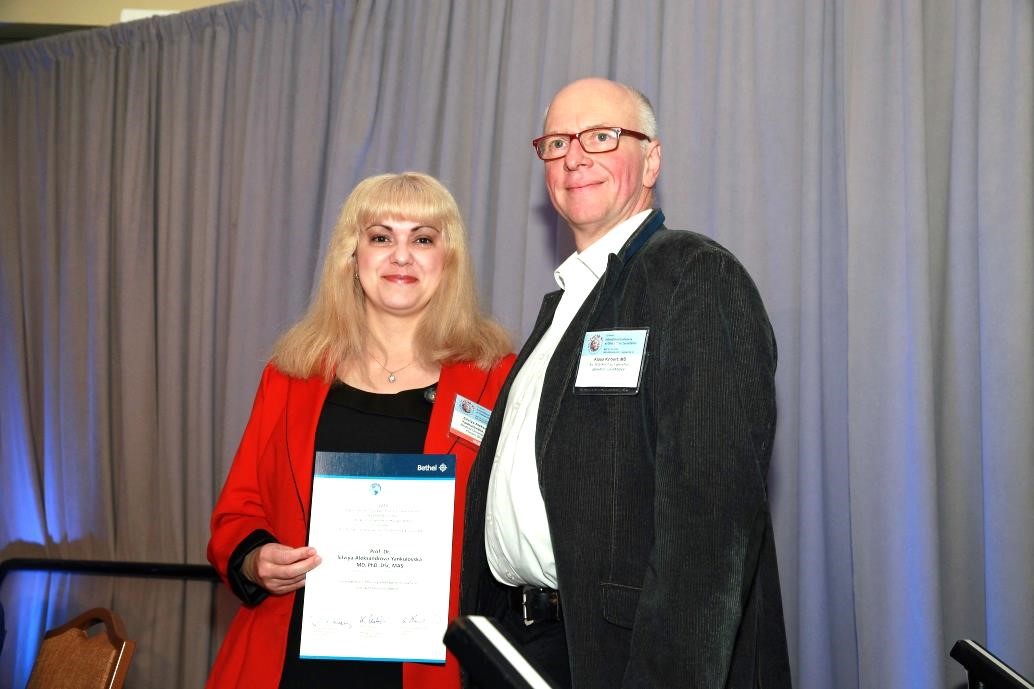
On 20-th of May at the opening ceremony of the 12-th International Conference on Clinical Ethics and Consultation the Hans-Joachim Schwager-Prize for Clinical Ethics for 2016 was presented to Prof. Silviya Aleksandrova-Yankulovska, Dean of the Faculty of Public Health at the Medical University of Pleven, Bulgaria.
The award carries the name of Professor Hans Joachim Schwager who was a pioneer in clinical ethics in Germany initiating ethics education for staff members and consultation rounds in early nineties in Bielefeld. The award aims at individuals or groups, who perform innovative or pioneer work in clinical ethics. As the implementation of a clinical ethics program often needs stamina and courage, the award is intended to encourage and support these initiatives.
The Board of Directors of the v. Bodelschwinghschen Stiftungen Bethel sponsor the Hans Joachim Schwager Award for Clinical Ethics and present the prize together with the International Conferences on Clinical Ethics and Consultation leadership. The Prize is presented to a scholar from Eastern Europe for first time which is a high recognition of Prof. Yankulovska’s work. She has been an active member of the European Clinical Ethics Network since its establishment closely studying European clinical ethics consultation practices and collaborating with all the leading European experts in the field.
The wining project is named “Application of adapted METAP methodology for clinical ethics consultation in Bulgaria” and took place in 6 clinical units in the country over the period May 2013 – December 2014. Applying the instruments of the methodology 69 ethics meetings with 286 participants were held altogether.
Professor Stella Reiter-Theil, President of the Jury, in her laudation of Prof. Silviya Yankulovska underlined: “The winning project does not only consist of the adaptation of concepts and tools to the Bulgarian situation. It also provides, after only a few years of practice, already rich data and cases from various clinical sites in Bulgaria illustrating the value of applying the METAP methodology to engage clinical staff in ethical case discussions. After this fulminant start it can be expected that clinical ethics support will continue to raise interest and obtain acceptance in the Bulgarian health care sector. We wish the winner and her wining project all the best for the future!”
The Presidency of Bosnia and Herzegovina of the SEE Health Network (SEEHN) (health authorities in Bosnia and Herzegovina shall be understood as Ministry of Civil Affairs of Bosnia and Herzegovina, Federal Ministry of Health, Ministry of Health and Social Welfare of Republic of Srpska and Department of Health and Other Services of Brcko District of Bosnia and Herzegovina), its Executive Committee and Secretariat are pleased to make this advanced announcement of the 37th Plenary of the SEEHN and High Level Pre-forum Event.
The Event is called by H.E. Mr. Adil Osmanovic, President of the SEEHN, Minister of Civil Affairs of Bosnia and Herzegovina and will be held on 28-29 June 2016 in Sarajevo, Bosnia and Herzegovina.
The 37th Plenary of the SEEHN and High Level Pre-Forum Meeting is the most important event that will lead the SEE Governments and health professionals to a successful Fourth SEE Health Ministerial Forum in November 2016 in Chisinau, the Republic of Moldova. The Fourth Health Ministerial Forum is the next cornerstone of the regional cooperation for public health and well-being in South East Europe and it aims to further direct the political and technical collaboration that would benefit from a closer partnership between the SEE countries, members of this network.
The focus of the Fourth Forum and, respectfully, of the 37th Plenary Meeting of the SEEHN and High Level Pre-Forum Event in Sarajevo, Bosnia and Herzegovina is “Health, Wellbeing and Prosperity in South East Europe in the framework of the UN Sustainable Development Goals 2030”.
The Forum and the 37th Plenary of the SEEHN and High Level Pre-Forum Event come after 15 years of regional cooperation in SEE (2001-2016). The SEEHN will build on major European resolutions, charters and communications, treaties, frameworks and action plans. Included amongst these are the European policy framework for health, Health2020 and the SEE 2020 Strategy through which the SEEHN will continue to implement the values, priority areas and actions of these documents and will further implement joint sub-regional and national actions in the SEE region for achieving the UN Sustainable Development Goals 2030 (UN SDGs 2030) with the objective of better health, equity and accountability.
The 37th Plenary Meeting of the SEEHN and High Level Pre-Forum Event will conduct the first round of inter-country consultations on five outcome and background political documents to be ready for Fourth SEE Health Ministerial Forum in Chisinau on 03-04 November 2016. The expected outcome of the 37thPlenary Meeting of the SEEHN and High Level Pre-Forum Event will be to discuss and collect the opinions of all SEE governments on the extended sub-regional cooperation for introducing and/or strengthening the values, priority areas, and actions towards achieving better health, well-being and prosperity in the region in the framework of the UN Sustainable Development Goals (SDGs) 2030. It is also expected that a Memorandum of Understanding for partnership with Instituto Superiore di Sanità – URE (ISS), Rome, Italy will be signed.
The Jubilee Scientific Conference celebrating the 10th anniversary of the Faculty of Public Health in Pleven took place on 1-3 October 2015 under the title of “Public Health Policy and Practice”.
Divided into three plenary sessions, various conference topics were tackled in the context of both the negative public health trends that Bulgaria faces and the urgency to find appropriate solutions. Bringing into focus the epidemiology of infectious and chronic non-infectious diseases, the ethics of public health and clinical practice as well as health promotion and management, quality of health care and medical rehabilitation and ergotherapy, the Jubilee Conference has provided health professionals and managers with the opportunity to exchange valuable experience and ideas and to enhance their professional connections in the field of public health research and practice for prevention and control of public health processes.
The abstracts of the Jubilee Scientific Conference comprise the latest edition of the Journal of Biomedical and Clinical Research, issued by the Medical University – Pleven twice per year. Entirely dedicated to conference itself, this edition also features the Rector of the Medical University Prof. Dr. Slavcho Tomov who describes the Faculty of Public Health as the “leading structure within our university and a solid educational center for training of public health professionals and managers”.
Recognizing the seriousness of the health workforce migration in recent years and the negative effects of brain drain and brain waste, the Republic of Moldova implemented the project “Better Managing the Mobility of Health Professionals” under the coordination of the World Health Organization.
Financially supported by the European Union, the project aimed to strengthen the capacity of the Republic of Moldova to manage the migration of Moldovan health professionals and to build up a better framework for the legal migration of health workers between Moldova and the EU in order to reduce or mitigate the negative impacts of migration on the Moldovan health system as well as to ease the reintegration of returning health workers.
Engaging a big team of WHO staff, experts, national authorities, medical institutions and medical education institutions both in the Republic of Moldova and from EU countries, the project incited and contributed to a 3-year-long fruitful collaboration that provided for substantial change in the HRH area in the country.
Achievements
One of the main project achievements is the development of a national information system (SIERUSS) to monitor the mobility of health professionals and the training of approximately 800 people in HRH governance and management and in using the SIERRUS database.
Furthermore, the project provided for the development of a relevant legislative framework and drafts of new regulations related to the employment and remuneration of health workers, improvement of both curricula for medical colleges and various postgraduate training programs, accreditation of the School of Public Health and Management as well as for the development of an e-learning platform at the University of Medicine and Pharmacy “Nicolae Testemitanu”.
An overview of all project activities, including the series of studies conducted in several European countries and the organization of dozens of policy dialogues, workshops and an information campaign, was given during the project closing conference held in March 2015. Also presented was a 20-minute movie summarizing the context, the challenges, the results and the lessons learned through views and opinions of Moldovan health professionals and WHO official representatives.
The Republic of Moldova as a SEEHN member
The example of the Republic of Moldova, one of the 10 member States of the SEE Health Network is to be commended. That was one of the reasons why the Republic of Moldova was authorized by the SEE Health Network to lead and coordinate the regional efforts on health workforce and its mobility through its designated Regional Health Development Centre in Chisinau.
Similar activities could and should be followed by the other SEE countries in either national and/or regional way. Health workforce is a major challenge for 9 of the 10 SEE Health network countries and is one of the four health objectives of the SEE 2020 Growth Strategy “Jobs and Prosperity in a European Perspective” which is currently in implementation with the support of the Regional Coordination Council, the European Commission DG Enlargement and many more international partners.
Leading structure at the Medical Faculty and a solid educational center for training of public health professionals and managers, the Faculty of Public Health in Pleven, Bulgaria invites all interested colleagues and public health professionals to join its Jubilee Scientific Conference and celebrate its 10th anniversary.
Titled “Public Health Policy and Practice”, the conference will take place on October 1-3, 2015. It will provide health professionals with the opportunity to exchange valuable experience and ideas as well as enhance their professional connections in the field of public health research and practice for prevention and control of public health processes, and health systems’ development.
The interested candidates can download the registration form here and learn more about the abstract submission guidelines and the preliminary program here.
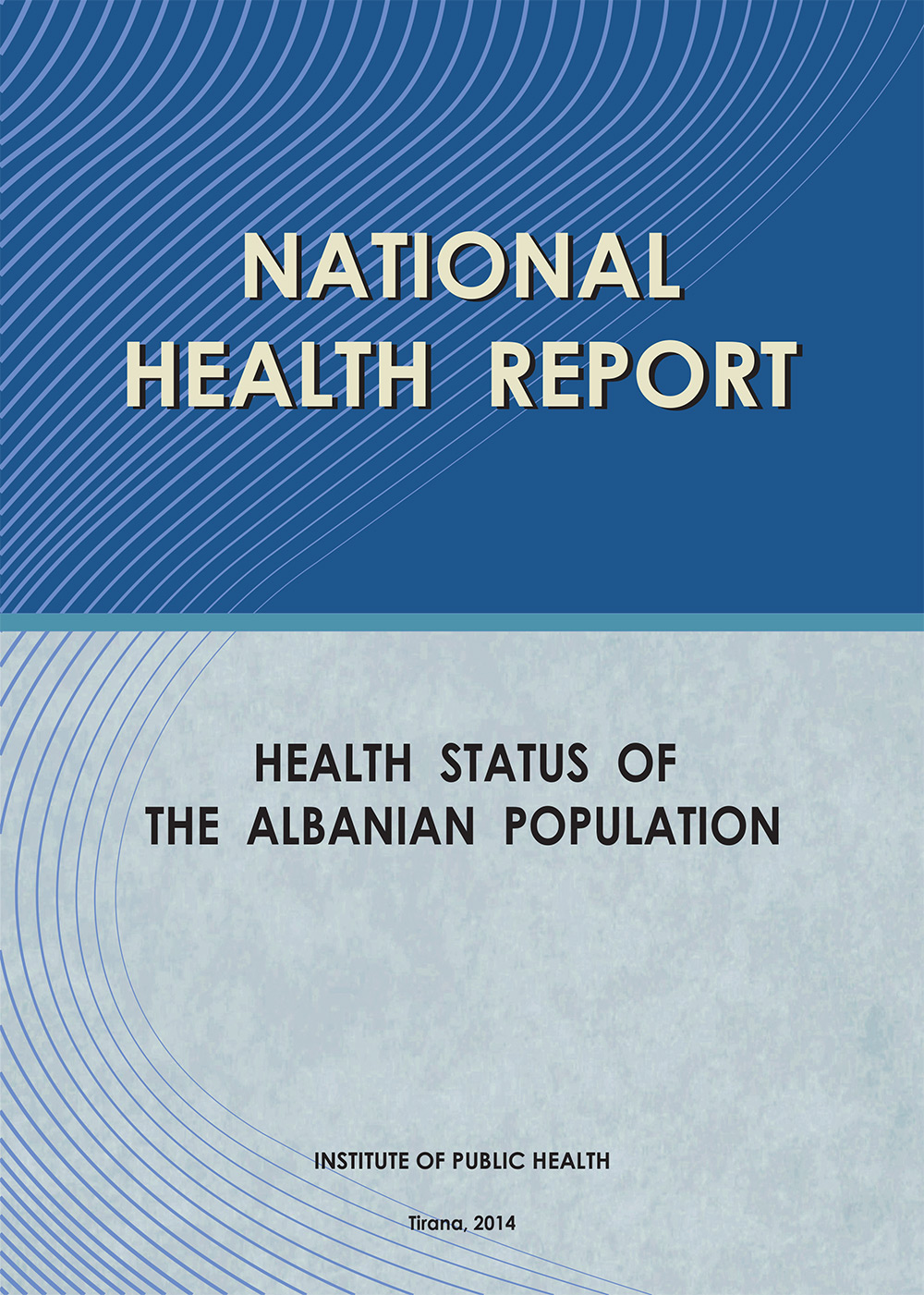
Titled “The Health Status of the Albanian Population”, the 2014 National Health Report of Albania was published by the Institute of Public Health of Albania with the support of the UNICEF country office.
Based upon a desk review of the official sources of information on health status and health care system in the country, the Report provides a broad overview of the current health status of the Albanian population by highlighting the mortality and morbidity patterns in the past twenty years as well as the major risk factors and other determinants of disease and death in the Albanian population. The Report also describes the health care resources, workforce distribution, health care utilization and the costs involved in the Albanian health sector.
Comparing certain aspects of the Albanian health system to the relevant ones in the neighbouring countries, the National Health Report provides solutions to the problematic issues, ultimately aiming at supporting better evidence-based health policy making and priority setting. Consequently, it may serve as a baseline document for a cross-national comparison at both regional and international level.
The complete 2014 National Health Report of Albania is available here.
 The Fourth Forum, under the theme “Health, well-being and prosperity in South-Eastern Europe by 2030 in the context of the 2030 Agenda for Sustainable Development” was held in Chisinau, Republic of Moldova on 3-4 April 20017.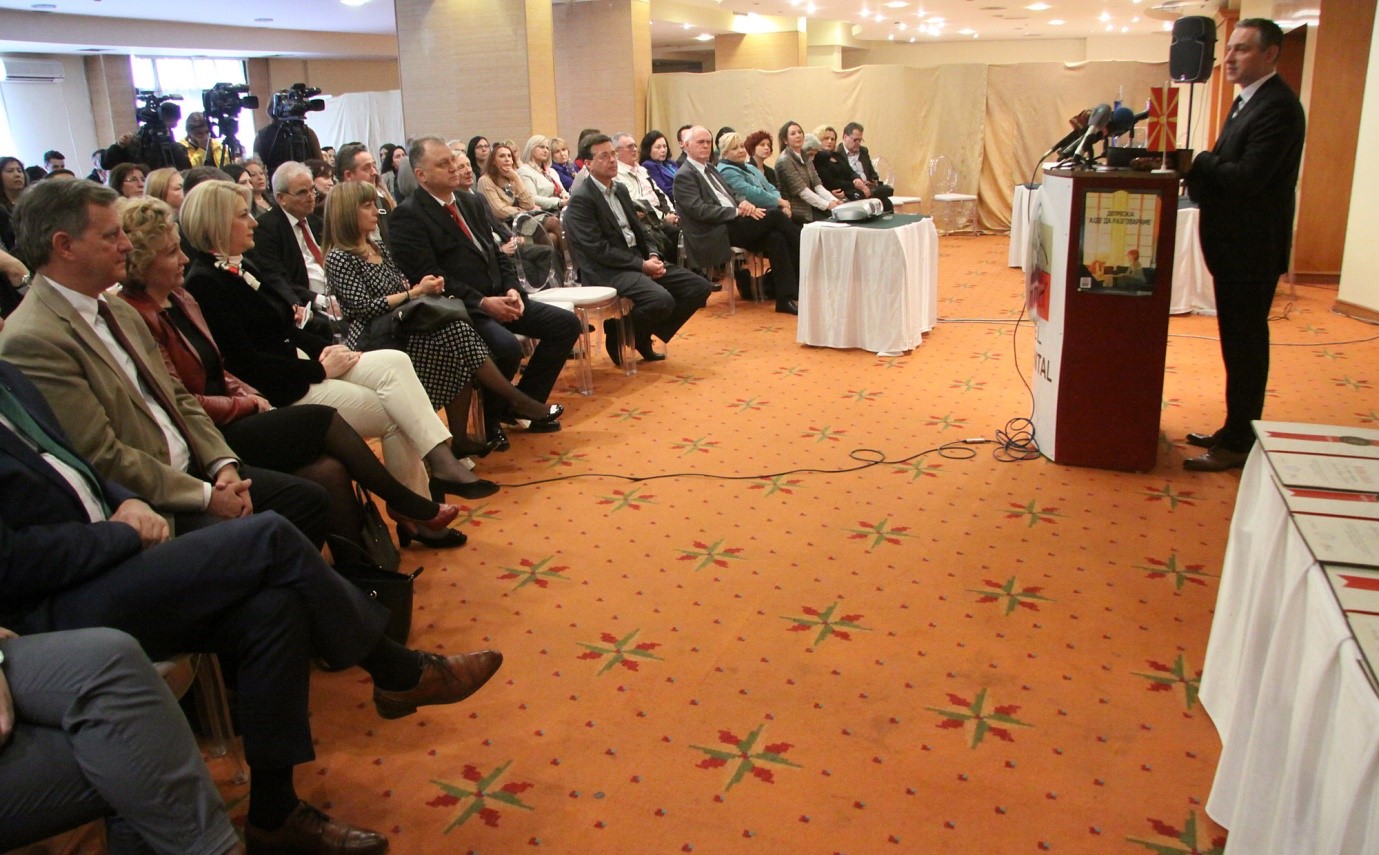





 the Jury, in her laudation of Prof. Silviya Yankulovska underlined: “The winning project does not only consist of the adaptation of concepts and tools to the Bulgarian situation. It also provides, after only a few years of practice, already rich data and cases from various clinical sites in Bulgaria illustrating the value of applying the METAP methodology to engage clinical staff in ethical case discussions. After this fulminant start it can be expected that clinical ethics support will continue to raise interest and obtain acceptance in the Bulgarian health care sector. We wish the winner and her wining project all the best for the future!”