Tirana, Albania – 04.02.2025 – The South Eastern Europe Health Network (SEEHN) and the Ministry of Health and Social Protection of Albania held a high-level meeting to strengthen Albania’s role in regional health collaboration. The discussions, led by Deputy Minister Mr. Niko Hyka, with Dr Tatiana Paduraru, Acting Head, SEEHN Secretariat, focused on deepening cooperation on:
Enhancing Regional Cooperation in Public Health
Setting Strategic Health Priorities for the Future
Ensuring Sustainable Funding and Resource Mobilization
Strengthening Governance and Albania’s Role in SEEHN
Reinforcing Commitment to Regional Health Agreements (signing the Belgrade Pledge)
During the meeting, SEEHN representatives commended Albania’s active participation in the network and acknowledged the contributions of key public health experts, including former National Health Coordinator (NHC) Ms Mejvis Kola, NHC Mr Niko Hyka, NHC Alternate Ms Alida Mici, RHDC on Communicable Diseases Director Prof. Dr. Silvia Bino, and Ms Ledia Agolli.
A significant focus of the dialogue was on ensuring the financial sustainability of SEEHN. Both sides explored mechanisms to strengthen Albania’s financial engagement, while also identifying alternative funding opportunities through EU health programs and strategic partnerships.
Albania’s representation in SEEHN’s Executive Committee was also a key point of discussion, emphasizing the importance of strong governance and regional health diplomacy. SEEHN reiterated its commitment to supporting Albania’s leadership in advancing shared health goals: especially advancing digital health, join procurement opportunities.
Additionally, discussions addressed Albania’s signing of the Belgrade Pledge, a commitment to reinforcing regional cooperation in public health. SEEHN representatives welcomed Albania’s consideration of this important step, which would further solidify its role in shaping the network’s future initiatives.
“Albania has been a valued and active member of SEEHN, and its leadership is crucial to the success of regional health efforts,” said Dr Paduraru, SEEHN Representative. “Today’s discussions reaffirm our shared commitment to strengthening public health systems, ensuring financial sustainability, and advancing key health priorities for the region.”- concluded Mr Niko Hyka, Deputy Minister of Health of Albania.
The meeting concluded with a mutual commitment to enhancing Albania’s engagement in SEEHN’s governance, financing, and strategic initiatives, paving the way for a more resilient and cooperative regional health landscape.
[4 February 2025] – On this World Cancer Day, the South-Eastern Europe Health Network (SEEHN) reaffirms its commitment to supporting cancer prevention, early detection, treatment, and support services across the region.
SEEHN strongly endorses the new global theme, “United by Unique” (2025-2027), as it highlights the power of individual stories and the importance of personalized, people-centered cancer care.
Cancer remains a significant public health challenge in South-Eastern Europe, where disparities in access to timely diagnosis and high-quality treatment persist. Greater efforts are needed across the region and beyond to close the care gap and ensure equitable access to life-saving cancer care, particularly by:
Expanding early detection and screening initiatives, especially in underserved communities.
Improving cancer care infrastructure to guarantee access to advanced treatments and supportive services.
Strengthening the cancer workforce by equipping healthcare professionals with the necessary skills and resources for high-quality, patient-centered care.
Promoting cancer prevention strategies, including tobacco control measures, vaccination programs, and public awareness campaigns.
SEEHN remains committed to actively collaborating with national health authorities, regional stakeholders, and international partners to reduce the cancer burden and improve survival rates across the region.
At the same time, real progress comes from listening to and empowering patients, ensuring that their voices shape the policies and services designed to support them. As part of World Cancer Day 2025, SEEHN encourages governments, healthcare professionals, civil society organizations, and communities to unite in a collective effort to make cancer care more inclusive, personalized, and effective.
Dr. Tatiana Păduraru, Acting Head of the South-Eastern Europe Health Network (SEEHN) Secretariat, participated as invited guest in the Erasmus Final Telenursing Conference hosted by the European Nursing Council (ENC) on January 22, 2025.
The event, held at Club de la Fondation Universitaire in the presence of ENC President Mr. Mircea Timofte, brought together healthcare leaders, policymakers, and experts to discuss the future of digital and remote care.
The Final Telenursing Conference featured a wide range of participants, including representatives from key European networks, organizations, and global institutions. Delegates included officials from the European Commission’s Directorate-General for Health and Food Safety (DG Santé), who shared insights on the EU’s Digital Health Action Plan and its role in driving remote care innovation.
Prominent European networks, such as the European Social Network (ESN), and national regulatory bodies like the French Regulatory Body for Nurses (ONI) and the Hellenic Regulatory Body, provided valuable perspectives on aligning policy frameworks and operational strategies for integrating telenursing into healthcare systems. Leaders from educational institutions, including the University of Thessaly, and organizations specializing in training and digital transformation shared their experiences in implementing telenursing platforms and programs.
As a distinguished panelist, Dr. Păduraru delivered a compelling address titled “The Role of Digital Health in SEEHN Member States,” emphasizing the vital role of telenursing in addressing regional healthcare challenges such as workforce shortages, access in rural areas, and overall system resilience.
“In rural and underserved areas across the SEEHN region, telenursing provides an innovative solution for delivering high-quality care. It enables nurses to conduct remote consultations, monitor chronic conditions, and educate patients, significantly improving access to healthcare,” Dr. Păduraru stated.
Key Points from Dr. Păduraru’s Intervention:
Digital Health Transformation in SEEHN Member States: Dr. Păduraru highlighted the ongoing shift toward digital health solutions, emphasizing their potential to bridge gaps in healthcare delivery. She underscored the pivotal role of nurses and midwives, who are the backbone of healthcare systems in the region, in driving this transformation.
Collaboration and Capacity Building: She stressed the importance of investing in workforce development, enhancing digital health literacy, and promoting cross-border knowledge exchange. Dr. Păduraru also highlighted the critical role of SEEHN’s RHDCs in fostering continuous professional development and regional collaboration.
Leveraging Regional and EU Support: Dr. Păduraru called for stronger partnerships between SEEHN Member States, the European Union, and international stakeholders to ensure the successful implementation of digital health solutions.
Future Vision for Telenursing: Building on the outcomes of the Telenursing project, Dr. Păduraru proposed the creation of a regional platform to integrate training resources and improve care quality through digital tools. The action could be a potential starting point for regional collaboration for the RHDC on Nursing and Midwifery hosted by Romania.
The Final Telenursing Conference marked a significant milestone in the Erasmus+ project, offering actionable insights into how digital innovation can empower nurses and enhance healthcare systems. Dr. Păduraru commended the ENC and project partners for their efforts and reaffirmed SEEHN’s commitment to fostering regional collaboration and supporting digital health initiatives.
“Telenursing is more than a technological solution; it is a transformative tool for achieving more equitable and resilient healthcare systems across our region,” she concluded.
Dr. Păduraru further emphasized SEEHN’s role in orchestrating cross-border initiatives that transcend boundaries, with RHDCs fostering capacity building and workforce development. She reaffirmed SEEHN’s commitment to contributing to new policy directions and regional initiatives aimed at advancing healthcare through digital transformation.
SEEHN announces the appointment of Dr. Tatiana Paduraru as Acting Head of the SEEHN Secretariat following the unexpected passing of Dr. Mira Jovanovski-Dasic. In accordance with the SEEHN Memorandum of Understanding (2008) and its Amendments (2011), the SEEHN Executive Committee convened an extraordinary meeting on 26 November 2024. During the meeting, the Executive Committee, in line with the Statute of the SEEHN Secretariat, appointed Dr. Tatiana Paduraru, Technical Officer at the SEEHN Secretariat, as Acting Head of the Secretariat. This appointment ensures the smooth operational management and continued functioning of the Secretariat until a permanent Head of the Secretariat is endorsed. Dr. Tatiana Paduraru brings extensive national and international expertise to her new role. With nearly a decade of experience in Moldova’s central government health sector, she successfully established a donor coordination mechanism replicated across other sectors. Recognized for promoting good governance, transparency, and accountability, she was awarded the prestigious John Smith Memorial Trust Fellowship in the United Kingdom, focusing on tobacco control policies. Her educational background includes a medical degree in dermatology, clinical experience at Saint Louis Hospital in Paris, and a Master’s degree in Health Management & Law from CNAM, Paris. Dr. Paduraru further honed her leadership and policy skills during her fellowship in Edinburgh and London. She has contributed to civil society at national and international levels, including a successful assignment in Georgia that delivered key health policy recommendations, such as the Primary Health Care Strategy and Human Resources Strategy. Dr. Paduraru’s experience spans collaboration with the World Health Organization and civil society and work in developing settings, with a particular focus on official development assistance. She co-chaired the Executive Board of Emerging Voices for Global Health (2020-2025) and was a Young Forum Gastein Taskforce Member (2014-2015). As a Technical Officer at SEEHN, her primary focus has been coordinating and implementing public health interventions to advance universal health coverage in SEEHN member states. ✅The SEEHN remains committed to its mission to improve regional cooperation in public health and ensure the seamless continuation of its work during this transitional period.
“Together, we are stronger than we could ever be alone.” – Dr. Mira Dasic.
Today, the South-Eastern Europe Health Network (SEEHN) community came together both in person in Sofia, and online to honor the extraordinary life and legacy of Dr. Mira Jovanovski-Dasic, a remarkable personality in public health and health diplomacy.
Recently, we bid farewell to Dr. Dasic, who served as the Head of the SEEHN Secretariat and was known for her visionary approach that significantly enhanced regional and global health collaborations.
The commemorative event served as a heartfelt prelude to the SEEHN Health Diplomacy Course, where participants reflected on Dr. Dasic’s profound influence on public health initiatives, her advocacy for health equity, and her relentless pursuit of cross-border partnerships.
Messages of condolences and tributes poured in from esteemed health leaders from all 9(nine) SEEHN member states, international collaborators, and colleagues who shared personal stories of her steadfast dedication, and genuine warmth and friendship.
Dr. Hans Kluge, WHO Regional Director for Europe, shared: “We will remember Dr Dasic as a charismatic public health leader, staunch supporter of the health workforce, a champion in health diplomacy and a determined advocate for health equity.”
A moment of silence was observed in her memory, underscoring the profound loss felt across the SEEHN community and beyond.
The SEEHN Health Diplomacy Course, which commenced right after the tribute, was dedicated to Dr. Dasic as a testament to her vision of promoting collaboration and enhancing health outcomes across the region.
“Dr. Dasic was not just a leader—she was an inspiration and a cherished friend to all. Her legacy will be our guiding light as we forge ahead,” remarked Dr Svetlana Nicolaescu, Chair of the SEEHN Executive Committee, Deputy Secretary General, Ministry of Health, Republic of Moldova.
In recognition of her extraordinary legacy, the SEEHN Secretariat is collecting condolence messages and letters from ministries of health, partners, collaborators, colleagues, and friends of Dr. Dasic. These tributes will be compiled into a book of condolences and presented to her family as a symbol of the immense respect and gratitude she inspired.
The SEEHN community remains steadfast in upholding Dr. Dasic’s values and continuing her mission, ensuring her vision catalyzes progress for years to come.
It is with deep sorrow that we share the news of the passing of Dr. Mira Jovanovski-Dasic, the esteemed Head of the Secretariat of the South-Eastern Europe Health Network (SEEHN).
Dr. Dasic was an exceptional leader whose commitment to public health and regional collaboration has profoundly influenced the SEEHN Network and far beyond. Her tireless efforts in advancing health diplomacy, promoting collaboration among member states, and championing health equity were pivotal in transforming SEEHN into the robust and unified organization it is today.
Prior to her impactful role with SEEHN, Dr. Mira Jovanovski Dašić had a distinguished career dedicated to public health and international cooperation.
With over two decades of experience as a medical doctor and specialist pediatrician across both the public and private sectors, she later became a National Professional Officer with the WHO Regional Office for Europe in Montenegro. Dr. Dasic served as the United Nations focal point for HIV/AIDS and tuberculosis in Montenegro, providing expert consultancy to numerous national and international organizations. She also held significant leadership positions in her home country, including Deputy Minister of Health and General Director at the Directorate for Bioethics and International Cooperation, where she cultivated extensive expertise in public health policy and regulation, always advocating for equitable health access for all.
Dr. Dasic’s career-which spanned decades-was characterized by her unparalleled expertise and passion for every initiative she undertook. Her guidance during critical moments, strategic insights, and unwavering commitment to the values of solidarity and shared progress inspired us all.
As we reflect upon her legacy, we honor not only her notable professional achievements but also the warmth, kindness, and determination she consistently demonstrated within our community. She was both a valued colleague and a cherished friend, and her absence will be profoundly felt.
Our deepest sympathies are extended to Dr. Dasic’s family, friends, and loved ones during this challenging time.
Let us unite in our resolve to continue the vital work she fervently championed, as a fitting tribute to her extraordinary life and contributions.
The South-Eastern Europe Health Network (SEEHN) took great pride in its involvement at the inaugural International Congress on Preventive Medicine and Public Health, which took place in Struga, North Macedonia, from October 31 to November 2, 2024.
This significant event brought together leading experts and healthcare professionals with the goal of sharing best practices, fostering collaboration, and enhancing public health across the region.
Assoc. Prof. Angel Kunchev, Chief State Health Inspector from the Bulgarian Ministry of Health, delivered a compelling presentation on the joint efforts between the Ministry of Health and the World Health Organization (WHO) in supporting Ukrainian refugees in Bulgaria. His talk shed light on various initiatives, including a Risk Communication and Community Engagement strategy, mental health services, and a vaccination information campaign specifically designed to meet the needs of refugee populations.
Vesela Vuchkova, Chief Expert at the Bulgarian Ministry of Health, also took the stage to discuss Regional Health Diplomacy (RHD). She highlighted the critical role of RHD in international relations, emphasizing the necessity of regional cooperation to strenghten health systems, share effective practices, and collaboratively address both routine and emerging health challenges.
The congress tackled crucial topics such as the One Health Approach, Chronic Non-Communicable Diseases, Climate Change and Health, and the urgency of addressing Infectious Diseases and Immunization. These themes reflect the pressing priorities for regional health resilience, highlighting the significance of preventive strategies and cooperative frameworks in addressing urgent health issues. SEEHN is dedicated to continuing these vital discussions and ensuring that collaborative efforts contribute to a healthier and safer future for all.
It is with profound sadness that the South-Eastern Europe Health Network (SEEHN) expresses heartfelt condolences on the passing of Dr. Biljana Lakić, a cherished colleague and distinguished leader in mental health.
Throughout her career, Dr. Lakić served as an inspiring force in mental health reform and community-based care. From her early years at the University Clinical Center of Republika Srpska to her pivotal roles as the Republic Coordinator for Mental Health and WHO Focal Point, she demonstrated unmatched commitment to improving mental health systems, workforce development, and preventive programs. As National Mental Health Coordinator for BiH in SEEHN, Dr. Lakić championed mental health initiatives with great skill and vision, ultimately enhancing access to quality care and well-being across the region.
In this time of sorrow, we extend our deepest sympathies to her family, friends, and colleagues. Dr. Lakić will be remembered as a compassionate professional whose life’s work brought hope and healing to so many. May her memory continue to inspire all of us in the ongoing journey toward a healthier, more supportive world.
On behalf of the South Eastern Europe Health Network (SEEHN) Secretariat and myself, I extend heartfelt congratulations to Dr. Hans Kluge on his unanimous reconfirmation as the Regional Director-elect for the WHO European Region during the recent 74th Regional Committee (RC74).This re-election reflects Dr. Kluge’s outstanding leadership, strong commitment to public health, and dedication to improving the well-being of individuals in our region and beyond.SEEHN is proud to acknowledge the significant impact of Dr. Kluge’s work, and we believe his continued leadership will drive the WHO European Region toward new milestones in health equity and resilience. As Dr. Kluge begins this new term, SEEHN looks forward to enhancing our collaboration to build on past successes and tackle upcoming challenges together. We are excited to work hand-in-hand to advance our shared goals, from enhancing public health capacity to fostering greater resilience in health systems across the region. Once again, congratulations, Dr. Kluge. We wish you every success as you lead the WHO European Region.
October 23, Bucharest – The South-Eastern Europe Health Network (SEEHN) celebrated the official inauguration of the SEEHN Regional Health Development Centre for Health Professionals and Midwives in South-eastern Europe, marking a significant advancement in promoting excellence in nursing and midwifery education and practices across the region.
The new RHD Centre, led by the Order of Nurses, Midwives, and Medical Assistants of Romania (OAMGMAMR) in partnership with the Ministry of Health and SEEHN, is dedicated to supporting sustainable health system development and strengthening collaboration among SEEHN member states. This Centre will function as a vital hub for professional training, policy development, and sharing of best practices throughout South-eastern Europe, working in line with global health standards to raise healthcare quality and accessibility.
“I am honored and thrilled to inaugurate today, here in Bucharest, the SEEHN Regional Health Development Centre for Health Professionals and Midwives. This initiative is a pivotal moment not only for us but for the entire health network across Southeast Europe,” stated Mircea Timofte, President of OAMGMAMR and SEEHN Regional Health Development Centre for Nursing and Midwifery.
Dr. Mira Dasic, Director of the SEEHN Secretariat, highlighted the significance of this joint effort:
“The establishment of the Regional Health Development Centre for Nursing and Midwifery is yet another testament to the power of collective effort. As Director of SEEHN’s Secretariat, I have witnessed the incredible impact of our joint projects, and I am confident that this Centre will play a vital role in elevating the nursing and midwifery professions. It will provide a platform to share knowledge, develop best practices, and ensure our health systems are equipped to meet the demands of both today and the future.”
In a video message, Dr. Maggie Langins, WHO EURO policy advisor, expressed strong support for the Centre’s mission and work.
The event was attended by high-profile guests, including Nicolae Ciucă, President of the Romanian Senate, who emphasized the importance of investing in healthcare workforce development:
“It is essential to invest in the development of the nursing and midwifery professions, as these are the fundamental pillars of an efficient and sustainable healthcare system.”
Among other supporters, Professor Diana Loreta Păun, Public Health Department Coordinator for the Romanian Presidential Administration, and Professor Alexandru Rafila, Romanian Minister of Health, shared messages reaffirming their commitment to the Centre’s work and to regional health initiatives. The event was facilitated by Dr. Florentina Furtunescu, Member of the SEEHN Executive Committee.
Throughout the event, speakers underscored the Centre’s crucial role in addressing healthcare workforce challenges, with a special focus on enhancing data collection to shape informed policies and boost cross-border cooperation.
Dr. Alba Llop-Gironés, expert in the WHO Europe Nursing and Midwifery program, emphasized the Centre’s role in improving workforce data collection and related policy-making.
Rowaida Al Maaitah, Consultant to HRH Princess Muna Al Hussein, and Dr. Howard Catton, CEO of the International Council of Nurses (ICN), shared insights into the global impact of the ICN Nursing Declaration, which will influence the Centre’s future initiatives.
Roxana Hainagiu, Executive Director of the Regional Centre and Head of Communications at OAMGMAMR, outlined the Centre’s five-year development strategy, which details specific goals to advance the nursing and midwifery professions in South-eastern Europe, aiming to continuously elevate healthcare quality across member states. Following this presentation, Mr. Dragoș Iordache, a Centre expert, introduced the Centre’s visual and media identity, and participants received pins featuring the Centre’s logo. This official inauguration underscores a renewed commitment to advancing healthcare professions in South-eastern Europe, with robust support from both regional and international partners, and paves the way for sustainable healthcare progress in the years to come.
The ICN’s 125th Anniversary Celebration took place in Bucharest on 21 and 22nd of October 2024.
In honour of ICN’s 125-year journey, celebrating the invaluable contributions and unwavering commitment of nurses to enhancing global health, SEEHN supported the participation of its member states representatives.
During this celebration, it was delved into the profound implications of the 2024 International Nurses Day theme, ”Our Nurses. Our Future. The economic power of care”, exploring nursing’s challenges, and devising strategic initiatives to garner support and momentum for investing in nurses and our shared future. A declaration advocating for support in nursing and midwifery was presented for adoption and signed by present stakeholders.
This dynamic two-day event blended celebratory activities with meaningful discussions, showcasing and engaging conversations, inspiring keynote speeches, and chances to connect with respected global personalities and representatives from leading international institutions.
Her Royal Highness Princess Muna Al-Hussein of Jordan was the guest of honor at ICN’s 125th Anniversary Celebration.
Princess Muna Al-Hussein is a beacon of inspiration in the world of health and health care. With a legacy spanning over six decades, she has passionately championed the roles of nurses and midwives, advocating tirelessly for their recognition and advancement on the global stage.
Hosts
The event was hosted by the Order of Nurses, Midwives, and Medical Assistants of Romania, and held under the High Patronage of the President of Romania, in partnership with the Ministry of Health, Ministry of Economy, Entrepreneurship and Tourism, the Committee for Health and Family of the Chamber of Deputies and the Public Health Committee of the Romanian Senate.
This year the South-Eastern Europe Health Network (SEEHN) and the European Health Forum Gastein (EHFG) supported the participation of three SEEHN representatives in the EHFG 2024. Under the main theme “Shifting sands of health – Democracy, demographics, digitalisation”, two participants attended from the Ministry of Health, Romania: Mrs. Mihaela Gîză, Head of the International Relations and European Affairs Unit and the national focal point for communication or public relations, and Mr. Bogdan Vinersar, Director for regulatory and medical professional training direction. The third representative was Mr. Ardit Gabili, Adviser to the Minister`s Cabinet, Ministry of Health and Social Protection, Albania. This participation was made possible by the SEEHN Secretariat funding and EHFG support to strengthen cross-border collaboration in health diplomacy and regional public health efforts. Mrs. Gîză and Mr. Gabili also participated in the EHFG 2024 Capacity-Building Initiative, a 1.5-day pre-conference workshop focused on “Inclusive Dialogue in Difficult Times”. The initiative explored the topic of „Deep Democracy”, a facilitation method that emphasises the importance of minority voices in decision-making processes and is designed to bring out underlying motives and opinions to reach more inclusive and informed decisions that reflect a broad consensus and effectively utilise a group’s diverse perspectives. This experience will undoubtedly enhance the future work of the participants, enabling SEEHN to continue to have a profound impact on regional health cooperation, resilience-building, and promoting inclusive health policies.
The European Health Forum Gastein (EHFG) [https://www.ehfg.org/] is widely recognised as one of the leading health conferences in the European Union, and aims to provide a neutral and inclusive platform for the discussion and advancement of health, solidarity and equity in the EU and beyond. With the founding principle of the equal representation of all stakeholders, it brings together stakeholders and decision-makers from the public and private sector, civil society, and science and academia, who together form the four pillars of the EHFG with their specific perspectives and knowledge.. The participation of representatives from Romania and Albania, supported by the SEEHN, underscores the network’s commitment to fostering cross-border cooperation and knowledge exchange in the shifting sands landscape of health policy and public health.
The South-Eastern Europe Health Network (SEEHN) proudly supports WHO’s theme for World Mental Health Day 2024: “Mental Health at Work”. The SEEHN emphasized the critical role of healthcare workers, particularly nurses, in maintaining public health throughout the COVID-19 pandemic. This year, the SEEHN urges urgent action on nursing burnout, advocating for safe working environments and mental health protections. By prioritizing mental health at work, the SEEHN aims to promote resilience and sustainability within the healthcare workforce across the region.
The challenges of the health workforce burnout demand immediate, coordinated responses from policymakers and healthcare institutions. The SEEHN is leading efforts to advocate for safer, supportive working conditions, including improved mental health provision systems within healthcare environments. With mental health at the forefront, the SEEHN urges its member states to commit to creating workplaces where the mental health of all workers, especially those in healthcare, is a priority.
In addition to these efforts, last year, the SEEHN hosted a study tour at the WHO Collaborative Center for Research and Training in Mental Health in Trieste. This initiative provided healthcare leaders in the SEE region with direct insights into community mental health services, fostering deeper collaboration and stronger mental health infrastructures. Through ongoing engagement, the SEEHN calls on its member states to increase investments in mental health and to promote resilience among healthcare workers, continuing the region’s commitment to mental health as a human rights-based approach. The collective power of governments, communities, and organizations is crucial in addressing the hidden mental health burden by securing a healthier, more resilient future for all.
The South-Eastern Europe Health Network (SEEHN) and the European Public Health Alliance (EPHA) have signed a Memorandum of Understanding (MoU).
This MoU marks the beginning of a strategic collaboration aimed at improving public health outcomes and promoting sustainable health systems in the South-Eastern European region. This partnership is rooted in a shared vision of fostering healthier communities through joint initiatives and capacity-building efforts in line with the UN Agenda 2030 and the Sustainable Development Goals (SDGs).
The MoU was signed by Dr Mira Jovanovski-Dašić, Director of the SEEHN Secretariat, and Dr Milka Sokolović, Director General of EPHA. The agreement formalises a framework for cooperation between the two organisations, including organising joint events, promoting capacity-building activities, and contributing to the achievement of SDG 3—Good Health and Well-being.
Dr Jovanovski-Dašić highlighted that “this partnership is a critical step towards strengthening health systems in South-Eastern Europe and by joining forces with EPHA, we will be better equipped to address key public health challenges in the region, including promoting equitable access to healthcare, improving health resilience, and advancing health policy reforms.”
The MoU emphasises collaboration in several key areas, including:
Organising joint public health events and fostering actions aimed at achieving better health outcomes for all;
Promoting institution- and capacity-building projects related to public health, such as healthy environments, health service delivery, and digital health;
Joint contributions to the UN Agenda 2030 and the Sustainable Development Goals, particularly SDG 3, which focuses on ensuring healthy lives and promoting well-being for all ages.
“We are thrilled to collaborate with SEEHN to drive forward our shared goals of health equity and stronger, more sustainable health systems,” said Dr Sokolović. “This partnership allows us to combine our expertise and networks to create lasting positive change in the region, improving health for everyone, especially vulnerable populations.”
This MoU will serve as a foundation for the two organisations to deepen their partnership over the next two years, with the potential for extension. The collaboration will also aim to facilitate knowledge sharing, support health system reforms, and promote the role of civil society in addressing public health challenges.
The first step to advance join efforts shall focus to strengthen Digital Health Literacy for All, in particular vulnerable populations in the South Eastern Europe.
About EPHA: The European Public Health Alliance – EPHA – is a change agent – Europe’s leading NGO alliance advocating for better health: https://epha.org/
The workshop took place in Bucharest on 29-30 August 2024, organized under the auspices of the SEEHN Secretariat, financed by the WHO Regional Office for Europe and hosted by the Order of Nurses and Midwives in Romania under the umbrella of the SEEHN Regional Health Development Center (RHDC) for Nurses and Midwives.
The Sub-Regional Workshop first objective was the strengthening of reporting on National Health Workforce Accounts, planned for publication in April 2025. The second objective was to harness this unique opportunity to build a network of dedicated focal points in the South Eastern Europe region.
The event was addressed by the Romanian Minister of Health, Prof. Alexandru Rafila, the Head of the WHO Country Office, Dr. Caroline Clarinval, the Director of SEEHN, Dr. Mira Dasic and the President of Order of Nurses and Midwives, Mr. Mircea Timofte.
There were more than 40 participants, out of which 35 in person and 8 online, from all 9 SEEHN member states, together with the SEEHN Secretariat, representatives of the partner-state Slovenia, and of the host organization.
On the first day of the workshop, WHO experts provided participants with detailed information on data registries and data-driven policies, focusing on the indicators included in the second edition of the State of Nurses Global report. During the second day, the participants discussed the challenges specific to each country and proposed concrete actions to improve existing capacities.
Among the identified commonalities across SEEHN countries, there are:
• Challenges in standardizing health worker definitions
• Recognition of the need for a select number of indicators to be routinely monitored
• Data flow issues between local authorities, the national level, and across governmental institutions
• Development of health workforce registries in some countries, with others recognizing the need to establish them
• The need for an enabling environment for digital transformation
• The importance of stakeholder involvement and coordination mechanisms in health workforce data and evidence
• The need for capacity building and training in data utilization and health workforce planning.
On the second day, Director of SEEHN Dr. Mira Dasic presented the initiatives and objectives of the network, as well as the operational status of the SEEHN RHDC for Nurses and Midwives. The President of the Order of Nurses and Midwives in Romania (ONM) Mr. Mircea Timofte emphasized the contributions of the organization at the national and regional level, followed by a detailed presentation by the Director of International Relations Ms. Roxana Hainagiu and the presentation of the visual identity proposals for the Center made by the ONM expert Mr. Dragoș Iordache.
In conclusion, the President of ONM Mr. Timofte informed about the official launch of the SEEHN Regional Health Development Center, scheduled for October 23, 2024.
Conclusions and the Future of Collaborations
The efforts of these two days will significantly contribute to improving the accuracy of health workforce data in SEEHN member states and will be reflected in the second edition of the Global State of Nursing report.
ONM as the host of the new SEEHN Regional Development Center for Nurses and Midwives in Romania remains committed to the development of a sub-regional strategy dedicated to the nurse and midwife professions, together with its regional and international partners.
SEEHN Secretariat thanks WHO and ONM for their continued collaboration and support, reaffirming its commitment to support and promote the development of nurses and midwives in the South Eastern Europe region.
Finally, this event was another opportunity to exchange and explore further regional needs and opportunities to build cross-country and cross-regional initiatives that SEEHN together with WHO shall support in future.
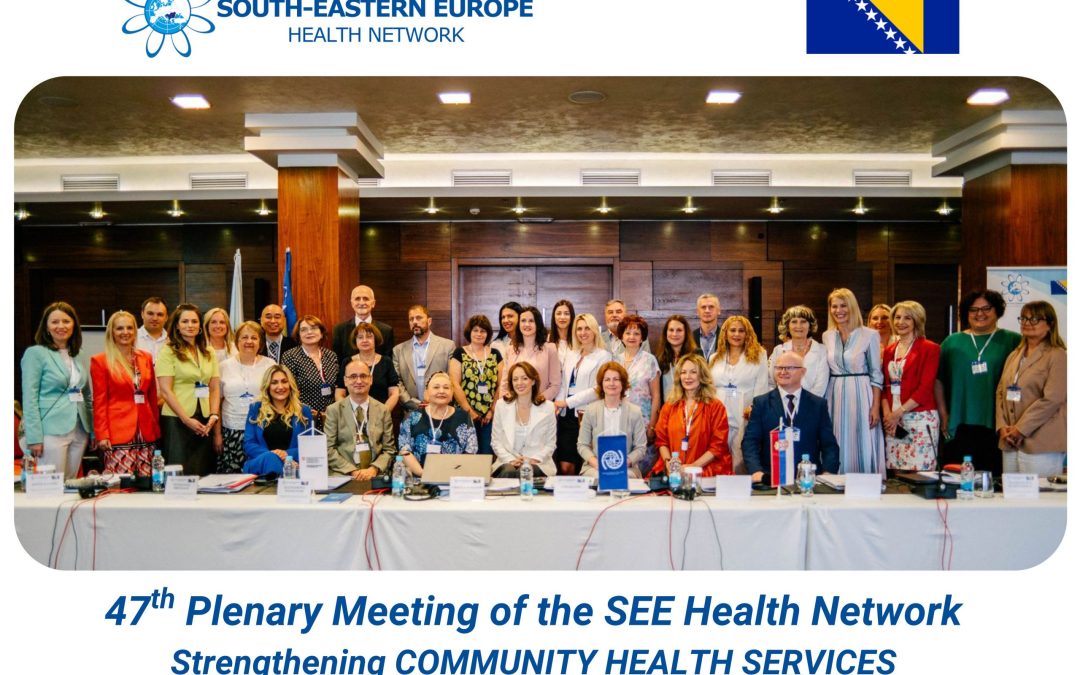
The South Eastern Europe Health Network (SEEHN) successfully organized its annual 47th Plenary Meeting, bringing together high-level representatives from member states, Ministries of Health, Directors of the Regional Health Development Centers, diplomatic corps and international partners.
The central theme of the 47th SEEHN Plenary Meeting held on 20-21 June in Sarajevo, Bosnia and Herzegovina was “Strengthening Community Health Services”. The event aimed at providing a platform for robust discussions, sharing of best practices, and formulating strategies to strengthen community health services in the SEE region.
During the dedicated sessions, representatives shared their experiences and achievements in promoting community health services while addressing the challenges and potential solutions to their particular contexts.
At the same time, experts from various fields, including primary health care, epidemiologists, mental health experts, Ministry of health representatives delivered insightful presentations, underscoring the importance of cross-sectoral cooperation and active involvement of all segments of society to promote universal health coverage with people centered approach.
Participants underlined the significance of collaboration among governments, healthcare professionals, civil society organizations, and other stakeholders to address, promote and implement better community health services.
Discussions centered on developing and implementing effective health communication strategies to reach out to communities and individuals to empower and promote healthy choices. Experts emphasized the need for clear, accurate, and culturally sensitive messaging tailored to different population segments and the utilization of digital platforms to increase health literacy.
SEEHN Plenary Meeting also forward-looked at the strategic governance and future objectives for the Southeastern Europe Health Network. Key highlights included the signing of the Belgrade Pledge, strategic planning for the next four years, and the presentation of the SEEHN Presidency Report and SEEHN Road Map.
The meeting outlined the strategic priorities of SEEHN for the upcoming four-year period that would support member states and partners to effectively align their efforts and resources.
During the closed session dedicated to Member States representatives, a new Executive Committee for the next two years was elected. The member states represented at the new ExCOM are ALB, BIH, ISR, MDA, and ROM.
At the meeting, for the first time, the award, “Dr Alexandre Berlin”, was given to the Federal Assistant Minister of Health, Dr. Goran Cerkez, for his outstanding contribution and commitment to regional cooperation in health in South-Eastern Europe over the past 20 years.
The SEEHN Plenary Meeting concluded with a collective commitment to implement the strategies and recommendations formulated during the event. The meeting witnessed unprecedented engagement and dedication from all participants, highlighting their commitment to safeguarding public health and strengthening health systems in the SEEHN region.
SEEHN is pleased to congratulate Dr. Paolo Lauriola, highly experienced in Public health, TAIEX expert, SEEHN collaborator and friend on the election as EPHA President of the Management Board 2024. We wish EPHA and Dr Lauriola success in their future endeavors.
The Ministry of Health; the National Agency of Public Health of the Republic of Moldova and the SEEHN are proud to welcome colleagues from across the SEE region to the highly anticipated meeting focused on the Medical Licensing and Registration System of Health Practitioners.
This event will provide valuable insights on the Legal Framework and Related Experiences in the healthcare sector and will serve as a platform for participants to share best practices, discuss challenges, and foster collaboration in the field of health regulation.
“We are thrilled to host this important gathering and to provide a forum for meaningful discussions on improving our healthcare systems,” said a Dr Nicolae Jelamschi, Director of the National Agency of Public Health.
The meeting will feature expert speakers, panel discussions, and interactive sessions aimed at promoting knowledge exchange and networking opportunities among attendees. Key topics to be addressed include advancements in medical licensing, registration processes for health practitioners, and the importance of a robust legal framework in healthcare.
Dr Mira Jovanovski Dasic, Director of the SEEHN Secretariat highlighted that “one of the most significant challenges faced by SEEHN Member States is the brain drain of healthcare professionals, driven by the migration of talent to Western Europe in search of better opportunities. This exacerbates existing issues such as workforce shortages, disparities in healthcare access, and the need for continuous professional development. While other challenges include improving healthcare infrastructure and ensuring equitable access to services, addressing brain drain is critical. It requires strategic efforts to enhance working conditions, provide competitive incentives, and invest in the professional growth of healthcare workers to retain talent within the region.”
For more information and updates about the Regional Meeting on Medical Licensing and Registration System of Health Practitioners, please follow SEEHN social media channels.
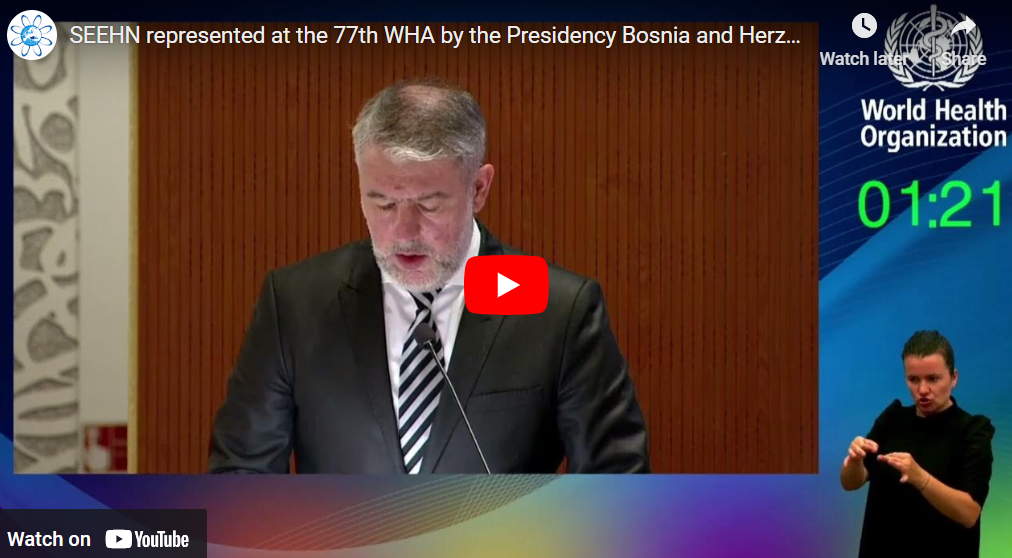
Joint Statement On behalf of the South Eastern Europe Health Network At the 77TH Session of the World Health Assembly within the plenary discussion session
[1] DR. ALEN ŠERANIĆ, HEAD OF DELEGATION OF BOSNIA AND HERZEGOVINA, MINISTER OF HEALTH AND SOCIAL WELFARE OF THE REPUBLIC OF SRPSKA
Your Excellences, Director-General, Regional-Director, [Mister or Madam] President, Honourable ministers, Ladies and gentlemen,
I have the honour to speak on behalf of the nine Member States of the South Eastern Europe Health Network, who have associated themselves with this statement: Albania, Bulgaria, Bosnia and Herzegovina, the State of Israel, Republic of Moldova, Montenegro, the Republic of North Macedonia, Romania and the Republic of Serbia.
As Bosnia and Herzegovina finalizes its one year SEEHN Presidency, it proudly shares several significant achievements. Our primary focus has been on advancing universal health coverage and fostering people-centred health systems.
We strongly believe that strong regional strategic efforts are required in advancing the WHO global and regional agenda to achieve the SDGs 2030 targets and close the health outcomes’ gap between the SEE region and the European Union. In this context, the SEEHN in partnership with Slovenia organized a High-Level Meeting on Strengthening Healthcare Systems in Southeast Europe. The main outcomes of the meeting were enhanced resilience and preparedness of healthcare systems for future shocks and crises, spotted innovative solutions to address persistent health workforce shortages, and strengthened trust among various healthcare stakeholders.
Additionally, Bosnia and Herzegovina Presidency keyefforts included promoting mental health reforms, particularly in developing community mental health services, as well as those in post-conflict settings. We have also prioritized the mental health and well-being of the healthcare workforce, especially in the aftermath of the pandemic.
Over the last two decades, the SEE Health Network, through Bosnia and Herzegovina, has championed mental health advancements, particularly in community settings. Leading experts from the SEE region have visited and extensively discussed the world-renowned Trieste mental health model. This initiative was a collaborative effort involving the SEEHN Secretariat, the Central European Initiative, and the WHO Collaborating Center for Research and Training in Mental Health, Trieste, Italy. It provided a platform for stakeholders to exchange experiences, learn about challenges, and compare the progress and policies shaping mental health services in the SEE region with the successful Trieste model.
In this respect, it is noteworthy that our actions and documents align closely with the WHO Global Strategic Directions for Nursing, Midwifery, and the corresponding European region roadmap. The South Eastern Europe Health Network is committed to optimizing healthcare workforce performance and investing strategically in this sector. In line with this commitment, we are pleased to announce a significant development: commencing in October this year, Romania will officially host the Regional Health Development Center for Nursing and Midwifery, under SEEHN’s auspices. This center will also host the ICN meeting in Bucharest, advancing our regional agenda. At the same time, we express gratitude to the WHO Collaborative Center for Leadership and Governance in Nursing, hosted by Israel, for active support and contribution to strengthen the capacity of the nursing aimed at improved quality of care in the SEE region.
Furthermore, just a week ago, SEEHN Member States convened in Banja Luka, Republic of Srpska, Bosnia and Herzegovina to advance nursing leadership and discuss strategies to secure the future of the healthcare workforce and the provision of high-quality care. This meeting focused on addressing nursing and midwifery challenges and planning the next steps.
The past year has been marked by actions focused on data quality improvement and control, non-communicable diseases population-based registries; improvement and promotion of patients’ rights; pandemic preparedness, influenza surveillance, and immunization.
On this occasion, I would like to express our true gratitude to the World Health Organization and in particular to its European Regional Office and the Regional Director, Dr Hans Kluge for his steady support to the SEEHN.
Also, our sincere appreciation to the WHO Director General Dr TedrosAdhanom Ghebreyesus for the support to the SEE Region, in advancing health equity and health systems resilience in this turbulent world.